2026 Unemployment Benefits: Key Changes, Eligibility, and Future Outlook

Anúncios
Navigating 2026 Unemployment Benefits: Key Changes and Eligibility Requirements for the Next 12 Months
As we approach 2026, understanding the landscape of unemployment benefits becomes increasingly crucial for workers and job seekers across the United States. The past few years have brought significant shifts to unemployment programs, driven by economic fluctuations, legislative adjustments, and technological advancements. These changes often lead to confusion and uncertainty, making it essential to stay informed about what to expect. This comprehensive guide aims to demystify 2026 unemployment benefits, providing a clear roadmap of potential changes, eligibility criteria, application processes, and strategies for navigating the system effectively.
The federal and state unemployment insurance (UI) programs serve as a vital safety net, offering temporary financial assistance to eligible workers who lose their jobs through no fault of their own. However, the specifics of these programs are not static. They are subject to continuous review and modification, influencing everything from benefit amounts and duration to eligibility requirements and application procedures. Our focus today is on the anticipated framework for 2026 unemployment benefits, examining the trends and legislative discussions that are likely to shape the support available to those facing job loss.
Anúncios
Understanding the Foundation: How Unemployment Benefits Work
Before diving into the specifics of 2026 unemployment benefits, it’s helpful to recap the fundamental principles of the unemployment insurance system. This is a joint federal-state program, meaning that while federal guidelines set a baseline, each state administers its own program within those parameters. This results in variations in benefit amounts, eligibility rules, and the maximum duration of benefits from one state to another.
Typically, unemployment benefits are funded through taxes paid by employers. When an eligible individual becomes unemployed, they can file a claim with their state’s unemployment agency. If approved, they receive weekly payments for a specified period, designed to partially replace lost wages and help them cover essential living expenses while they search for new employment. The primary goal is to provide temporary relief, not long-term income, encouraging claimants to actively seek new work.
Key Components of the Unemployment System:
- State Administration: Each state has its own agency (e.g., Department of Labor, Employment Development Department) responsible for processing claims and distributing benefits.
- Employer Contributions: Benefits are primarily funded by state and federal payroll taxes paid by employers.
- Temporary Assistance: Benefits are designed to be short-term, typically lasting up to 26 weeks in most states, though extensions can occur during economic downturns.
- Work Search Requirements: Claimants are generally required to be able to work, available for work, and actively seeking work to maintain their eligibility.
As we look towards 2026, it’s important to remember that these fundamental components will likely remain, but the details surrounding them could evolve. Anticipating these shifts is key to being prepared.
Anúncios
Anticipated Changes to 2026 Unemployment Benefits: What’s on the Horizon?
Predicting the exact legislative landscape for 2026 unemployment benefits is challenging, as economic conditions and political priorities can change rapidly. However, based on ongoing discussions, past patterns, and current economic indicators, we can identify several areas where changes are most likely to occur. These potential modifications could significantly impact who qualifies for benefits, how much they receive, and for how long.
Potential Legislative Reforms and Modernization Efforts:
There has been a growing bipartisan consensus on the need to modernize the unemployment insurance system. Many state systems still rely on outdated technology, leading to delays and inefficiencies, especially during periods of high unemployment. Federal initiatives and state-level reforms are likely to continue focusing on:
- Technological Upgrades: Investing in more robust, user-friendly digital platforms for filing claims, managing accounts, and accessing resources. This aims to streamline the application process for 2026 unemployment benefits and reduce administrative burdens.
- Fraud Prevention: Implementing stricter identity verification processes and data analytics to combat fraud, which became a significant issue during the pandemic.
- Program Solvency: Addressing the long-term solvency of state unemployment trust funds, which were depleted in many states during recent economic crises. This could lead to discussions about adjusting employer tax rates or benefit levels.
Adjustments to Eligibility Requirements:
Eligibility for 2026 unemployment benefits is primarily determined by an individual’s work history and the circumstances of their job separation. States typically look at:
- Monetary Eligibility: Whether an applicant earned enough wages during a specific ‘base period’ (usually the first four of the last five completed calendar quarters before filing a claim) to qualify. Expect these base period requirements to be periodically reviewed and potentially adjusted to reflect inflation or changes in employment patterns.
- Reason for Separation: The individual must have lost their job through no fault of their own (e.g., layoff, reduction in force). Those who quit voluntarily without good cause or were fired for misconduct are generally ineligible. While this core principle is unlikely to change, states might refine definitions of ‘good cause’ or ‘misconduct.’
- Availability and Work Search: Claimants must be able and available for work and actively seeking new employment. Some states might introduce more stringent or specific work search requirements, such as a minimum number of applications per week, mandatory attendance at job workshops, or engagement with re-employment services.
Benefit Amounts and Duration:
The weekly benefit amount (WBA) is typically a percentage of a claimant’s average weekly wages during their base period, subject to a state-defined minimum and maximum. The maximum duration is usually 26 weeks. For 2026 unemployment benefits, several factors could influence these figures:
- Inflationary Adjustments: States may consider adjusting maximum benefit amounts to account for inflation and the rising cost of living, ensuring benefits provide a more adequate safety net.
- Economic Triggers: Discussions may continue regarding the implementation of ‘trigger’ mechanisms that automatically extend the duration of benefits during severe economic downturns, similar to past federal programs. Conversely, in periods of strong economic growth, there might be pressure to limit extensions.
- Federal Supplemental Programs: While emergency federal programs like those seen during the COVID-19 pandemic are unlikely to be permanent, the possibility of similar temporary federal supplements during future widespread economic crises remains a topic of debate and could influence 2026 unemployment benefits in unforeseen circumstances.
Preparing for 2026: What You Need to Do Now
Proactive preparation is essential for anyone who might need to access 2026 unemployment benefits. Understanding the potential changes and ensuring your records are in order can significantly streamline the application process and reduce stress during a difficult time.
Maintain Accurate Employment Records:
Your work history and earnings are the foundation of any unemployment claim. Keep meticulous records of:
- Pay Stubs: Keep copies of your pay stubs for at least the past two years. These documents provide proof of your wages and hours worked.
- W-2 Forms: Store your W-2 forms securely. They summarize your annual earnings and taxes withheld.
- Employment Dates: Note down your start and end dates for all employers, along with contact information for your HR departments.
- Reason for Separation Documentation: If you are laid off, ensure you receive official documentation from your employer stating the reason for your separation. This is crucial for proving you are unemployed through no fault of your own.
Stay Informed About State-Specific Rules:
Given the state-by-state variations, it’s vital to know the specific rules in your state of employment. Regularly check your state’s unemployment agency website for updates, especially as 2026 approaches. Look for information on:
- Benefit Calculators: Many states offer tools to estimate your potential weekly benefit amount.
- Eligibility Checklists: Review specific criteria for monetary and non-monetary eligibility.
- Work Search Requirements: Understand what constitutes an ‘active work search’ in your state.
- Application Procedures: Familiarize yourself with the online application portal and any required documentation.
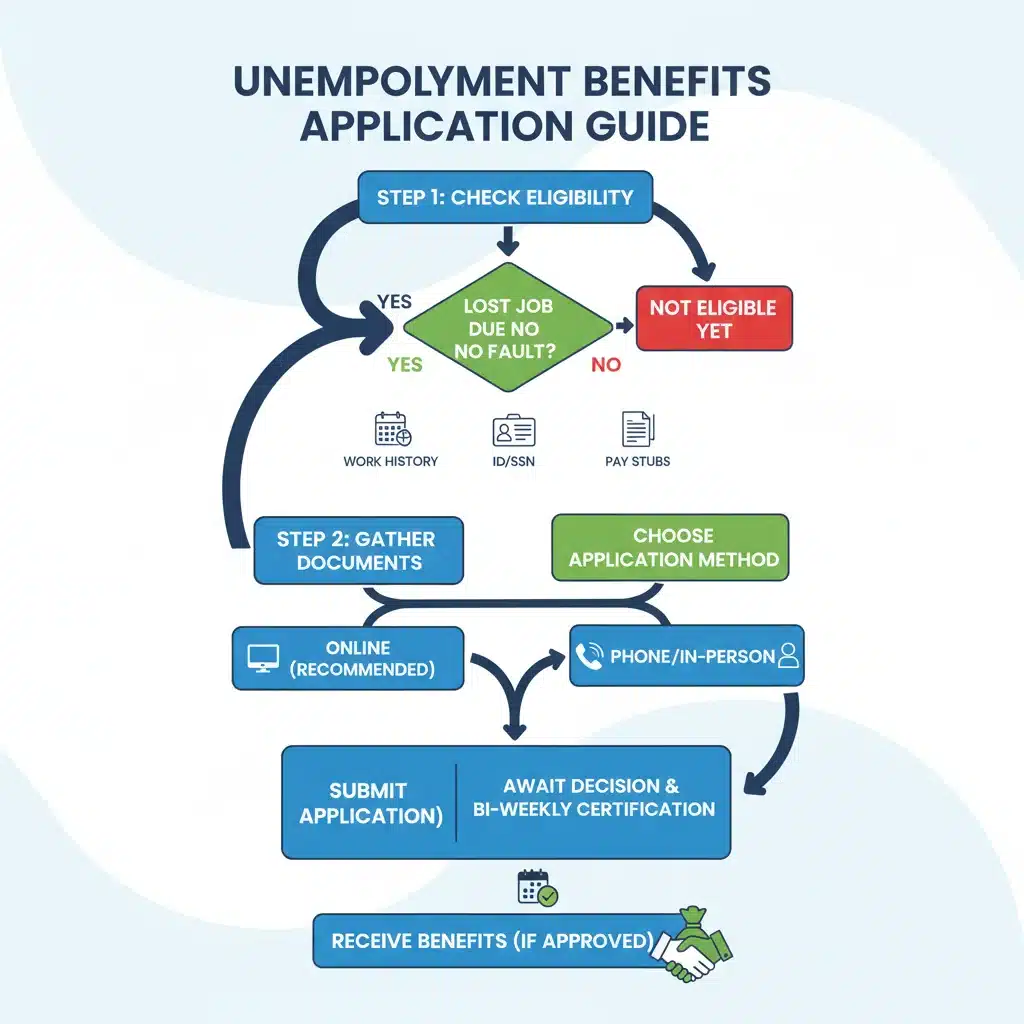
Being knowledgeable about your state’s specific regulations will put you in a stronger position to successfully apply for 2026 unemployment benefits.
The Application Process for 2026 Unemployment Benefits
While specific technological interfaces may evolve, the general steps for applying for 2026 unemployment benefits are expected to remain consistent. Understanding this process can help you navigate it efficiently.
Step-by-Step Guide to Filing a Claim:
- Gather Required Information: Before you start, have all your employment records handy, including names and addresses of all employers for the last 18-24 months, dates of employment, reason for separation, and your Social Security number.
- File Your Claim Promptly: File your claim as soon as you become unemployed. Benefit eligibility often begins the week you file your claim, not the week you became unemployed. Most states now offer online filing, which is usually the quickest method.
- Provide Accurate Information: Be truthful and thorough in your application. Inaccurate information can lead to delays or even denial of benefits.
- Participate in Eligibility Interviews (If Required): Your state may contact you or your former employer for additional information. Respond promptly and honestly.
- Certify for Benefits Regularly: To continue receiving benefits, you will typically need to certify (usually weekly or bi-weekly) that you are still unemployed, able and available for work, and actively seeking employment. This is where work search requirements come into play.
- Report Any Earnings: If you perform any work or earn any income while receiving benefits, you must report it. Failure to do so can result in overpayment and penalties.
Common Pitfalls to Avoid:
- Delaying Your Application: Every week you delay could be a week of lost benefits.
- Incomplete or Inaccurate Information: Double-check all details before submitting.
- Missing Deadlines: Pay attention to deadlines for filing appeals or submitting certifications.
- Not Actively Seeking Work: Failure to meet work search requirements is a common reason for benefit termination.
- Ignoring Communication from the State: Always respond to requests for information from your state unemployment agency.
Being diligent and organized throughout this process will be key to successfully receiving 2026 unemployment benefits if you need them.
Beyond Benefits: Re-employment and Skill Development in 2026
While 2026 unemployment benefits provide crucial financial support, the ultimate goal is always re-employment. The modern job market is dynamic, and continuous skill development is paramount. Many state unemployment agencies offer resources to help claimants transition back into the workforce.
Leveraging State and Community Resources:
- Job Search Assistance: State workforce agencies often provide free services such as resume writing workshops, interview coaching, and access to job boards.
- Training and Retraining Programs: Explore opportunities for skill enhancement or retraining in high-demand fields. Some programs may even allow you to continue receiving benefits while enrolled in approved training.
- Career Counseling: Professional counselors can help you identify transferable skills, explore new career paths, and set realistic job search goals.
- Networking Events: Participate in virtual or in-person job fairs and networking events to connect with potential employers.
Taking advantage of these resources can significantly shorten your period of unemployment and improve your long-term career prospects. The focus on upskilling and reskilling will likely intensify by 2026, making these services even more valuable.
The Economic Context and Future Outlook for Unemployment
The availability and structure of 2026 unemployment benefits will inevitably be shaped by the broader economic context. Factors such as inflation, interest rates, job growth, and technological disruption all play a role in shaping policy decisions and the demand for unemployment assistance.
Economic Indicators to Watch:
- Inflation: Persistent inflation could lead to discussions about adjusting benefit amounts to maintain purchasing power.
- Job Market Health: A robust job market with low unemployment rates might lead to less generous benefit extensions, while a downturn could trigger calls for expanded aid.
- Automation and AI: The increasing adoption of automation and artificial intelligence could lead to job displacement in certain sectors, potentially increasing the need for retraining support and unemployment benefits for affected workers. Policymakers are already debating how to adapt the social safety net to these technological shifts.
- Gig Economy and Independent Contractors: The classification of gig workers and independent contractors remains a complex issue. There could be further legislative attempts to address whether these workers should be eligible for traditional unemployment benefits, potentially expanding the pool of claimants for 2026 unemployment benefits in some states.
Advocacy and Policy Debates:
Various advocacy groups and policymakers continue to push for reforms that could make the unemployment system more equitable, efficient, and responsive to modern economic realities. These debates often center on:
- Benefit Adequacy: Ensuring that benefits are sufficient to cover basic living expenses.
- Accessibility: Making the system easier to navigate for all eligible workers, including those with limited English proficiency or disabilities.
- Duration Flexibility: Implementing more flexible benefit durations that adapt to economic conditions rather than fixed periods.
These ongoing discussions will undoubtedly influence the final form of 2026 unemployment benefits, highlighting the importance of staying engaged with current events and policy developments.