Future-Proof Your Career: Top Vocational Training Programs U.S. 2026
Anúncios
In an ever-evolving global economy, the traditional four-year college degree is no longer the sole pathway to a successful and fulfilling career. Indeed, a significant shift is underway, with a growing emphasis on practical, job-specific skills that can be acquired through vocational training programs. These programs are not just for those who choose not to pursue a university education; they are increasingly becoming the smart choice for individuals looking to enter high-demand fields quickly, gain hands-on experience, and secure stable, well-paying jobs.
The landscape of work is changing rapidly, driven by technological advancements, demographic shifts, and new economic priorities. As a result, the demand for skilled trades and technical professionals is skyrocketing. By 2026, several key industries are projected to experience substantial growth, creating a pressing need for a workforce equipped with specialized skills. This article delves into 7 innovative Vocational Training Programs that are gaining significant traction in the U.S. and are poised to lead individuals from the classroom directly into rewarding careers.
Understanding these emerging trends and the opportunities they present is crucial for anyone considering their educational and career options. Whether you’re a high school student, a college graduate looking to reskill, or an experienced professional seeking a career change, exploring these vocational training programs can open doors to exciting possibilities.
Anúncios
The Resurgence of Vocational Training: Why Now?
For decades, vocational training often carried a stigma, viewed as a less prestigious alternative to a university education. However, this perception is rapidly changing. Several factors contribute to the resurgence and growing importance of vocational training programs:
- Skills Gap: Many industries face a significant shortage of skilled workers. Traditional education pathways haven’t kept pace with the rapid evolution of technology and industry demands, leading to a gap between available jobs and qualified candidates. Vocational programs directly address this by training individuals in the specific skills employers need.
- Cost-Effectiveness: University education can be incredibly expensive, often leading to substantial student debt. Vocational programs are generally shorter in duration and less costly, offering a faster and more affordable route to employment and financial independence.
- Hands-On Learning: Many individuals thrive in environments that emphasize practical, hands-on learning rather than purely theoretical instruction. Vocational training provides this, allowing students to develop tangible skills through direct application.
- High Demand and Good Salaries: Jobs in skilled trades and technical fields often offer competitive salaries and excellent job security. As the demand for these roles continues to outpace supply, the earning potential for graduates of vocational training programs is significant.
- Adaptability to Market Needs: Vocational schools and community colleges are often more agile than traditional universities, allowing them to quickly adapt their curricula to meet emerging industry needs and technological advancements.
This renewed appreciation for vocational education is not just a passing trend; it’s a fundamental shift in how we approach workforce development and career preparation. As we look towards 2026, the value of specialized, practical skills will only continue to grow.
Anúncios
1. Renewable Energy Technologies: Powering the Future
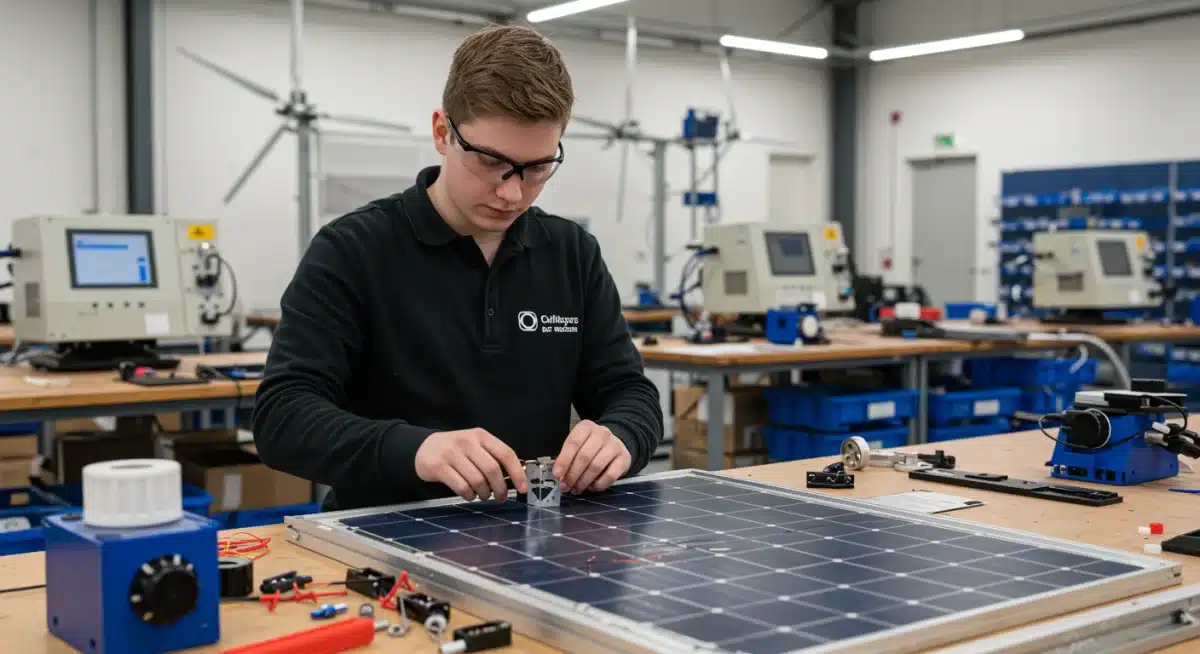
As the world grapples with climate change and the need for sustainable energy sources, the renewable energy sector is experiencing unprecedented growth. This creates a massive demand for skilled technicians who can install, maintain, and repair renewable energy systems. Vocational Training Programs in this area are designed to equip students with expertise in:
- Solar Photovoltaic (PV) Installation and Maintenance: Learning to install, troubleshoot, and maintain residential and commercial solar panel systems.
- Wind Turbine Technology: Training in the mechanics, hydraulics, and electrical systems of wind turbines, often involving work at heights.
- Geothermal System Installation: Understanding the principles and practical application of geothermal heating and cooling systems.
- Energy Efficiency Auditing: Assessing buildings for energy loss and recommending solutions to improve efficiency.
Graduates of these vocational training programs can find roles as solar panel installers, wind turbine technicians, energy auditors, and renewable energy system maintenance specialists. The job outlook for these professions is exceptionally strong, driven by government incentives, decreasing technology costs, and increasing environmental awareness.
2. Cybersecurity: Protecting Our Digital World
In an increasingly interconnected world, cybersecurity is no longer an optional luxury but a critical necessity. Businesses, governments, and individuals are constantly under threat from cyberattacks, leading to an urgent demand for trained cybersecurity professionals. Vocational Training Programs in cybersecurity focus on practical skills such as:
- Network Security: Protecting computer networks from unauthorized access, use, disclosure, disruption, modification, or destruction.
- Ethical Hacking: Learning to identify vulnerabilities in systems and networks from a hacker’s perspective to improve defenses.
- Incident Response: Developing strategies and procedures to handle and recover from security breaches.
- Data Privacy and Compliance: Understanding regulations like GDPR and CCPA and implementing measures to protect sensitive data.
These vocational training programs prepare individuals for roles like cybersecurity analysts, security administrators, incident responders, and penetration testers. With cyber threats becoming more sophisticated, the need for skilled professionals in this field will only intensify, making it one of the most secure career paths for the foreseeable future.
3. Advanced Manufacturing and Robotics: The New Industrial Revolution
Modern manufacturing is a far cry from the assembly lines of the past. Today, it’s a high-tech, precision-driven industry powered by automation, robotics, and artificial intelligence. Vocational Training Programs in advanced manufacturing and robotics are crucial for developing the workforce needed to operate and maintain these complex systems. Key areas of study include:
- Robotics and Automation: Programming, operating, and maintaining industrial robots and automated systems.
- Computer-Aided Design (CAD) and Manufacturing (CAM): Using software to design products and control manufacturing processes.
- Additive Manufacturing (3D Printing): Operating and maintaining 3D printers for prototyping and production.
- Mechatronics: A multidisciplinary field combining mechanical engineering, electronics, computer engineering, and control engineering.
Graduates can pursue careers as robotics technicians, automation specialists, CNC machinists, and manufacturing engineers. These vocational training programs are vital for keeping the U.S. competitive in global manufacturing and ensuring a robust industrial base.
4. Healthcare Support Services: The Backbone of Medical Care
The healthcare sector continues its rapid expansion, driven by an aging population and advancements in medical science. While doctors and nurses are critical, a vast array of healthcare support professionals are essential for the smooth functioning of medical facilities. Vocational Training Programs in this area provide vital skills for roles such as:
- Medical Assisting: Performing administrative and clinical tasks in clinics and hospitals, from taking vital signs to scheduling appointments.
- Phlebotomy: Drawing blood for tests, transfusions, donations, or research.
- Medical Coding and Billing: Translating medical services into codes for insurance claims and managing patient billing.
- Certified Nursing Assistant (CNA): Providing basic care to patients in hospitals, nursing homes, and home health settings.
These vocational training programs offer quick entry into a stable and growing industry, with many opportunities for further specialization and career advancement. The demand for these support roles is consistently high, ensuring excellent job prospects for graduates.
5. Data Science and Analytics: Unlocking Insights
In the age of big data, the ability to collect, analyze, and interpret vast amounts of information is a highly coveted skill. Data science and analytics are no longer exclusive to those with advanced university degrees; specialized Vocational Training Programs are emerging to train individuals in practical data skills. These programs typically cover:
- Data Collection and Cleaning: Acquiring raw data and preparing it for analysis.
- Statistical Analysis: Applying statistical methods to understand data patterns and relationships.
- Data Visualization: Creating charts, graphs, and dashboards to communicate insights effectively.
- Machine Learning Fundamentals: Introduction to algorithms that allow systems to learn from data.
- Database Management: Working with SQL and other database technologies.
Graduates can find roles as data analysts, business intelligence specialists, and junior data scientists across virtually all industries, from finance and marketing to healthcare and technology. As data continues to grow in importance, these vocational training programs offer a pathway to a high-impact career.
6. Electric Vehicle (EV) Technology and Maintenance: Driving Towards an Electric Future
The automotive industry is undergoing a monumental transformation with the rapid adoption of electric vehicles. This shift creates a new demand for technicians skilled in EV mechanics, battery technology, and charging infrastructure. Vocational Training Programs in EV technology are specifically designed to address these evolving needs, focusing on:
- EV Powertrain Systems: Understanding and servicing electric motors, inverters, and transmissions.
- Battery Management Systems: Diagnosing and maintaining high-voltage battery packs.
- EV Charging Infrastructure: Installation, troubleshooting, and maintenance of charging stations.
- Hybrid Vehicle Technology: Knowledge of both internal combustion engines and electric systems.
As more consumers switch to electric vehicles, the need for qualified EV technicians will soar. These vocational training programs provide a direct route into a cutting-edge and environmentally conscious segment of the automotive industry, offering excellent job security and growth potential.
7. Digital Marketing and E-commerce: Mastering the Online Marketplace
In today’s digital economy, almost every business needs a strong online presence. Digital marketing and e-commerce skills are essential for reaching customers, driving sales, and building brands in the digital realm. Vocational Training Programs in this field equip individuals with practical skills for the online business world, including:
- Search Engine Optimization (SEO): Optimizing websites to rank higher in search engine results.
- Social Media Marketing: Developing and executing strategies for various social media platforms.
- Content Creation: Writing engaging copy, creating visuals, and producing multimedia content.
- E-commerce Platform Management: Setting up and managing online stores using platforms like Shopify or WooCommerce.
- Paid Advertising (PPC): Managing campaigns on platforms like Google Ads and Facebook Ads.
Graduates can pursue roles as digital marketing specialists, social media managers, SEO analysts, content creators, and e-commerce managers. With businesses increasingly reliant on digital channels, these vocational training programs offer a versatile skill set applicable across countless industries.

Choosing the Right Vocational Training Program for You
With so many exciting options, selecting the right Vocational Training Program requires careful consideration. Here are some factors to keep in mind:
- Personal Interests and Aptitude: What subjects or activities genuinely interest you? What are you naturally good at? Aligning your program with your passions can lead to greater job satisfaction.
- Job Market Demand: Research the current and projected job outlook for the careers associated with the programs you’re considering. Look for industries with high growth potential, like those highlighted in this article. Resources like the Bureau of Labor Statistics (BLS) are invaluable for this research.
- Program Accreditation and Reputation: Ensure the vocational school and its programs are accredited. Accreditation signifies that the program meets certain quality standards. Look for schools with strong industry connections and positive graduate outcomes.
- Hands-On Training and Internships: A hallmark of effective vocational training is practical, hands-on experience. Programs that include internships, apprenticeships, or extensive lab work provide invaluable real-world exposure.
- Cost and Financial Aid: Compare tuition costs, fees, and available financial aid options. Many vocational training programs are eligible for federal student aid, scholarships, and grants.
- Location and Flexibility: Consider whether you prefer an in-person, online, or hybrid learning environment. Also, think about the program’s location relative to your living situation and potential job opportunities.
- Career Services: A good vocational program will offer robust career services, including resume writing assistance, interview coaching, and job placement support.
Don’t be afraid to visit campuses, speak with current students and instructors, and reach out to professionals in the field to gain insights. Making an informed decision now can set you on a path to a highly successful career.
The Economic Impact of Vocational Training
The growth of vocational training programs has far-reaching positive economic impacts. By equipping individuals with in-demand skills, these programs:
- Reduce Unemployment: They directly address skill shortages, helping to get more people into meaningful employment.
- Boost Local Economies: A skilled workforce attracts businesses and industries, leading to economic growth and increased tax revenue.
- Increase Earning Potential: Graduates often command competitive salaries, contributing to higher household incomes and consumer spending.
- Foster Innovation: A workforce skilled in advanced technologies can drive innovation and productivity across various sectors.
- Strengthen Competitiveness: A strong base of skilled trades and technical professionals makes a nation more competitive on the global stage.
Investing in vocational education is an investment in the future economic health and resilience of the U.S. It creates a virtuous cycle where skilled workers meet industry demands, driving innovation and prosperity.
Looking Ahead: The Future of Vocational Education
The trajectory for Vocational Training Programs is upward and onward. We can expect to see several key developments in the coming years:
- Increased Integration of AI and VR/AR: Artificial intelligence will play a larger role in personalized learning, while virtual and augmented reality will provide immersive, risk-free training environments for complex tasks.
- Stronger Industry Partnerships: Closer collaboration between vocational schools and businesses will ensure curricula remain relevant and directly align with employer needs. This will likely lead to more apprenticeships and direct hiring pipelines.
- Micro-credentials and Stackable Certifications: The trend towards shorter, specialized programs that lead to industry-recognized certifications will continue. These ‘stackable’ credentials allow individuals to build their skill sets incrementally and adapt to changing job requirements.
- Focus on Soft Skills: Beyond technical expertise, programs will increasingly emphasize critical thinking, problem-solving, communication, and teamwork – skills essential for success in any modern workplace.
- Lifelong Learning Models: Vocational education will become a continuous process, with individuals returning to programs throughout their careers to upskill or reskill as industries transform.
These developments underscore the dynamic nature of vocational education and its commitment to preparing individuals for the challenges and opportunities of the future workforce. The flexibility and responsiveness of vocational training programs make them incredibly valuable assets in a rapidly changing world.
Conclusion: Your Pathway to a Thriving Career by 2026 and Beyond
The U.S. job market is undergoing a profound transformation, and with it, the pathways to professional success are diversifying. The 7 innovative Vocational Training Programs discussed in this article – Renewable Energy Technologies, Cybersecurity, Advanced Manufacturing and Robotics, Healthcare Support Services, Data Science and Analytics, Electric Vehicle Technology and Maintenance, and Digital Marketing and E-commerce – represent some of the most promising avenues for career growth by 2026 and beyond.
These programs offer more than just job skills; they provide a direct route to stable employment, competitive salaries, and the satisfaction of contributing to vital industries. They empower individuals to bypass the often-lengthy and costly traditional university route, offering a focused, practical, and efficient way to enter the workforce with highly sought-after expertise.
If you’re contemplating your next educational or career move, consider the immense potential of vocational training. It’s a strategic investment in your future, equipping you with the practical skills and knowledge needed to thrive in the industries that are shaping our world. The journey from classroom to a rewarding career in these fields is shorter and more direct than ever before, promising a future rich with opportunity and professional fulfillment. Embrace the future of work by exploring these cutting-edge vocational training programs today.