High-Yield REITs 2026: Uncovering Top Dividend Opportunities

Anúncios
In the ever-evolving landscape of investment opportunities, Real Estate Investment Trusts (REITs) continue to stand out as a compelling option for income-focused investors. As we look ahead to 2026, the prospect of identifying high-yield REITs 2026 with dividend yields exceeding 6% is particularly enticing. This comprehensive guide will delve into the intricacies of these investment vehicles, offering insights into market trends, strategic considerations, and potential pitfalls to navigate. Our goal is to equip you with the knowledge to make informed decisions and potentially enhance your investment portfolio with robust, income-generating real estate assets.
The allure of high dividend yields in REITs stems from their unique structure. By law, REITs must distribute at least 90% of their taxable income to shareholders annually in the form of dividends. This mandate makes them a cornerstone for investors seeking consistent income streams. However, not all REITs are created equal, and the search for sustainable high-yield REITs 2026 requires diligent research and a keen understanding of the underlying real estate sectors and economic forces at play.
Anúncios
Understanding the REIT Landscape in 2026
As we approach 2026, several macroeconomic factors and technological advancements are shaping the real estate market. Interest rate fluctuations, inflation, demographic shifts, and the continued digital transformation are all critical elements that will influence the performance and dividend sustainability of REITs. Investors seeking high-yield REITs 2026 must consider how these broader trends will impact specific property sectors.
The Impact of Interest Rates and Inflation
Interest rates have a dual impact on REITs. On one hand, higher interest rates can increase borrowing costs for REITs, potentially squeezing their net operating income and, consequently, their dividends. On the other hand, a rising interest rate environment often signals a strong economy, which can lead to increased demand for real estate and higher rental income. Inflation, too, presents a mixed bag. While it can erode the purchasing power of fixed income, well-managed REITs with properties in high-demand areas can often pass on increased costs through higher rents, acting as a natural hedge against inflation. This dynamic interplay is crucial for identifying resilient high-yield REITs 2026.
Anúncios
Demographic Shifts and Urbanization
Global demographic trends, such as population growth, aging populations, and ongoing urbanization, continue to drive demand for specific types of real estate. For instance, the demand for senior housing, healthcare facilities, and logistics centers (driven by e-commerce) is likely to remain robust. These secular trends can provide a stable foundation for certain REIT sectors, making them attractive candidates for investors seeking sustainable high yields. Understanding these long-term shifts is key to pinpointing promising high-yield REITs 2026.
Technological Advancements and Digital Transformation
The digital transformation is profoundly impacting real estate. Data centers, cell towers, and industrial properties facilitating e-commerce logistics are experiencing unprecedented demand. Conversely, traditional retail and office spaces are undergoing significant transformations, with some facing headwinds. REITs that own and manage these digitally-driven assets are often well-positioned for growth and consistent dividend payouts. Analyzing a REIT’s portfolio exposure to these emerging sectors is vital when searching for high-yield REITs 2026.
Identifying Promising High-Yield REIT Sectors for 2026
To find high-yield REITs 2026, it’s essential to look beyond the headline dividend yield and analyze the underlying property sectors. Certain sectors are inherently more stable or offer greater growth potential, contributing to more sustainable dividends.
Industrial REITs: The E-commerce Backbone
Industrial REITs, which own and manage warehouses, distribution centers, and logistics facilities, have been major beneficiaries of the e-commerce boom. The relentless growth of online retail continues to fuel demand for efficient supply chains and storage solutions. These REITs often have long-term leases with creditworthy tenants, providing stable rental income. As global trade and e-commerce expand, industrial REITs are likely to remain a strong contender for investors seeking high-yield REITs 2026 with robust fundamentals.
Data Center REITs: Powering the Digital World
With the explosion of cloud computing, artificial intelligence, and big data, data center REITs are at the forefront of digital infrastructure. These REITs own and operate specialized facilities that house critical IT infrastructure. The demand for data storage and processing is only expected to intensify, ensuring a steady revenue stream for these REITs. While they might not always offer the absolute highest yields, their growth potential and mission-critical nature make them attractive for long-term income, making them a sector to watch for high-yield REITs 2026.
Healthcare REITs: Addressing an Aging Population
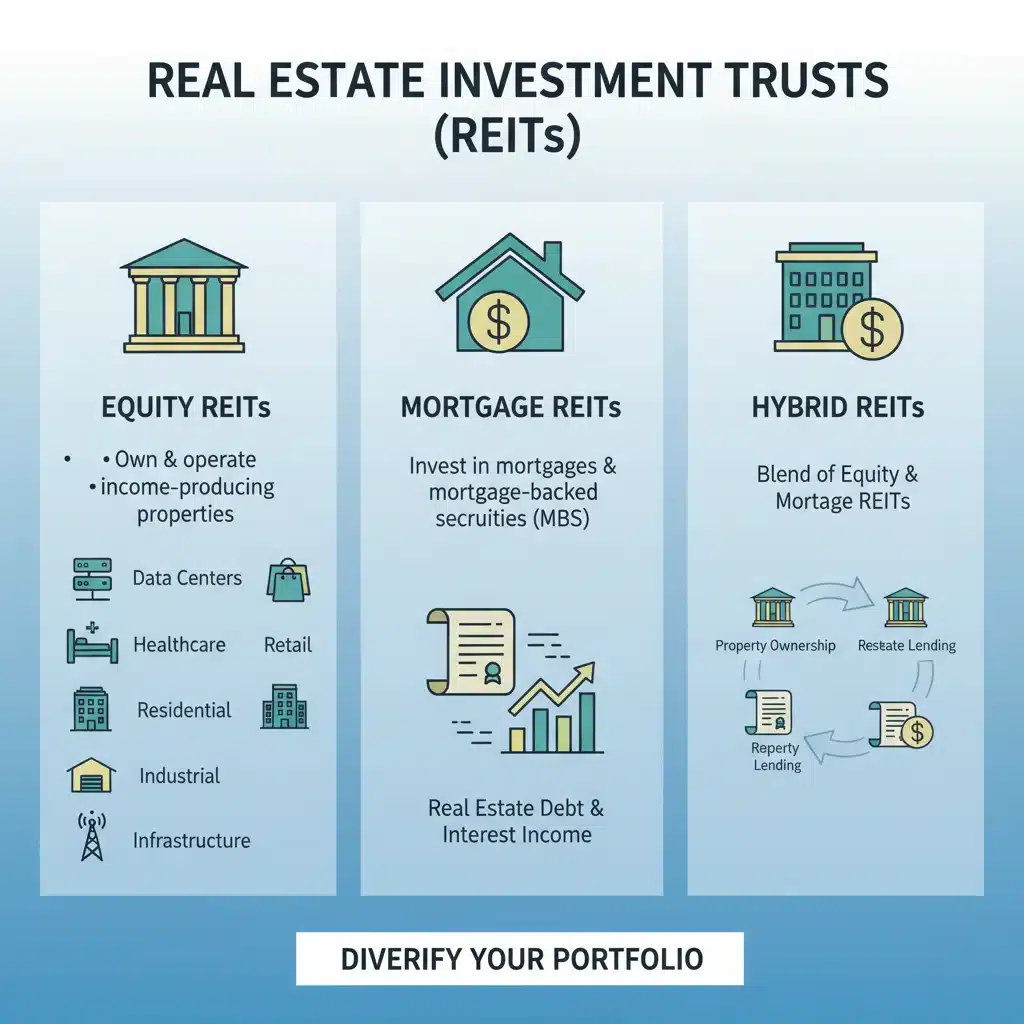
Healthcare REITs invest in properties such as hospitals, medical office buildings, senior living facilities, and skilled nursing facilities. The aging global population and increasing healthcare expenditure provide a strong demographic tailwind for this sector. While regulatory changes and healthcare policy can introduce some volatility, the fundamental demand for healthcare services remains strong, offering a degree of stability for dividend income. This makes healthcare REITs a potentially reliable source of high-yield REITs 2026, particularly those with diversified portfolios and strong tenant relationships.
Specialty REITs: Niche Opportunities
Beyond the major sectors, specialty REITs focus on niche property types like cell towers, timberland, self-storage, and even outdoor advertising. These often have unique demand drivers and can offer attractive yields due to their specialized nature or barriers to entry. For example, cell tower REITs benefit from the insatiable demand for mobile data. Self-storage REITs tend to be resilient during economic downturns. Exploring these niche areas can uncover hidden gems among high-yield REITs 2026.
Analyzing Dividend Sustainability: Beyond the Yield
A high dividend yield alone does not guarantee a good investment. It’s crucial to assess the sustainability of that dividend. A yield that appears too good to be true often is, signaling potential underlying problems with the company’s financial health or prospects. When evaluating high-yield REITs 2026, consider the following metrics and factors:
Funds From Operations (FFO) and Adjusted Funds From Operations (AFFO)
FFO and AFFO are critical metrics for REITs, providing a more accurate picture of a REIT’s operating performance than traditional net income. FFO adds back depreciation and amortization to net income, as these are non-cash expenses that don’t reflect the actual cash generated by the properties. AFFO goes a step further by adjusting for recurring capital expenditures needed to maintain properties. A healthy FFO and AFFO per share that comfortably cover the dividend per share are strong indicators of dividend sustainability. Look for REITs where the dividend payout ratio (dividend per share / AFFO per share) is reasonable, ideally below 80-90% for most sectors, to ensure there’s enough cash flow for reinvestment and unexpected expenses. A low payout ratio is a positive sign for high-yield REITs 2026.
Balance Sheet Strength and Debt Levels
A strong balance sheet is paramount for any income-generating investment. Excessive debt can jeopardize a REIT’s ability to maintain its dividend, especially in a rising interest rate environment. Analyze the REIT’s debt-to-EBITDA ratio, interest coverage ratio, and debt maturity schedule. REITs with manageable debt, staggered maturities, and access to diverse funding sources are better positioned to weather economic downturns and sustain their dividends. This due diligence is essential when selecting high-yield REITs 2026.
Management Quality and Track Record
The quality of a REIT’s management team plays a significant role in its long-term success. Evaluate their experience, strategic vision, and track record of capital allocation. Have they consistently grown their FFO and dividends? Do they have a clear strategy for property acquisition, development, and disposition? Transparent and shareholder-friendly management is a huge plus. A strong management team is often a key differentiator for successful high-yield REITs 2026.
Lease Structures and Tenant Quality
The stability of a REIT’s rental income is directly linked to its lease structures and tenant quality. Long-term leases with built-in rent escalators provide predictable cash flows. Diversification across a large number of tenants and industries reduces reliance on any single entity. Moreover, tenants with strong credit ratings are less likely to default, ensuring consistent rental payments. Understanding these aspects is crucial for assessing the reliability of dividend payouts from high-yield REITs 2026.
Risks and Considerations for High-Yield REITs in 2026
While the prospect of high dividend yields is attractive, it’s important to be aware of the inherent risks associated with REIT investing, particularly with those offering significantly high yields.
Interest Rate Sensitivity
As mentioned, REITs are sensitive to interest rate movements. Rising rates can increase borrowing costs and make fixed-income alternatives (like bonds) more attractive, potentially leading to a decrease in REIT share prices. Investors in high-yield REITs 2026 should monitor interest rate forecasts and consider how these might impact their chosen investments.
Economic Downturns
Real estate is cyclical, and economic downturns can lead to higher vacancy rates, lower rental income, and reduced property values. While some sectors are more resilient than others, a severe recession can impact even the strongest REITs. Diversifying across different REIT sectors and geographies can help mitigate this risk when investing in high-yield REITs 2026.
Sector-Specific Risks
Each real estate sector comes with its unique set of risks. For example, retail REITs face challenges from e-commerce, while office REITs grapple with hybrid work models. Healthcare REITs are exposed to regulatory changes, and residential REITs are sensitive to local housing market dynamics. Thorough research into the specific risks of each sector is paramount.
Dividend Cuts
A high dividend yield can sometimes be a warning sign if the company’s financial health is deteriorating. If a REIT’s FFO or AFFO declines significantly, it may be forced to cut its dividend, leading to a sharp drop in share price and loss of income. This underscores the importance of analyzing dividend sustainability metrics rather than just the raw yield when looking for high-yield REITs 2026.
Strategies for Investing in High-Yield REITs 2026
To successfully navigate the market for high-yield REITs 2026, consider implementing a well-defined investment strategy.
Diversification is Key
Do not put all your eggs in one basket. Diversify your REIT portfolio across different property sectors, geographical regions, and even types of REITs (e.g., equity, mortgage). This approach helps to mitigate sector-specific risks and reduces the impact of underperformance in any single investment.
Long-Term Perspective
REIT investing, especially for income, is typically a long-term strategy. Market fluctuations are inevitable, but a long-term perspective allows you to benefit from compounding dividends and potential capital appreciation over time. Avoid making impulsive decisions based on short-term market noise.
Continuous Monitoring and Rebalancing
The real estate market and economic conditions are constantly changing. Regularly monitor the performance of your REIT holdings, review their financial health, and stay informed about industry trends. Rebalance your portfolio periodically to ensure it remains aligned with your investment goals and risk tolerance. This ongoing vigilance is crucial for maintaining a robust portfolio of high-yield REITs 2026.

Consider REIT ETFs and Mutual Funds
For investors who prefer a more diversified and professionally managed approach, REIT exchange-traded funds (ETFs) and mutual funds can be excellent options. These funds hold a basket of REITs, providing instant diversification and often lower expense ratios compared to actively managed funds. They can be a convenient way to gain exposure to high-yield REITs 2026 without the need for individual stock selection and ongoing management.
Due Diligence and Research
There’s no substitute for thorough research. Before investing in any REIT, carefully examine its financial statements, investor presentations, and analyst reports. Understand its business model, competitive advantages, and growth prospects. Pay close attention to the factors that drive its cash flow and dividend sustainability. This diligent approach is the cornerstone of successful investing in high-yield REITs 2026.
The Future of High-Yield REITs Beyond 2026
While our focus is on high-yield REITs 2026, it’s important to consider the longer-term outlook. The real estate market is dynamic, and what works today might not be the best strategy tomorrow. Emerging trends such as sustainability, smart buildings, and proptech (property technology) are set to reshape the industry further.
Sustainability and ESG Factors
Environmental, Social, and Governance (ESG) factors are becoming increasingly important for investors. REITs that prioritize sustainable practices, energy efficiency, and social responsibility may attract more capital and potentially achieve higher valuations in the long run. This focus on sustainability can also lead to operational cost savings and enhanced tenant appeal, contributing to more stable cash flows and dividends. Considering ESG factors could be a differentiating factor for leading high-yield REITs 2026 and beyond.
Smart Buildings and Proptech
The integration of technology into real estate, often referred to as proptech, is revolutionizing how properties are managed, operated, and valued. Smart buildings equipped with advanced sensors, automation, and data analytics can optimize energy consumption, enhance tenant experiences, and improve operational efficiency. REITs that embrace these technological innovations are likely to gain a competitive edge, potentially leading to stronger financial performance and more attractive dividends in the future. These forward-thinking REITs could emerge as the next generation of high-yield REITs 2026 and beyond.
Adaptability and Innovation
The most successful REITs will be those that demonstrate adaptability and innovation. The ability to pivot to new property types, embrace changing tenant demands, and leverage technology will be crucial for long-term growth and dividend sustainability. Investors should look for REITs with a proven track record of strategic evolution and a forward-looking approach to property management and development.
Conclusion: Navigating the High-Yield REIT Landscape in 2026
Investing in high-yield REITs 2026 offers a compelling opportunity for income-seeking investors to participate in the real estate market. By carefully analyzing market trends, understanding the nuances of different property sectors, and diligently assessing dividend sustainability, investors can build a robust portfolio designed for consistent income and potential capital appreciation. Remember that a high yield is only one piece of the puzzle; thorough due diligence, diversification, and a long-term perspective are essential for success.
As the global economy continues to evolve, the real estate sector will undoubtedly face new challenges and present fresh opportunities. By staying informed and adopting a strategic approach, you can position yourself to capitalize on the potential offered by high-yield REITs 2026 and beyond. Always consult with a financial advisor to ensure your investment decisions align with your personal financial goals and risk tolerance.