The Impact of 2026 Inflation on Retirement Portfolios: Strategies for a 4% Annual Erosion
As we look towards the horizon of 2026, the potential for a 4% annual inflation erosion casts a long shadow over the meticulously built retirement portfolios of millions. For those who have diligently saved and planned for their golden years, the prospect of their hard-earned money losing a significant portion of its purchasing power each year is a daunting one. Understanding the nuances of 2026 inflation retirement challenges is not just an academic exercise; it’s a critical imperative for safeguarding your financial future. This comprehensive guide will delve into the anticipated impact of inflation, explore the mechanisms through which it erodes wealth, and, most importantly, provide actionable strategies to protect and even grow your retirement savings in an inflationary environment.
Anúncios
Inflation, at its core, is the rate at which the general level of prices for goods and services is rising, and subsequently, the purchasing power of currency is falling. While a modest level of inflation is often seen as a sign of a healthy economy, a sustained rate of 4% can be particularly destructive over the long term, especially for those living on fixed incomes or drawing from retirement accounts. This article is designed to equip you with the knowledge and tools necessary to navigate this challenging landscape, ensuring your retirement dreams remain intact.
Understanding the Threat: Why 2026 Inflation Matters for Your Retirement
The year 2026 is often cited in economic forecasts as a period where inflationary pressures could stabilize at a higher-than-desired rate. A 4% annual erosion might not sound catastrophic at first glance, but its compounding effect over years can drastically reduce your real wealth. Imagine a retirement portfolio worth $1,000,000 today. With a consistent 4% inflation rate, its purchasing power would drop to approximately $960,000 after one year, $921,600 after two years, and so on. Over a typical 20-30 year retirement, this erosion can cut the effective value of your savings by half or more. This makes understanding and combating 2026 inflation retirement a top priority for pre-retirees and current retirees alike.
Several factors contribute to inflationary pressures. These can include supply chain disruptions, increased consumer demand fueled by fiscal stimulus, monetary policy decisions, and geopolitical events. While predicting the exact trajectory of inflation is challenging, preparing for a scenario of sustained higher inflation is prudent. For retirees, who often rely on a relatively stable income stream from their investments, this erosion directly impacts their ability to afford daily necessities, healthcare, leisure, and other aspects of their desired lifestyle. The goal isn’t just to maintain the nominal value of your portfolio, but its real value – what it can actually buy.
Anúncios
The Mechanisms of Erosion: How Inflation Impacts Different Asset Classes
Inflation doesn’t affect all asset classes equally. Understanding these differential impacts is crucial for crafting an effective strategy to combat 2026 inflation retirement challenges. Some assets tend to perform better in inflationary environments, while others suffer significantly.
Fixed-Income Investments: The Most Vulnerable
Bonds and other fixed-income investments are particularly vulnerable to inflation. When you invest in a bond, you’re essentially lending money at a fixed interest rate. If inflation rises above that interest rate, the real return on your investment becomes negative. For instance, if you hold a bond yielding 2% and inflation is 4%, your purchasing power is effectively decreasing by 2% annually. This makes long-term bonds especially risky in an inflationary environment, as their fixed payments become less valuable over time. Retirees often hold a significant portion of their portfolio in fixed-income assets for stability, making this a critical area of concern.
Cash and Savings Accounts: A Sure Loss
Holding large amounts of cash or keeping funds in traditional savings accounts with minimal interest rates is almost guaranteed to result in a loss of purchasing power during periods of high inflation. If your savings account yields 0.5% and inflation is 4%, you are losing 3.5% of your money’s value each year. While an emergency fund is essential, excessive cash holdings can be detrimental to your long-term financial health when facing 2026 inflation retirement scenarios.
Equities: A Mixed Bag
The impact of inflation on stocks (equities) is more complex. Companies that can pass on increased costs to consumers through higher prices may fare well. These are often businesses with strong pricing power, established brands, or essential products/services. However, companies with thin margins, high debt, or those heavily reliant on imported goods may struggle as their input costs rise and they cannot easily increase prices. Growth stocks, which derive much of their value from future earnings projections, can also be negatively impacted as higher inflation often leads to higher interest rates, which discount future earnings more heavily. Value stocks, particularly those in sectors like energy, materials, and financials, sometimes perform better.
Real Estate: A Traditional Hedge, But With Caveats
Historically, real estate has been considered a good hedge against inflation. Property values and rental incomes tend to rise with inflation, providing a tangible asset that retains its value. However, rising interest rates, which often accompany inflation, can make mortgages more expensive, potentially cooling the housing market. Location, property type, and debt levels all play a significant role in how well real estate performs in an inflationary environment. Investing in REITs (Real Estate Investment Trusts) can offer a more liquid way to gain exposure to real estate.
Commodities: Direct Inflation Beneficiaries
Raw materials like gold, silver, oil, and agricultural products often perform well during inflationary periods. As the cost of producing goods rises, so too does the price of the underlying commodities. Gold, in particular, is often seen as a traditional inflation hedge and a safe haven asset. However, commodity prices can be highly volatile and are subject to global supply and demand dynamics, making them a more speculative investment.
Strategic Pillars for Protecting Your Retirement from 2026 Inflation
Facing a potential 4% annual erosion requires a multi-faceted approach. Here are key strategies to consider for your 2026 inflation retirement plan:
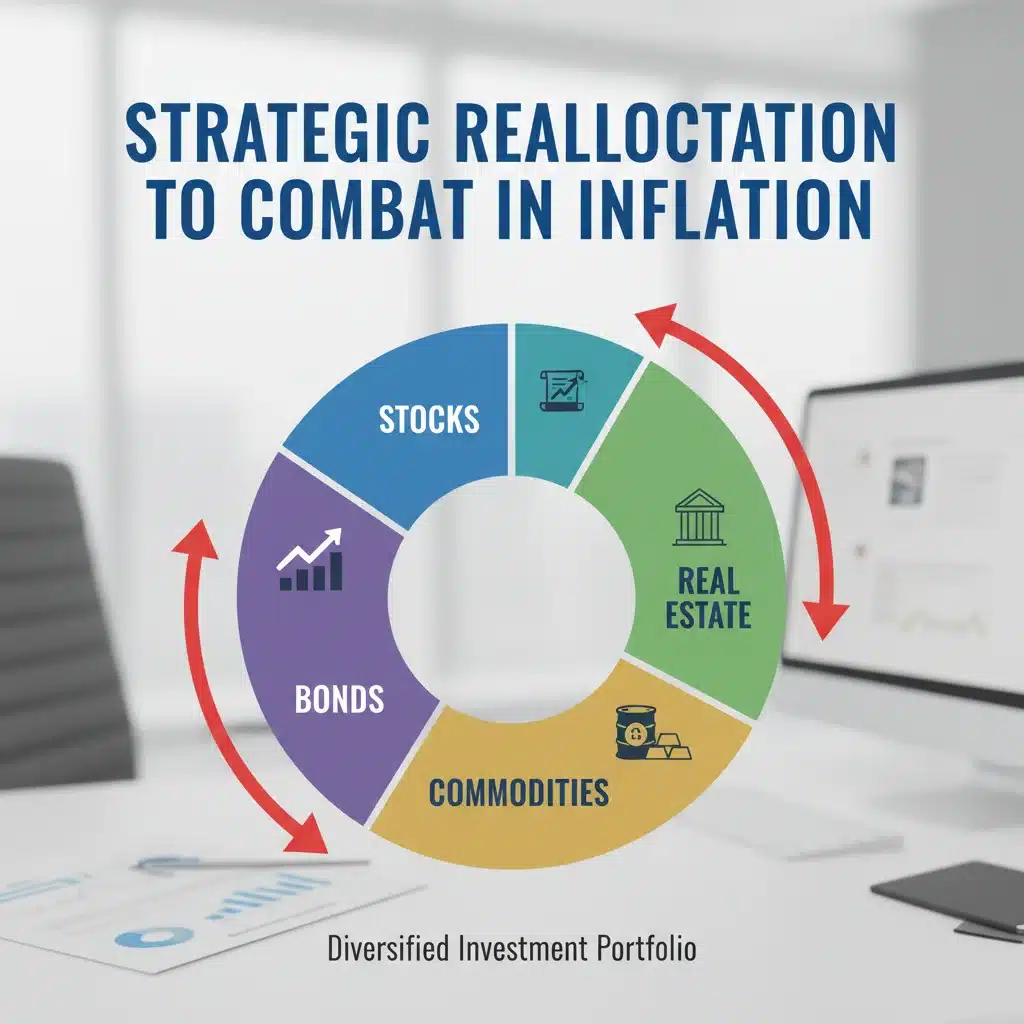
1. Re-evaluate and Diversify Your Portfolio
The cornerstone of any sound investment strategy, diversification becomes even more critical in an inflationary environment. Review your current asset allocation with an eye towards inflation protection. Consider increasing your exposure to assets that historically perform well when prices rise.
- Inflation-Protected Securities (TIPS): Treasury Inflation-Protected Securities (TIPS) are government bonds whose principal value adjusts with inflation, as measured by the Consumer Price Index (CPI). They offer a guaranteed real return, making them an excellent tool for protecting against inflation risk.
- Commodities and Precious Metals: As mentioned, direct investment in commodities or through commodity-focused ETFs can provide a hedge. Gold, silver, and other precious metals have long been considered stores of value during inflationary times.
- Real Estate and REITs: Consider adding real estate to your portfolio, either directly or through publicly traded REITs. These can provide income through rent and capital appreciation as property values rise.
- Value Stocks and Dividend-Paying Companies: Focus on companies with strong balance sheets, pricing power, and consistent dividend growth. These businesses are often better equipped to navigate rising costs and can continue to return value to shareholders.
- Global Diversification: Inflationary pressures can vary significantly across different economies. Diversifying internationally can help mitigate risks associated with domestic inflation.
2. Optimize Your Income Streams for Inflation
Your income in retirement needs to keep pace with rising costs. Relying solely on fixed pensions or annuities without inflation adjustments can be problematic.
- Inflation-Adjusted Annuities: Some annuities offer inflation riders, which increase your payments over time. While these may come with a higher initial cost or lower starting payout, they provide crucial protection against purchasing power erosion.
- Social Security Strategy: Understand how Social Security benefits are adjusted for inflation (Cost-of-Living Adjustments – COLAs). Maximize your benefits by delaying claiming if possible, as this increases your monthly payout, which will then be subject to COLAs.
- Part-Time Work: For some, continuing to work part-time in retirement can provide a flexible income stream that naturally adjusts with market wages, offering an additional buffer against inflation.
- Rental Income: If you own rental properties, ensure your lease agreements allow for periodic rent increases to keep pace with market rates and inflation.
3. Manage Debt Wisely
While inflation can technically erode the real value of fixed-rate debt, rising interest rates (often a consequence of inflation) can make new borrowing more expensive. For retirees, carrying significant debt can be a major drain on resources.
- Pay Down High-Interest Debt: Prioritize paying off credit card debt or other variable-rate loans. These can become significantly more expensive as interest rates rise.
- Fixed-Rate Mortgages: If you have a fixed-rate mortgage, its real burden decreases over time with inflation, which can be beneficial. However, consider if paying it off completely aligns with your overall financial plan and cash flow needs.
4. Review and Adjust Your Budget Regularly
Inflation directly impacts your cost of living. A static budget from years ago will quickly become obsolete. Regularly reviewing and adjusting your retirement budget is paramount to managing 2026 inflation retirement challenges.
- Track Expenses: Understand where your money is going. Categorize expenses and identify areas where you might be able to cut back or find more cost-effective alternatives.
- Anticipate Rising Costs: Factor in expected increases for essentials like groceries, utilities, healthcare, and transportation. Healthcare costs, in particular, tend to outpace general inflation.
- Flexibility is Key: Build flexibility into your budget. Having a buffer for unexpected price hikes can prevent financial stress.

5. Consider Alternative Investments
Beyond traditional stocks and bonds, some alternative investments can offer inflation protection, though they often come with higher risks and liquidity considerations.
- Private Equity/Debt: For accredited investors, private equity or private debt funds can offer exposure to assets that may be less correlated with public markets and potentially offer higher returns, though with less liquidity.
- Infrastructure Investments: Investing in infrastructure projects (e.g., toll roads, utilities) can provide stable, often inflation-linked, cash flows.
- Cryptocurrencies: While highly volatile, some view cryptocurrencies like Bitcoin as a potential hedge against fiat currency inflation due to their decentralized and limited supply nature. However, their risk profile is very high and they are not suitable for all investors, particularly retirees seeking stability.
6. Seek Professional Financial Advice
Navigating the complexities of inflation and its impact on retirement planning can be challenging. A qualified financial advisor can provide personalized guidance tailored to your specific situation, risk tolerance, and retirement goals. They can help you:
- Assess Your Current Portfolio: Evaluate how well your existing investments are positioned to withstand inflation.
- Develop a Customized Strategy: Create an investment and spending plan that accounts for projected inflation rates.
- Stay Informed: Keep you updated on economic trends and make necessary adjustments to your plan.
- Manage Emotions: Help you avoid making rash decisions based on market volatility or fear.
The Long-Term Perspective: Beyond 2026 Inflation
While our focus is on 2026 inflation retirement strategies, it’s crucial to remember that inflation is an ongoing economic force. The principles of sound financial planning, diversification, and regular review remain vital throughout your retirement years. Building a resilient portfolio is not a one-time event but a continuous process.
Healthcare Costs: A Significant Inflationary Factor
One area where inflation often hits retirees particularly hard is healthcare. Medical costs consistently rise faster than general inflation. Factor this into your retirement planning by:
- Maximizing Medicare Benefits: Understand your Medicare options and supplemental plans to minimize out-of-pocket expenses.
- Health Savings Accounts (HSAs): If eligible, HSAs are triple-tax-advantaged accounts that can be invested and used for qualified medical expenses in retirement.
- Long-Term Care Insurance: Consider long-term care insurance to protect against potentially catastrophic costs later in life.
Longevity Risk and Inflation
People are living longer, which means retirement portfolios need to last longer. The longer your retirement, the more pronounced the effect of inflation becomes. A 4% annual erosion over 30 years is far more damaging than over 10 years. This underscores the need for investments that not only keep pace with inflation but also offer growth potential to sustain a longer retirement.
Conclusion: Proactive Planning for a Secure Retirement
The prospect of 2026 inflation retirement challenges, marked by a potential 4% annual erosion of purchasing power, demands a proactive and strategic response. Ignoring this threat is not an option for those committed to a comfortable and secure retirement. By understanding how inflation impacts various asset classes, diversifying your portfolio with inflation-resistant investments, optimizing your income streams, managing debt, and diligently budgeting, you can build a robust financial fortress against rising costs.
Remember, financial planning is a dynamic process. Regularly review your strategy with a qualified financial advisor, stay informed about economic trends, and be prepared to make adjustments as circumstances evolve. Your retirement security is a journey, not a destination, and navigating the currents of inflation is a critical part of that journey. By taking these steps today, you can look forward to your golden years with confidence, knowing that your hard-earned savings are protected and positioned for sustained growth, even in an inflationary environment.