2026 FAFSA Overhaul: Key Changes, Eligibility, and Student Aid Updates

Anúncios
The 2026 FAFSA Overhaul: 5 Key Changes Impacting Student Aid Eligibility and What You Need to Do Now (RECENT UPDATES)
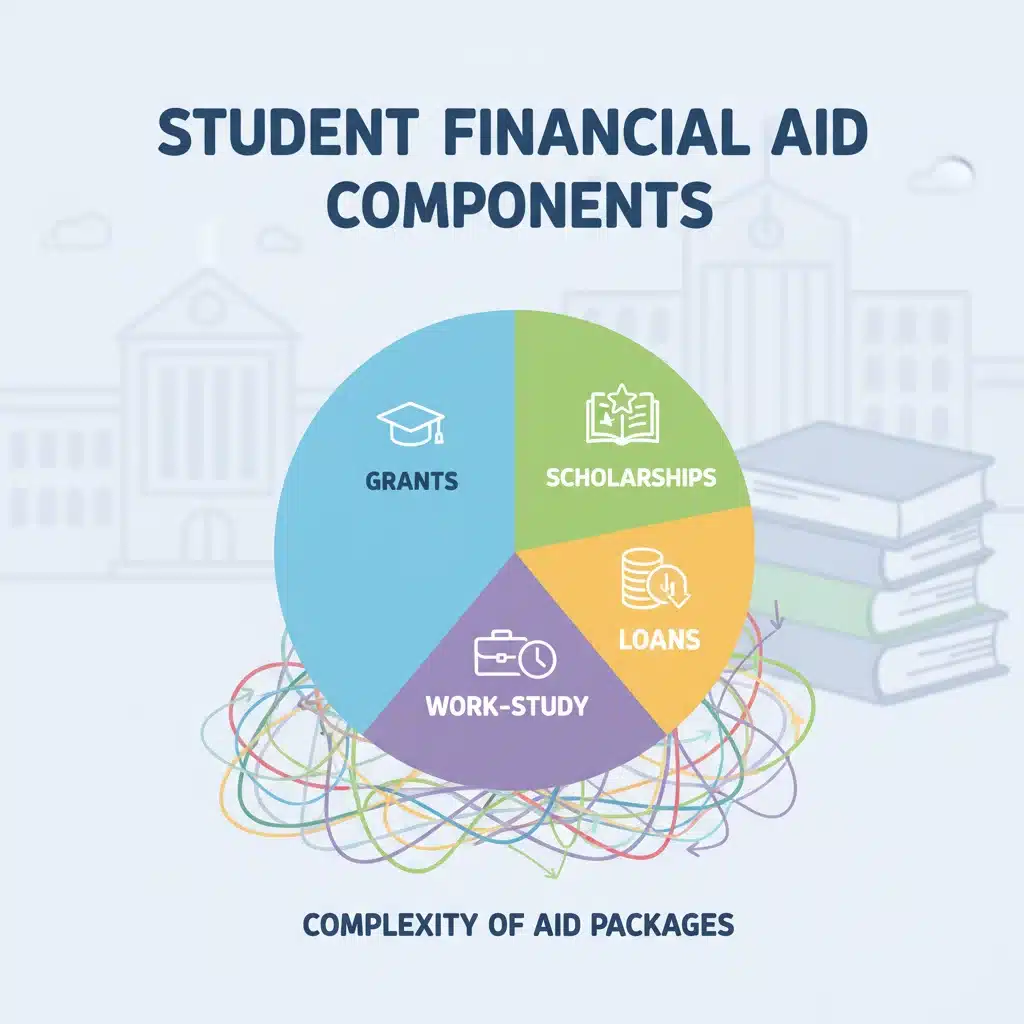
Navigating the world of college financial aid can often feel like deciphering a complex code. For decades, the Free Application for Federal Student Aid (FAFSA) has been the gateway to grants, scholarships, work-study programs, and federal student loans. It’s the cornerstone of how millions of students fund their higher education dreams. However, the landscape is constantly evolving, and the upcoming FAFSA 2026 changes represent one of the most significant overhauls in recent memory. These updates are not merely cosmetic; they will fundamentally alter how student aid eligibility is determined, impacting countless families across the nation.
Understanding these profound shifts is not just beneficial; it’s absolutely critical for anyone planning to attend college in the 2026-2027 academic year and beyond. From new terminology to revised calculation methodologies, the changes promise to streamline some processes while introducing new considerations for others. This comprehensive guide will break down the five most crucial changes, explain their potential impact on your student aid package, and, most importantly, provide actionable steps you can take now to prepare for a successful financial aid journey.
Anúncios
Whether you’re a prospective student, a concerned parent, or a high school counselor, arming yourself with this knowledge is your best defense against surprises and your best strategy for maximizing your financial aid opportunities. Let’s delve into the specifics of the FAFSA 2026 changes and ensure you’re well-equipped for what lies ahead.
Understanding the FAFSA Simplification Act: The Driving Force Behind the FAFSA 2026 Changes
Before we dive into the specific updates, it’s essential to understand the legislative backbone of these modifications: the FAFSA Simplification Act. This act, passed by Congress, aims to make the financial aid application process less daunting and more accessible for students and families. While some changes have already been rolled out in previous cycles, the 2026-2027 academic year will see the full implementation of many core provisions, particularly those related to eligibility calculations and the overall application experience. The goal is to create a more equitable and understandable system, but as with any major reform, there’s a learning curve for everyone involved.
Anúncios
The act seeks to:
- Streamline the application process by reducing the number of questions.
- Expand Pell Grant eligibility to more students.
- Simplify the determination of financial need.
- Improve data sharing between the IRS and the Department of Education.
These overarching objectives set the stage for the specific FAFSA 2026 changes we will explore. It’s a systemic shift designed to improve access to federal student aid, but understanding the nuances is key to navigating it successfully. The transition aims to be smoother, but proactive engagement from applicants remains paramount.
Key Change 1: Introducing the Student Aid Index (SAI) – Replacing the EFC
Perhaps the most significant terminology change in the FAFSA 2026 changes is the replacement of the Expected Family Contribution (EFC) with the Student Aid Index (SAI). While both are indices used to determine a student’s eligibility for federal student aid, the SAI is not just a new name; it represents a fundamental shift in how a student’s financial need is assessed. The EFC was often a source of confusion, as many families mistakenly believed it was the amount they would actually have to pay out of pocket. The SAI aims to be a clearer indicator of a student’s eligibility for aid, rather than a direct payment expectation.
What is the Student Aid Index (SAI)?
The SAI is an eligibility index number that financial aid administrators use to determine how much federal student aid a student is eligible to receive. It can be a negative number, as low as -1500, indicating a higher level of financial need and potentially greater eligibility for need-based aid, such as the Pell Grant. This negative SAI is a crucial new feature, allowing for greater recognition of profound financial hardship.
How is the SAI Calculated Differently?
The calculation methodology for the SAI includes several critical adjustments compared to the old EFC:
- Elimination of Number of Students in College: Under the old EFC formula, having multiple children simultaneously enrolled in college significantly reduced the EFC for each student. The SAI calculation eliminates this benefit. This is a major change that could increase the out-of-pocket costs for families with multiple children pursuing higher education concurrently. Families with two children in college, for example, might see their total aid eligibility reduced compared to previous years.
- Inclusion of Federal Tax Information (FTI): The new FAFSA will rely more heavily on direct data exchange with the IRS, using Federal Tax Information (FTI). This aims to simplify the application process for many, as applicants will often consent to direct data retrieval, reducing the need for manual input and potential errors. However, it also means that the income data used will be more precise and directly from tax records.
- Changes to Income Protection Allowances: Income protection allowances, which shield a portion of income from being counted in the aid calculation, have been adjusted. These allowances are generally increasing, which could lead to a lower SAI for some families, especially those with lower incomes.
- Treatment of Assets: While assets still factor into the SAI calculation, the specific treatment and allowances have been refined. For instance, small business and farm assets that were previously excluded for certain family sizes will now be included in the asset calculation, potentially increasing the SAI for some self-employed families or those with significant farm assets.
The transition to SAI is designed to make the process more transparent and, in some cases, more favorable for low-income students. However, the elimination of the multi-child discount is a point of concern for many middle-income families.
Key Change 2: Expanded Pell Grant Eligibility and Simplified Determination
One of the most celebrated aspects of the FAFSA Simplification Act, and consequently the FAFSA 2026 changes, is the expansion of Pell Grant eligibility. The Pell Grant is a form of federal financial aid that does not need to be repaid, making it a cornerstone for many students’ college funding. The new system aims to provide Pell Grants to more students and ensure that the amount awarded is clearer and more predictable.
New Pell Grant Eligibility Criteria
Under the new system, Pell Grant eligibility will be determined in two primary ways:
- Maximum Pell Grant Eligibility: Some students will automatically qualify for a maximum Pell Grant based on their family income relative to the federal poverty level. The new FAFSA will use specific income thresholds, indexed to inflation, to identify students who qualify for the full amount. This simplifies the process for the lowest-income families, providing a clear pathway to significant aid.
- Minimum Pell Grant Eligibility: Other students, who do not qualify for the maximum award, may still be eligible for a minimum Pell Grant based on their SAI and the cost of attendance at their chosen institution. This ensures that more students, including some from middle-income backgrounds, can receive at least a partial Pell Grant, broadening the reach of this vital program.
This dual approach to Pell Grant eligibility is a significant improvement, designed to increase access to higher education for a broader spectrum of students. It’s a direct response to the rising costs of college and the recognition that many families struggle to afford tuition even with modest incomes.

Key Change 3: Changes to Family Financial Contribution and Reporting
The way families report their financial information and how that information contributes to the student’s aid eligibility is undergoing substantial refinement with the FAFSA 2026 changes. These modifications are intended to create a more accurate and streamlined process, but they also introduce new considerations for families.
Income and Asset Reporting
- Direct Data Exchange with IRS (FTI): As mentioned, the FAFSA will now primarily use direct data exchange with the IRS, referred to as Federal Tax Information (FTI). This means that applicants and contributors (parents or spouses) will provide consent for the Department of Education to directly pull tax data from the IRS. This is a significant simplification, reducing the number of questions and the likelihood of errors from manual data entry. However, it also means that the tax data used will be from two years prior to the academic year for which aid is sought (e.g., 2024 tax data for the 2026-2027 FAFSA).
- Child Support Received is Now an Asset: Previously, child support received was reported as untaxed income. Under the new rules, child support received will be treated as an asset of the recipient parent, rather than income. This change could have varying impacts depending on the family’s overall financial situation and other assets. For some, it might lead to a higher SAI, while for others, the impact might be minimal.
- Exclusion of Cash Support: Cash support, which previously needed to be reported on the FAFSA, will no longer be included in the aid calculation. This simplifies reporting for students who receive financial assistance from relatives or friends that isn’t formal child support.
Contributors on the FAFSA
The term ‘contributor’ is now used to refer to anyone required to provide information on the FAFSA. For dependent students, this typically includes the student and their parent(s). The definition of which parent’s information is required has also been clarified:
- If the student’s parents are divorced or separated, the parent who provided the most financial support to the student will be the required contributor, regardless of which parent the student lives with more. This is a shift from the previous rule that considered the parent with whom the student lived for the majority of the time. This change could significantly impact aid eligibility for students whose parents have disparate incomes.
These changes require careful attention, as they can directly influence the calculated SAI and, consequently, the student aid package. Families should be aware of how their specific financial situations align with these new reporting requirements.
Key Change 4: Simplified Application Process and Reduced Question Count
The FAFSA has long been criticized for its length and complexity, often deterring eligible students from applying for aid. A core objective of the FAFSA Simplification Act, and a key feature of the FAFSA 2026 changes, is to make the application process much simpler and more user-friendly. The aim is to reduce barriers to access and encourage more students to apply for the aid they deserve.
Fewer Questions, Easier Navigation
- Reduced Question Count: The number of questions on the FAFSA has been significantly reduced, from over 100 questions to approximately 36. This drastic reduction aims to make the application less intimidating and quicker to complete.
- User-Friendly Interface: The online FAFSA platform is being redesigned to be more intuitive and mobile-friendly, improving the overall user experience.
- Direct Data Exchange (FTI) Streamlines Input: As discussed, the ability to directly import tax data from the IRS will eliminate the need to manually enter a large portion of financial information, further simplifying the process and reducing errors. This is a major efficiency gain for applicants and financial aid offices alike.
While the goal is simplification, it’s important to remember that ‘simpler’ doesn’t mean ‘less important.’ Every piece of information provided still carries significant weight in determining aid eligibility. Students and families should still approach the application with care and attention to detail.
Key Change 5: Impact on Professional Judgment and Special Circumstances
Despite the move towards a more standardized and streamlined process, the FAFSA 2026 changes also reinforce the importance of professional judgment. Financial aid administrators have the authority to make adjustments to a student’s aid eligibility based on special circumstances not captured by the FAFSA. This is a crucial safety net for families experiencing unforeseen financial hardship.
What Constitutes a Special Circumstance?
Special circumstances are unusual situations that justify an adjustment to a student’s SAI. These can include, but are not limited to:
- Loss of employment or significant reduction in income.
- Unusual medical or dental expenses not covered by insurance.
- Death of a parent or independent student’s spouse.
- Divorce or separation of parents after the FAFSA was filed.
- Unusual dependent care expenses.
- Changes in the number of family members supported.
Under the new system, financial aid administrators are explicitly encouraged to use professional judgment when warranted. While the FAFSA itself will be simpler, the human element of financial aid remains vital. If your family experiences a significant financial change after filing the FAFSA, it is imperative to contact the financial aid office at your chosen institution to discuss your situation and inquire about the professional judgment process.
This flexibility ensures that the system can respond to individual needs, preventing a rigid application of rules from penalizing families facing genuine hardship. Understanding this avenue for appeal is a critical part of navigating the FAFSA 2026 changes.
What You Need to Do Now to Prepare for the FAFSA 2026 Changes
The upcoming FAFSA 2026 changes are substantial, but with proactive planning, you can navigate them successfully. Here are concrete steps you should take now:
-
Understand Your Family’s Financial Profile:
- Review Tax Information: The 2026-2027 FAFSA will primarily use 2024 tax data. Start gathering and understanding your 2024 tax documents as they become available.
- Assess Assets: Understand how your assets (checking, savings, investments, and now potentially small business/farm assets) might impact your SAI. While there are protection allowances, it’s good to have a clear picture.
- Consider Child Support: If you receive child support, remember it will be treated as an asset. Factor this into your financial planning.
-
Families with Multiple Children in College:
- Prepare for Higher SAIs: Be aware that the elimination of the multi-child discount will likely result in a higher SAI for each child. This could mean less need-based aid from federal sources.
- Explore Other Options: Intensify your search for scholarships from private organizations, state programs, and the colleges themselves. Colleges often have institutional aid programs that may or may not mirror federal aid calculations.
- Communicate with Colleges: Engage early with financial aid offices at prospective schools to understand how they will address this change with their institutional aid.
-
Create an FSA ID:
- Both the student and at least one parent (if the student is dependent) will need an FSA ID to access and sign the FAFSA. If you don’t have one, create it now. It can take a few days for the ID to become active. This is a non-negotiable step for all contributors.
-
Stay Informed and Seek Guidance:
- Monitor Official Sources: Regularly check the official Federal Student Aid website (StudentAid.gov) for the latest updates and guidance on the FAFSA 2026 changes.
- Connect with High School Counselors: High school counselors are often well-versed in financial aid changes and can provide personalized advice.
- Contact College Financial Aid Offices: Don’t hesitate to reach out to the financial aid offices of schools you are considering. They are the ultimate resource for specific institutional policies and can help you understand how the new FAFSA will impact aid at their institution.
-
Don’t Delay Applying:
- Even with a simpler application, it’s crucial to apply as soon as the FAFSA opens (typically October 1st, though the exact date for 2026 may be confirmed later). Many state and institutional aid programs have limited funds and operate on a first-come, first-served basis.
Conclusion: Embracing the Future of Student Aid with the FAFSA 2026 Changes
The FAFSA 2026 changes represent a transformative moment for federal student aid. While the transition may bring questions and require adjustments in strategy, the overarching goal is to create a more equitable, accessible, and understandable system for students and families. The introduction of the SAI, expanded Pell Grant eligibility, streamlined application, and refined reporting mechanisms are all geared towards making higher education more attainable.
For students and families, the key to success lies in proactive engagement and informed decision-making. By understanding these pivotal changes, preparing your financial documents, and leveraging available resources, you can confidently navigate the new FAFSA landscape. Remember, financial aid is a critical component of college access, and being well-prepared for the FAFSA 2026 changes will empower you to unlock the educational opportunities you deserve.
Don’t let the complexity deter you. Embrace the simplification, understand the new rules, and take the necessary steps today to secure your financial future in higher education. Your diligence now will pay dividends when it’s time to fund your college dreams.