Unclaimed Benefits US: Recovering Over $50 Billion

Anúncios
Billions of dollars in unclaimed benefits, ranging from forgotten bank accounts to government refunds, remain unrecovered by Americans annually, presenting a significant opportunity for individuals to reclaim their rightful funds through accessible search methods.
Anúncios
Across the United States, a staggering amount of money, estimated to be over $50 billion, lies in various government programs and forgotten accounts, waiting to be claimed. This vast sum represents unclaimed benefits US citizens are rightfully owed, often unbeknownst to them. Understanding how to navigate the complex landscape of these overlooked funds is crucial for anyone looking to recover what is theirs.
Understanding the Scope of Unclaimed Benefits in the US
The sheer volume of unclaimed assets in the US is often surprising. From forgotten utility deposits to uncashed insurance policies, these funds represent a significant financial resource that could impact countless lives. Many individuals are unaware that they might be entitled to such benefits, leading to billions of dollars remaining in state and federal coffers.
Anúncios
These unclaimed benefits stem from a variety of sources, making the search for them seem daunting at first glance. However, by understanding the common categories and the mechanisms through which they become unclaimed, individuals can better target their search efforts and increase their chances of successful recovery.
What Constitutes Unclaimed Benefits?
Unclaimed benefits encompass a broad spectrum of financial assets that have been dormant for a specified period, typically due to a lack of contact between the asset holder and the rightful owner. These can include a wide array of items:
- Forgotten bank accounts and safe deposit box contents.
- Uncashed checks, such as payroll, dividends, or refunds.
- Life insurance proceeds and annuity payments.
- Stock certificates, mutual funds, and other investment holdings.
- Utility deposits, court-ordered refunds, and escrow accounts.
The Role of State and Federal Agencies
Both state and federal governments play a critical role in holding and attempting to return unclaimed property. Each state maintains its own unclaimed property program, often managed by the state treasurer or comptroller’s office. Federally, agencies like the IRS and the Department of the Treasury hold onto various types of unclaimed funds, including tax refunds and savings bonds.
The process by which these funds become ‘unclaimed’ typically involves a period of inactivity, after which the holder of the asset (e.g., a bank, insurance company) is legally required to turn the property over to the state. This process, known as ‘escheatment,’ is designed to protect consumers by ensuring that forgotten assets are not simply absorbed by the holding institution.
In conclusion, the problem of unclaimed benefits is widespread, affecting millions of Americans. Recognizing the diverse nature of these assets and the governmental structures in place to manage them is the first step towards reclaiming what is rightfully yours. The journey to recovery begins with awareness and a systematic approach to searching available databases.
Common Sources of Overlooked Government Programs and Funds
Beyond the typical forgotten bank accounts, a substantial portion of the $50 billion in unclaimed funds originates from various government programs and less obvious sources. Many Americans are eligible for benefits they simply don’t know exist or have forgotten about over time. These programs range from housing assistance to educational grants and even military benefits.
Identifying these specific government programs can be challenging, as they are often decentralized and require targeted searches. However, understanding where to look can significantly streamline the recovery process, connecting individuals with much-needed financial support.
Federal Unclaimed Funds
The federal government holds a significant amount of unclaimed money. This can include funds from various departments and agencies, each with its own specific type of unclaimed asset. Being aware of these can open up new avenues for recovery.
- IRS Tax Refunds: Millions of dollars in tax refunds go unclaimed each year because taxpayers fail to file a return or move without updating their address.
- Social Security Administration: Unclaimed death benefits or underpayments to beneficiaries.
- Department of Veterans Affairs: Unclaimed benefits for veterans and their families, including insurance proceeds or pension overpayments.
- TreasuryDirect: Unclaimed savings bonds that have matured but haven’t been cashed.
State-Specific Programs and Funds
Every state has unique programs and funds that can result in unclaimed benefits. These often relate to state-run initiatives, local government services, or even specific industry regulations. Knowing your state’s particular offerings can be highly advantageous.
For instance, some states might have specific funds for victims of crime, unclaimed lottery winnings, or even rebates from state-mandated programs. The key is to consult your state’s official unclaimed property website, which typically centralizes information about these diverse sources.
The landscape of unclaimed government funds is vast and varied. By systematically exploring both federal and state-specific sources, individuals can uncover a multitude of potential benefits that have been overlooked. This proactive approach is essential for maximizing the chances of recovering significant sums.
The Practical Solution: Navigating Unclaimed Property Databases
With billions of dollars waiting to be claimed, the most practical solution for individuals is to actively search the various unclaimed property databases. These databases serve as central repositories for forgotten assets, making the search process far more manageable than it might initially appear.
While the sheer number of databases can seem overwhelming, a strategic approach, starting with the most comprehensive resources, can yield positive results quickly. Consistency and thoroughness in searching are key to uncovering all potential unclaimed funds.
National Association of Unclaimed Property Administrators (NAUPA)
The NAUPA website, through its official link MissingMoney.com, is often the first and most crucial stop for anyone searching for unclaimed property. This site aggregates data from participating states and provinces, allowing for a multi-state search in one convenient location.
Using MissingMoney.com: Users can simply enter their name and last known address to search across multiple states simultaneously. While not all states participate, it is an excellent starting point for a broad search. The results will often direct users to the specific state’s unclaimed property division for formal claims.
State Unclaimed Property Websites
Even if you start with MissingMoney.com, it is highly recommended to visit the official unclaimed property website for every state you have lived in, worked in, or conducted significant business. Some states do not participate in MissingMoney.com, and others may have more granular search capabilities on their direct sites.
Each state’s website will have a search function, usually requiring a name and sometimes a last known address. The claiming process typically involves:
- Verifying your identity with official documents.
- Providing proof of your connection to the unclaimed property.
- Submitting a claim form, either online or by mail.
Effectively navigating these databases is the cornerstone of recovering unclaimed benefits. By utilizing both national aggregators and individual state resources, individuals can systematically search for and initiate claims for their rightful funds. Patience and attention to detail during the claim submission process are vital for success.
Strategies for Maximizing Your Search for Unclaimed Benefits
Finding unclaimed benefits requires more than just a cursory search; it demands a strategic and comprehensive approach. Many people miss out on substantial funds because they don’t know how to broaden their search or where to look beyond the obvious. Adopting specific strategies can significantly increase the likelihood of a successful recovery.
These strategies involve thinking beyond your current self and considering past affiliations, family members, and even deceased relatives. The more thorough your investigation, the greater your chances of uncovering hidden assets.
Expand Your Search Parameters
Don’t limit your search to just your current name and address. Consider all variations and historical information:
- Maiden Names and Former Names: If you’ve changed your name due to marriage or other reasons, search using all previous names.
- Past Addresses: Include every address you’ve lived at, even for short periods.
- Business Names: If you’ve owned a business, search under its name, especially if it’s now defunct.
- Deceased Relatives: Many unclaimed funds belong to the estates of deceased individuals. Search for parents, grandparents, and other relatives who may have left behind unclaimed assets.
Utilize Federal and Specialized Databases
Beyond state unclaimed property sites, several federal and specialized databases hold significant amounts of money. These often require separate searches but can yield substantial results.
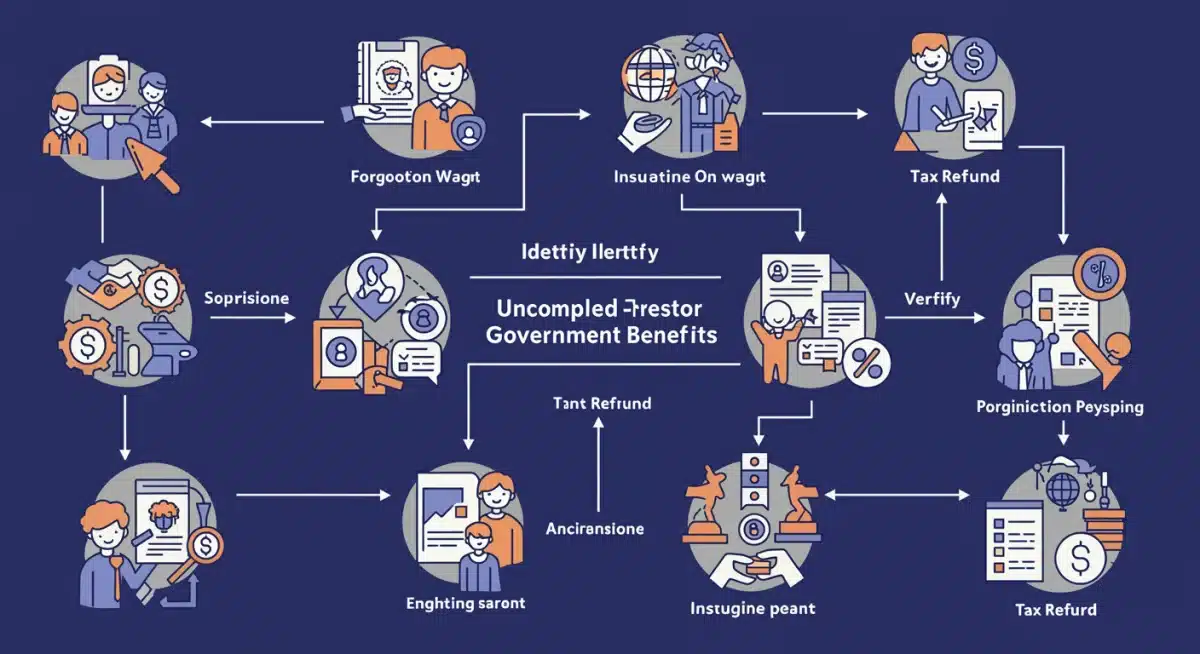
For example, the Pension Benefit Guaranty Corporation (PBGC) maintains a database of unclaimed pensions for individuals whose defined-benefit plans were terminated. The Department of Housing and Urban Development (HUD) sometimes holds mortgage insurance refunds. Even the FDIC has a search tool for unclaimed insured deposits from failed banks.
By employing a multi-faceted search strategy that includes historical data and specialized federal resources, individuals can significantly enhance their ability to locate and claim all the unclaimed benefits they are owed. Diligence in this process is paramount for success.
Overcoming Challenges in the Claiming Process
While the prospect of recovering unclaimed benefits is exciting, the claiming process itself can sometimes present challenges. These obstacles, ranging from proving ownership to dealing with outdated records, can deter individuals from completing their claims. However, with the right approach and persistence, most of these hurdles can be successfully overcome.
Understanding common challenges and preparing for them in advance can make the claiming journey much smoother and increase the likelihood of a positive outcome.
Documentation and Proof of Ownership
The most common challenge in claiming unclaimed property is providing sufficient documentation to prove your identity and your rightful ownership of the assets. State agencies are rigorous in verifying claims to prevent fraud.
You may be asked for:
- Government-issued identification (driver’s license, passport).
- Proof of address (utility bills, bank statements from the relevant period).
- Documents linking you to the property (e.g., old bank account statements, insurance policy numbers, stock certificates).
- For deceased relatives, probate documents, death certificates, and proof of heirship.
Dealing with Outdated Information and Lost Records
Many unclaimed properties have been dormant for years, sometimes decades. This can mean that the records associated with them are outdated or difficult to retrieve. Addresses may have changed multiple times, and original documents might be lost.
In such cases, be prepared to submit alternative forms of proof or provide affidavits. If you are struggling to find old documents, consider contacting financial institutions where you or your relatives once held accounts, or review old tax returns for clues.
Navigating the claiming process requires patience and meticulous attention to detail regarding documentation. While challenges may arise, a proactive approach to gathering necessary proofs and understanding the requirements of the claiming agency will significantly improve your chances of successfully recovering your unclaimed benefits. Don’t be discouraged by initial roadblocks; persistence often pays off.
Preventing Future Unclaimed Benefits: Best Practices
Recovering existing unclaimed benefits is a significant accomplishment, but preventing future funds from becoming lost is equally important. By adopting a few simple financial habits and organizational practices, individuals can ensure their assets remain accessible and their beneficiaries are aware of their entitlements. Proactive measures can save time, effort, and potential financial loss down the line.
These best practices revolve around diligent record-keeping, regular communication, and staying informed about financial holdings.
Maintain Comprehensive Financial Records
One of the primary reasons funds become unclaimed is poor record-keeping. Keeping an organized system for all financial accounts, policies, and investments is crucial. This includes both physical and digital records.
- Centralized List: Create a master list of all bank accounts, investment accounts, insurance policies, and retirement plans, including account numbers and contact information.
- Regular Review: Periodically review this list to ensure all information is current and active.
- Secure Storage: Store important documents in a secure, fireproof location or a password-protected digital vault.
Communicate with Beneficiaries and Loved Ones
Often, unclaimed benefits belong to deceased individuals whose heirs are unaware of the assets. Open communication with family members about your financial affairs can prevent this from happening.
Inform your trusted family members, executors, or beneficiaries about where your financial records are kept and who to contact in case of your incapacitation or death. This ensures a smooth transition of assets and prevents them from becoming lost.
By implementing these preventive measures, individuals can significantly reduce the risk of their assets becoming unclaimed in the future. Proactive management and clear communication are key to ensuring that financial legacies are preserved and accessible to rightful owners and their beneficiaries.
The Economic and Social Impact of Recovering Unclaimed Funds
The recovery of the estimated $50 billion in unclaimed benefits has far-reaching implications, not just for the individuals who receive the funds, but also for the broader economy and society. These recovered assets can provide much-needed financial relief, stimulate local economies, and foster a greater sense of financial security among the populace.
Understanding this broader impact underscores the importance of public awareness campaigns and accessible recovery mechanisms for these overlooked funds. It highlights that unclaimed property isn’t just about individual wealth, but collective well-being.
Individual Financial Empowerment
For many, recovering unclaimed benefits can be a life-changing event. These funds can be used for a variety of purposes, including:
- Paying off debts, alleviating financial stress.
- Funding education or career advancement.
- Making down payments on homes or vehicles.
- Boosting retirement savings or emergency funds.
This individual financial empowerment contributes to greater stability and opportunities for personal growth, directly improving the quality of life for those who recover their rightful assets.
Stimulating Local Economies
When individuals recover unclaimed funds, a significant portion of that money often re-enters the economy through spending and investment. This can provide a noticeable boost to local economies.
Increased consumer spending supports local businesses, creates jobs, and generates tax revenue. Even small claims, when aggregated across millions of people, can have a substantial cumulative effect, acting as an unexpected stimulus without requiring new government spending.
The effort to recover unclaimed benefits is more than just a bureaucratic process; it’s a mechanism for economic revitalization and social upliftment. By facilitating the return of these billions of dollars, we empower individuals and inject valuable capital back into communities, demonstrating the profound positive ripple effect of a practical solution to a widespread financial oversight.
| Key Aspect | Brief Description |
|---|---|
| Total Unclaimed Funds | Over $50 billion in various assets are currently unclaimed across the US. |
| Main Search Tool | MissingMoney.com (NAUPA) is the primary national database for state-held property. |
| Claiming Process | Requires identity verification and proof of ownership, often through state websites. |
| Preventive Measures | Maintain records, inform beneficiaries, and regularly review financial accounts. |
Frequently Asked Questions About Unclaimed Benefits
Unclaimed benefits are financial assets, such as forgotten bank accounts, uncashed checks, insurance proceeds, or utility deposits, that have been dormant or inactive for an extended period. These funds are typically turned over to state governments for safekeeping until the rightful owner or their heirs can claim them.
Estimates suggest that over $50 billion in unclaimed property is held by state and federal governments across the United States. This vast sum includes a wide range of assets, making it a significant financial resource for individuals who may be unaware of their entitlements.
The easiest way to begin your search is by visiting MissingMoney.com, the official website of the National Association of Unclaimed Property Administrators (NAUPA). This platform allows you to search for unclaimed property across multiple participating states simultaneously, providing a convenient starting point.
Typically, you will need government-issued identification, proof of your current and past addresses, and documentation that links you to the unclaimed property, such as old bank statements or policy numbers. For claims belonging to deceased relatives, a death certificate and proof of heirship are usually required.
Yes, you can often claim unclaimed benefits on behalf of a deceased family member. This usually requires providing legal documentation, such as a death certificate, probate documents, and proof of your relationship to the deceased as an heir or executor. Each state’s requirements may vary slightly.
Conclusion
The journey to recovering unclaimed benefits US citizens are owed can seem complex, but it is a highly rewarding endeavor. With over $50 billion awaiting its rightful owners, the practical solutions outlined—from diligent searching of databases to understanding the claiming process—offer a clear path to financial recovery. By taking proactive steps to identify and claim these overlooked funds, individuals not only secure their own financial well-being but also contribute to the broader economic health of their communities. The key lies in awareness, persistence, and a systematic approach to unlocking these hidden assets, ensuring that what’s rightfully yours finds its way home.