Federal Reserve Policy Shift: Mid-2026 Interest Rate Projections & Impact
Anúncios
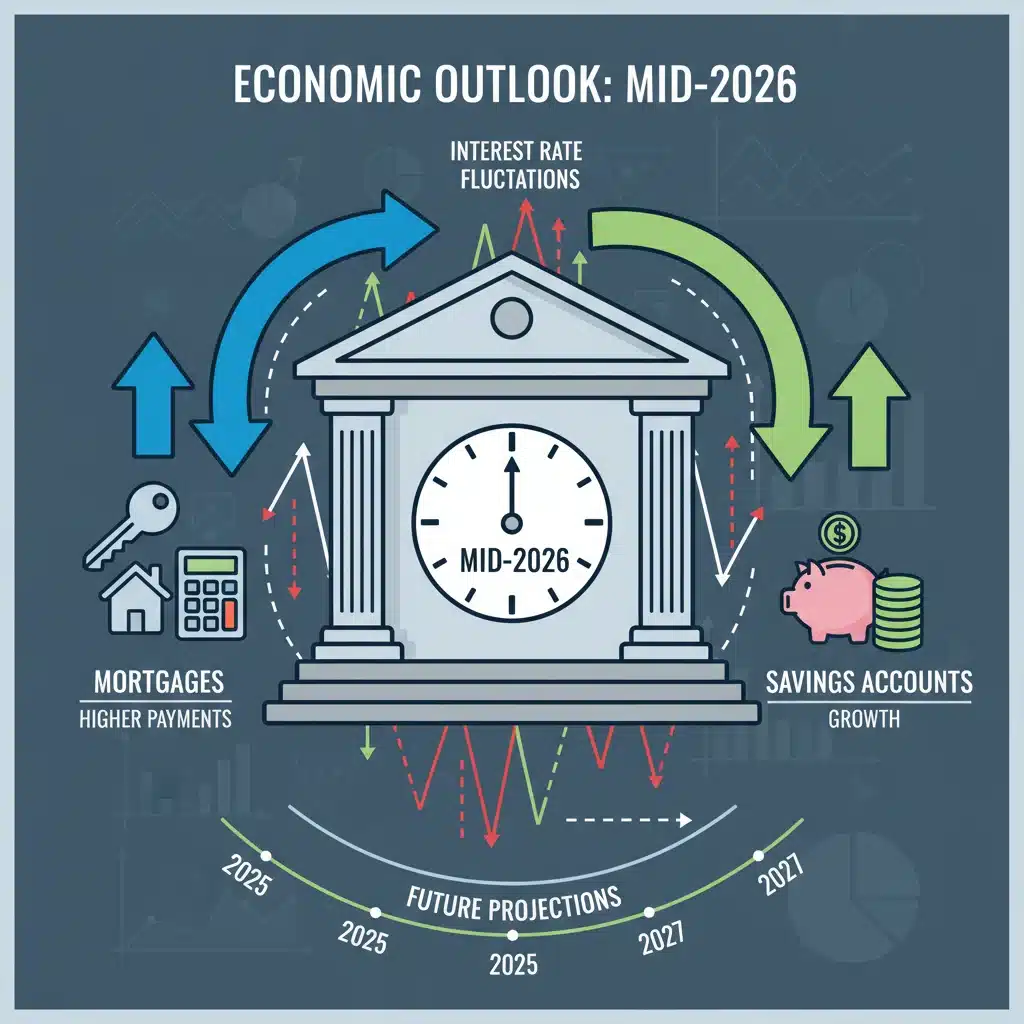
The financial world is abuzz with the latest pronouncements from the Federal Reserve, signaling a pivotal Federal Reserve Policy shift that is set to redefine the economic landscape for years to come. At the heart of this shift are the newly revealed interest rate projections, extending their outlook to mid-2026. This forward-looking guidance provides an unprecedented glimpse into the future of monetary policy, carrying significant implications for every aspect of the economy, from the housing market and consumer spending to corporate investments and personal savings. Understanding this new Federal Reserve Policy is not just for economists; it’s vital for individuals, businesses, and investors alike to navigate the evolving financial environment successfully.
For decades, the Federal Reserve has played a crucial role in steering the U.S. economy, utilizing tools like interest rates to manage inflation, foster employment, and maintain financial stability. Their decisions reverberate globally, influencing currency values, international trade, and capital flows. The current announcement isn’t merely a tweak; it represents a comprehensive re-evaluation of economic conditions and a strategic adjustment to their long-term approach. This article will delve deep into the intricacies of this Federal Reserve Policy shift, dissecting the reasons behind it, analyzing the specific projections, and, most importantly, exploring the tangible impacts on mortgages, savings, and the broader economic framework. Prepare to gain a comprehensive understanding of what this means for your financial future and how to adapt to the upcoming changes.
Anúncios
Decoding the New Federal Reserve Policy: What Changed and Why?
The recent Federal Reserve Policy statement marks a notable departure from previous stances, reflecting a dynamic response to persistent economic challenges and evolving global conditions. For a considerable period, central banks worldwide grappled with the aftermath of the pandemic, employing aggressive stimulus measures to prevent economic collapse. As economies have largely recovered, albeit with new inflationary pressures, the focus has shifted towards normalization and price stability. The Federal Reserve, recognizing the need for a more sustainable economic trajectory, has recalibrated its strategy.
Several key factors underpin this Federal Reserve Policy adjustment. Firstly, inflation, which proved to be more persistent and widespread than initially anticipated, has been a primary concern. Supply chain disruptions, robust consumer demand, and geopolitical events have all contributed to elevated price levels. The Fed’s dual mandate includes achieving maximum employment and stable prices, and the latter has increasingly demanded more assertive action. Secondly, the labor market has shown remarkable resilience, with unemployment rates near historical lows. While this is a positive indicator, it also suggests that the economy can withstand higher interest rates without significantly jeopardizing job growth. Thirdly, global economic uncertainties, from ongoing conflicts to energy market volatility, require a cautious yet proactive approach to monetary policy, ensuring the U.S. economy remains resilient.
Anúncios
The new Federal Reserve Policy framework emphasizes a data-dependent approach, where future decisions will be heavily influenced by incoming economic data, including inflation reports, employment figures, and consumer spending trends. This flexibility allows the Fed to adapt swiftly to changing circumstances, avoiding rigid commitments that could hinder effective policy implementation. Moreover, the decision to extend interest rate projections to mid-2026 provides markets and the public with greater transparency and predictability, enabling better long-term financial planning. This long-term view is crucial for businesses making investment decisions and for individuals planning major purchases like homes or saving for retirement. The Fed’s commitment to transparency through these extended projections aims to anchor expectations and reduce market volatility, fostering a more stable economic environment.
Interest Rate Projections for Mid-2026: The Numbers Game
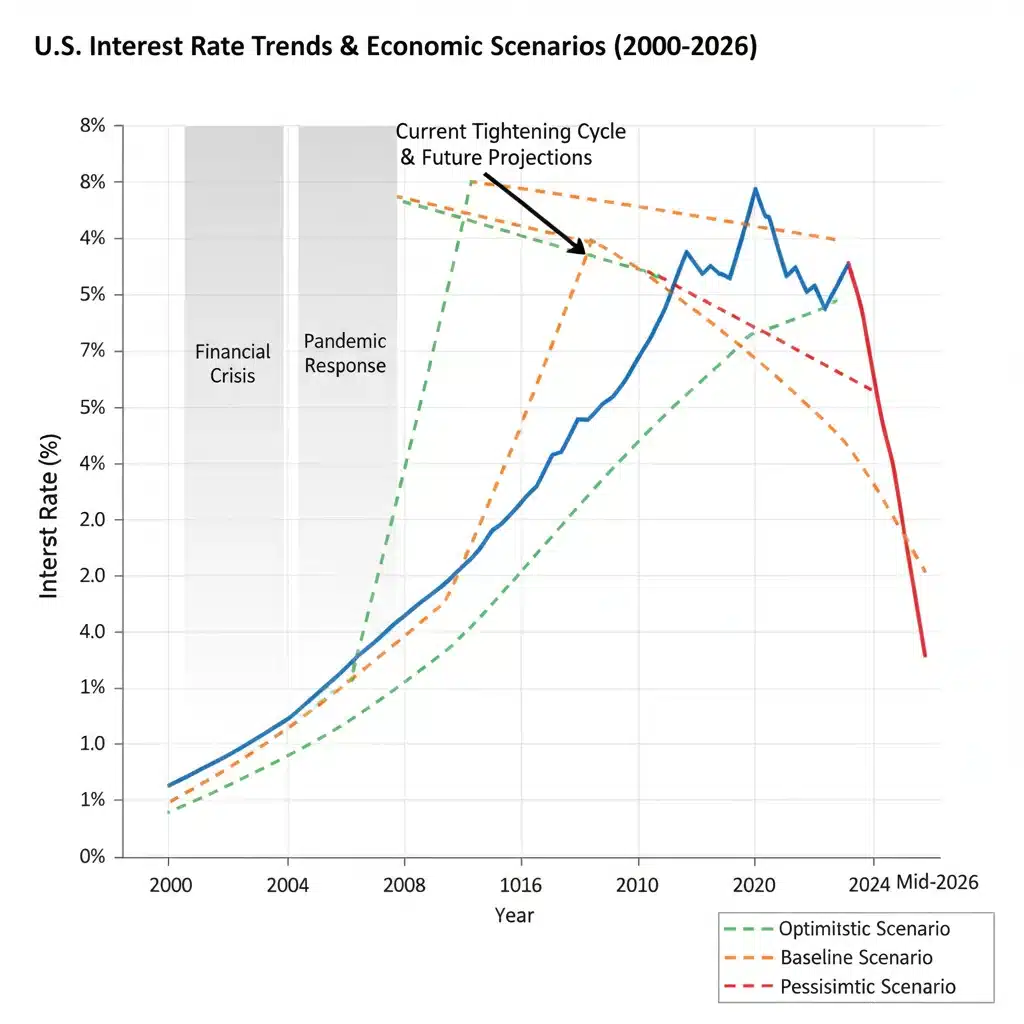
The core of the recent Federal Reserve Policy announcement lies in its detailed interest rate projections. These projections, often presented as a ‘dot plot,’ illustrate the individual forecasts of Federal Open Market Committee (FOMC) members for the federal funds rate at various points in the future. The latest update, extending to mid-2026, offers a clearer path for the trajectory of borrowing costs.
While specific numbers can fluctuate with each FOMC meeting, the general consensus among members points towards a gradual but sustained approach to interest rate adjustments. The projections suggest that the federal funds rate, which influences a wide array of other interest rates, will likely settle at a ‘neutral’ level by mid-2026. A neutral rate is one that neither stimulates nor restricts economic growth, allowing the economy to operate at its full potential without generating excessive inflation. Prior to this, the path indicates a period of potential further rate hikes, followed by a plateau, and then possibly slight adjustments downward as inflation is brought under control and economic growth stabilizes.
It’s important to remember that these are projections, not guarantees. The Fed explicitly states that its policy remains data-dependent. Any significant shifts in inflation, employment, or global economic conditions could lead to revisions in these forecasts. However, the current projections provide a strong signal of the Fed’s intent to bring inflation back to its 2% target while carefully managing employment levels. The market will closely watch upcoming economic indicators to confirm or challenge these projections, as deviations could lead to significant market reactions. This forward guidance helps to manage market expectations, reducing the likelihood of sudden shocks and allowing financial institutions and consumers to plan more effectively. The transparency of these projections is a hallmark of the new Federal Reserve Policy, aiming to build confidence and stability.
Impact on Mortgages: What Homebuyers and Homeowners Need to Know
One of the most immediate and tangible effects of any Federal Reserve Policy change on interest rates is felt in the housing market, particularly concerning mortgages. The federal funds rate directly influences the prime rate, which in turn impacts adjustable-rate mortgages (ARMs) and, less directly, fixed-rate mortgages. The mid-2026 projections suggest a period of potentially higher borrowing costs before stabilization, which has significant implications for both prospective homebuyers and existing homeowners.
For Prospective Homebuyers:
Higher interest rates translate to increased monthly mortgage payments, reducing purchasing power. If rates continue to rise in the short term as projected, homebuyers might find themselves qualifying for smaller loan amounts or facing higher monthly expenses for the same home price. This could cool down an overheated housing market, potentially leading to a moderation in home price appreciation or even slight corrections in some areas. Aspiring homeowners should closely monitor interest rate trends and consider locking in rates when they find a suitable property, especially if they believe rates will continue their upward trajectory in the near future. Understanding the long-term Federal Reserve Policy outlook can help in making informed decisions about timing a home purchase. It might also be a time to consider smaller homes or different locations to fit within a tighter budget.
For Existing Homeowners:
The impact depends heavily on the type of mortgage held. Homeowners with fixed-rate mortgages are largely insulated from these changes, as their interest rates are locked in for the life of the loan. However, those with adjustable-rate mortgages (ARMs) could see their monthly payments increase when their rates reset, especially if the reset date aligns with a period of higher interest rates. It would be prudent for ARM holders to review their loan terms, understand their reset schedule, and explore options like refinancing into a fixed-rate mortgage if current rates are still favorable compared to future projections. Even homeowners with fixed rates might see impacts on their home equity lines of credit (HELOCs) or second mortgages, which are often tied to the prime rate. The overall sentiment in the housing market, influenced by the Federal Reserve Policy, can also affect home values, though this is a more complex interplay of supply, demand, and economic growth.
The mid-2026 projections provide a horizon for planning. While immediate rate hikes might make homeownership more challenging, the eventual stabilization or potential slight decline projected further out could offer a window of opportunity. It underscores the importance of financial planning and seeking advice from mortgage professionals to navigate this dynamic environment effectively. The housing market is a cornerstone of the American economy, and the Fed’s actions are designed to ensure its long-term health, even if it means short-term adjustments. This proactive Federal Reserve Policy aims to prevent bubbles and ensure sustainable growth.
The Effect on Savings and Investments: A Mixed Bag
While higher interest rates are often viewed negatively by borrowers, they typically present a more favorable environment for savers and certain types of investors. The new Federal Reserve Policy, with its projected rate trajectory, creates a mixed bag of opportunities and challenges across different financial vehicles.
For Savers:
This is generally good news. As the federal funds rate rises, banks tend to offer higher interest rates on savings accounts, money market accounts, and certificates of deposit (CDs). This means that individuals holding cash in these accounts can earn more on their deposits, helping their money grow faster. For those who have been frustrated by years of near-zero interest rates, this shift represents a welcome change. It incentivizes saving and provides a safer avenue for wealth accumulation, especially for those with a lower risk tolerance. However, it’s crucial to shop around for the best rates, as not all banks adjust their savings rates uniformly or immediately in response to Federal Reserve Policy changes. Online banks, in particular, often lead the way in offering competitive rates. This period could be an excellent time to re-evaluate where you keep your emergency fund and other short-term savings to maximize returns.
For Investors:
The impact is more nuanced. Higher interest rates can make fixed-income investments, such as bonds, more attractive. Newly issued bonds will offer higher yields, potentially drawing capital away from riskier assets like stocks. For existing bondholders, rising rates can lead to a decrease in the market value of their current holdings, as older, lower-yielding bonds become less desirable. This is a crucial consideration for bond funds and individual bond portfolios. The stock market’s reaction is often complex. While higher borrowing costs can dampen corporate profits and valuations, a stable economic environment with controlled inflation, which is the Fed’s ultimate goal, can be beneficial in the long run. Sectors that are highly sensitive to interest rates, such as technology and real estate, might experience more volatility. Conversely, sectors that benefit from stronger economic growth or have less reliance on debt could perform better. Investors should review their portfolios, considering diversification and asset allocation in light of the new Federal Reserve Policy projections. Consulting with a financial advisor can help tailor investment strategies to this evolving landscape.
The mid-2026 outlook suggests that while there might be some short-term adjustments and volatility, the long-term aim of the Federal Reserve Policy is to foster a more stable and predictable economic environment. This stability, once achieved, should ultimately benefit both savers and investors by reducing uncertainty and promoting sustainable growth. However, vigilance and adaptability remain key to capitalizing on opportunities and mitigating risks.

Broader Economic Implications: Inflation, Employment, and Growth
Beyond individual finances, the Federal Reserve Policy shift and its interest rate projections have profound implications for the broader economy. The Fed’s actions are designed to influence the aggregate demand, supply, and overall health of the nation’s economic output. Understanding these macro-level effects is crucial for grasping the full scope of the policy change.
Inflation Control:
The primary objective of raising interest rates is to combat inflation. By making borrowing more expensive, the Fed aims to slow down economic activity, reduce consumer and business spending, and thereby cool down price pressures. The mid-2026 projections signal the Fed’s commitment to bringing inflation back to its target range, even if it means a period of tighter monetary conditions. Success in this endeavor would restore purchasing power for consumers and provide greater certainty for businesses, fostering a more stable economic environment. The new Federal Reserve Policy emphasizes a proactive stance against persistent inflation, learning from past experiences where inflation was allowed to run too hot.
Employment Outlook:
While the Fed aims for maximum employment, controlling inflation sometimes necessitates a trade-off. Higher interest rates can lead to slower economic growth, which in turn might impact job creation. However, the current labor market remains robust, providing the Fed with some leeway. The challenge for the Federal Reserve Policy is to engineer a ‘soft landing’ – bringing inflation down without triggering a significant recession or a sharp rise in unemployment. The projections to mid-2026 suggest a belief that this balance can be achieved, with employment levels remaining healthy, albeit potentially with a slower pace of job growth than seen in recent years. This careful balancing act is central to the Fed’s strategy.
Economic Growth:
Slower growth is an expected consequence of tighter monetary policy. Businesses might postpone expansion plans, and consumer spending could moderate due to higher borrowing costs and a focus on saving. However, the goal is not to stifle growth entirely but to bring it to a sustainable, non-inflationary pace. The long-term projections indicate the Fed’s vision for an economy that can grow steadily without being plagued by excessive price increases. This stability is ultimately more conducive to long-term prosperity. The Federal Reserve Policy aims to create an environment where businesses can plan with confidence, knowing that the economic fundamentals are sound.
Furthermore, the U.S. economy’s performance under this new Federal Reserve Policy will have global ramifications. As the world’s largest economy, shifts in U.S. interest rates can affect capital flows, exchange rates, and monetary policy decisions in other countries. International investors will closely watch how the U.S. economy adapts to these changes, influencing investment decisions worldwide. The transparent communication of the Fed’s long-term outlook is intended to provide global markets with clarity, helping to prevent international financial instability.
Strategies for Navigating the New Economic Landscape
The Federal Reserve Policy shift and its extended interest rate projections necessitate a proactive approach to personal and business finance. Adapting to this new economic landscape requires careful planning, informed decision-making, and a willingness to adjust strategies as new data emerges.
For Individuals and Families:
- Review Debt: Prioritize paying down high-interest debt, such as credit card balances, as borrowing costs are likely to remain elevated. If you have an adjustable-rate mortgage, assess whether refinancing into a fixed rate is a viable option before potential further rate increases.
- Boost Savings: Take advantage of higher interest rates on savings accounts and CDs. Re-evaluate where your emergency fund is held to ensure it’s earning the best possible return. Consider laddering CDs to lock in rates for different durations.
- Financial Planning: Consult with a financial advisor to review your overall financial plan. This includes retirement savings, investment portfolios, and major purchase plans. An advisor can help you understand how the Federal Reserve Policy impacts your specific situation and recommend adjustments.
- Budgeting: Revisit your household budget to account for potential increases in borrowing costs and the impact of inflation on everyday expenses. Look for areas where you can cut back or optimize spending.
For Businesses:
- Capital Management: Businesses relying on debt for operations or expansion should carefully evaluate their borrowing costs. Locking in favorable rates on loans or lines of credit might be prudent if further rate hikes are anticipated.
- Inventory Management: With potentially slower consumer demand, efficient inventory management becomes even more critical to avoid carrying excess stock and incurring higher holding costs.
- Pricing Strategies: Businesses need to balance passing on increased costs to consumers with maintaining competitiveness. Careful analysis of market demand and competitor pricing is essential.
- Investment Decisions: Long-term investment decisions should consider the cost of capital and the projected economic growth trajectory. Projects with strong, clear returns will be favored in an environment of higher interest rates.
The transparency offered by the mid-2026 projections is a valuable tool. It allows individuals and businesses to anticipate future conditions and make informed decisions rather than reacting to sudden changes. Staying informed about economic indicators and the Fed’s communications will be paramount. The new Federal Reserve Policy is designed to bring about long-term economic stability, and those who adapt strategically will be best positioned to thrive in this evolving environment.
Conclusion: A New Era for Monetary Policy
The recent Federal Reserve Policy shift, with its explicit interest rate projections extending to mid-2026, marks the beginning of a new era in monetary policy. This comprehensive approach reflects a determined effort to navigate persistent inflation while safeguarding employment and fostering sustainable economic growth. The Fed’s commitment to data-dependency and enhanced transparency provides a clearer roadmap for the economy, allowing for more informed decision-making across all sectors.
The implications of this Federal Reserve Policy are far-reaching. For homeowners and prospective buyers, it signifies a period of potentially higher mortgage costs, demanding careful consideration of financing options. For savers, it offers a welcome opportunity to earn better returns on deposits, incentivizing financial prudence. Investors, meanwhile, must adapt their portfolios to an environment where fixed-income assets become more attractive and equity markets may experience increased volatility as they adjust to higher borrowing costs and a re-evaluation of corporate earnings.
At the macro level, the Fed’s strategy aims to restore price stability, ensuring that inflation returns to its target without severely impacting the robust labor market or triggering a deep recession. This delicate balancing act will be closely watched, both domestically and internationally. The success of this Federal Reserve Policy hinges on its flexibility and the economy’s ability to absorb the adjustments. As we move towards mid-2026, the economic landscape will undoubtedly continue to evolve. Vigilance, adaptability, and a commitment to sound financial planning will be essential for individuals and businesses to navigate these changes successfully and capitalize on the opportunities that emerge from this new phase of monetary policy.
Ultimately, the long-term goal of the Federal Reserve Policy is to create a more stable and predictable economic environment. While the path to get there may involve some adjustments and challenges, the clarity provided by these extended projections offers a valuable guide. Staying informed, making strategic financial decisions, and seeking expert advice will empower everyone to thrive in this evolving economic climate.