
Maximizing Your 2026 Capital Gains Tax Efficiency: A Guide to Qualified Dividends and Long-Term Holdings
As we approach 2026, savvy investors are already looking ahead to optimize their tax strategies. Understanding and effectively managing capital gains tax is paramount to maximizing your investment returns. This comprehensive guide will delve into the intricacies of capital gains 2026, focusing specifically on how qualified dividends and long-term holdings can be leveraged to enhance your tax efficiency.
The landscape of taxation is ever-evolving, and staying informed is your best defense against unexpected liabilities. By proactively planning, you can significantly reduce your tax burden and retain more of your hard-earned profits. We’ll explore the definitions, implications, and strategic advantages of these key concepts, providing actionable insights for both seasoned investors and those new to the world of tax-efficient investing.
Anúncios
Understanding Capital Gains Tax in 2026
Before we dive into optimization strategies, it’s crucial to have a firm grasp of what capital gains tax entails. A capital gain is the profit you make from selling an asset, such as stocks, bonds, real estate, or other investments, for more than you paid for it. Conversely, a capital loss occurs when you sell an asset for less than its original purchase price. The IRS categorizes capital gains into two main types: short-term and long-term, each with distinct tax implications.
Short-Term vs. Long-Term Capital Gains
Anúncios
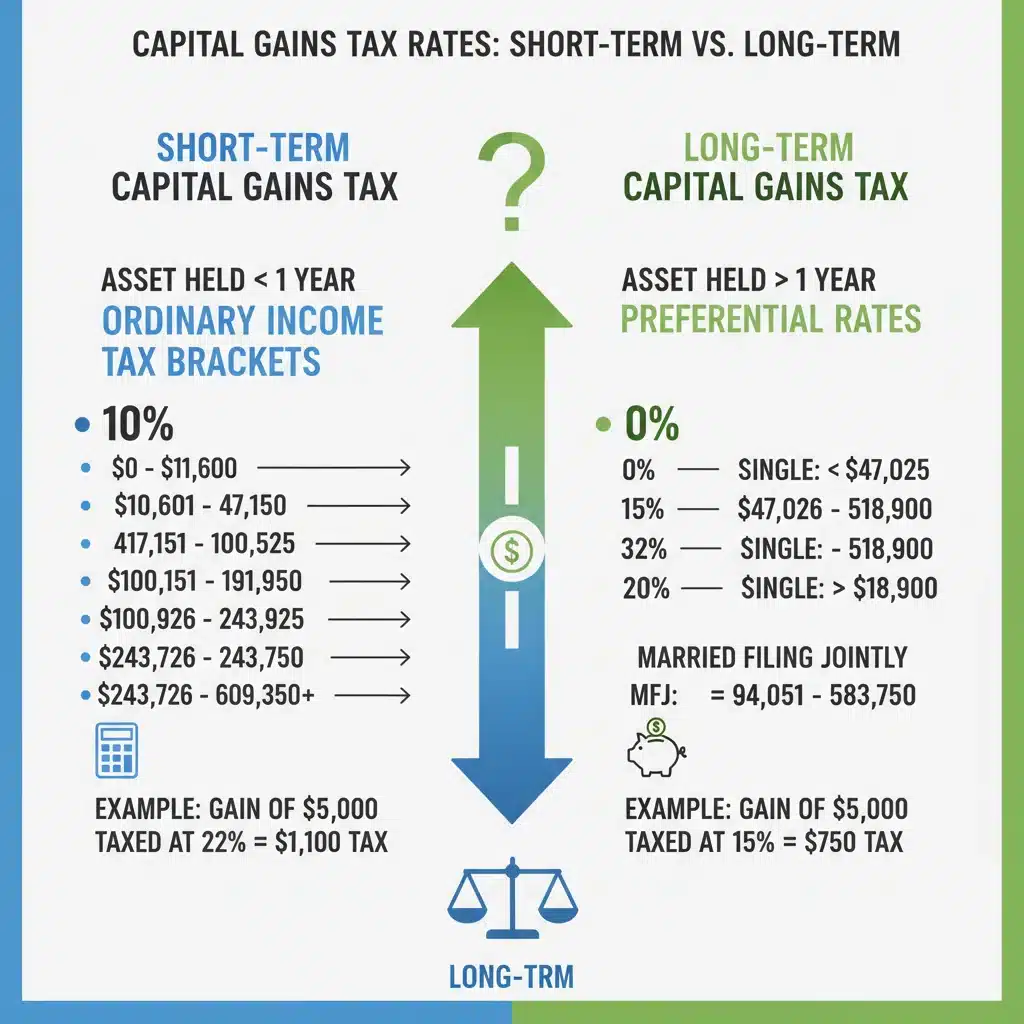
- Short-Term Capital Gains: These are profits from assets held for one year or less. They are taxed at your ordinary income tax rates, which can be significantly higher than long-term rates, depending on your income bracket. For 2026, while specific rates are subject to change, the general principle of taxing short-term gains as ordinary income is expected to remain consistent.
- Long-Term Capital Gains: These are profits from assets held for more than one year. These gains are typically taxed at preferential rates, which are often lower than ordinary income tax rates. This distinction is a cornerstone of tax-efficient investment planning, as holding assets for longer periods can lead to substantial tax savings.
The exact tax rates for capital gains 2026 will depend on your taxable income and filing status. However, the tiered structure (0%, 15%, and 20% for most taxpayers) for long-term capital gains and qualified dividends is a consistent feature of the U.S. tax code. High-income earners may also be subject to the Net Investment Income Tax (NIIT) of 3.8% on certain investment income, including capital gains and dividends, which should also be factored into your planning.
The Power of Long-Term Holdings for Capital Gains 2026
One of the most straightforward and effective strategies for reducing your capital gains 2026 tax liability is to embrace a long-term investment horizon. As discussed, assets held for more than a year qualify for the more favorable long-term capital gains tax rates. This isn’t just about reducing your tax percentage; it’s about fundamentally changing the tax treatment of your investment profits.
Consider the difference: if you sell an asset after 11 months for a $10,000 profit and your ordinary income tax rate is 24%, you’d owe $2,400 in tax. If you hold that same asset for 13 months and realize the same $10,000 profit, and your long-term capital gains rate is 15%, your tax liability drops to $1,500. This $900 difference is a direct result of simply waiting a couple of extra months.
Strategic Implications of Long-Term Investing
- Reduced Tax Burden: The primary benefit is the lower tax rate, allowing you to keep a larger portion of your investment returns.
- Compounding Growth: Holding investments for longer periods also allows for the power of compounding to work its magic. Reinvesting earnings and avoiding frequent trading can lead to significant wealth accumulation over time.
- Reduced Trading Costs: Fewer transactions mean lower brokerage fees and commissions, further enhancing your net returns.
- Emotional Discipline: A long-term approach often encourages a more disciplined investment strategy, reducing the likelihood of impulsive decisions driven by short-term market fluctuations.
For capital gains 2026 planning, review your portfolio regularly to identify any assets nearing the one-year mark. If you’re considering selling, weigh the tax implications of waiting just a bit longer. This simple act of patience can yield substantial tax savings.
Qualified Dividends: A Tax-Advantaged Income Stream
Beyond capital gains from selling assets, many investors receive income in the form of dividends. Not all dividends are created equal for tax purposes. Understanding the distinction between ordinary and qualified dividends is crucial for optimizing your capital gains 2026 tax strategy.
What are Qualified Dividends?
Qualified dividends are a special category of dividends that are taxed at the same preferential rates as long-term capital gains (0%, 15%, or 20% for most taxpayers). This is a significant advantage compared to ordinary dividends, which are taxed at your regular income tax rates.
To be considered a qualified dividend, several criteria must be met:
- Paid by a U.S. Corporation or a Qualified Foreign Corporation: Most dividends from U.S. companies qualify. Dividends from certain foreign corporations also qualify if the corporation is eligible for benefits under a U.S. tax treaty or if its stock is readily tradable on an established U.S. securities market.
- Holding Period Requirement: You must have held the stock for more than 60 days during the 121-day period that begins 60 days before the ex-dividend date. For preferred stock, the holding period is more than 90 days during the 181-day period that begins 90 days before the ex-dividend date. This holding period prevents investors from buying stock just before a dividend payment and selling it immediately after to capture the tax-advantaged dividend.
- Not from Certain Sources: Dividends from certain types of organizations, such as real estate investment trusts (REITs), master limited partnerships (MLPs), and employee stock ownership plans (ESOPs), generally do not qualify for the preferential rates.
Your brokerage statements will typically indicate whether the dividends you received are qualified or ordinary, simplifying the reporting process for your capital gains 2026 tax return.
Integrating Qualified Dividends into Your Strategy
For investors focused on income, prioritizing investments that generate qualified dividends can significantly boost your after-tax returns. Instead of solely chasing high-yield ordinary dividends, consider dividend-paying stocks that meet the qualified criteria. This strategy can be particularly effective in taxable brokerage accounts where dividend income is directly subject to taxation.
When constructing your portfolio for capital gains 2026, evaluate the tax efficiency of your income streams. A mix of growth stocks that can generate long-term capital gains and dividend-paying stocks that produce qualified dividends can be a powerful combination for overall tax optimization.
Advanced Strategies for Capital Gains 2026 Tax Efficiency
Beyond simply holding assets long-term and seeking qualified dividends, several other advanced strategies can further enhance your capital gains 2026 tax efficiency.
Tax-Loss Harvesting
Tax-loss harvesting involves selling investments at a loss to offset capital gains and, potentially, a limited amount of ordinary income. If you have realized capital gains from profitable sales, you can strategically sell losing investments to reduce your overall taxable gains. If your capital losses exceed your capital gains, you can deduct up to $3,000 of the net loss against your ordinary income each year. Any remaining loss can be carried forward indefinitely to offset future capital gains.
This strategy is particularly effective at the end of the year, but it can be implemented anytime market conditions present opportunities. Just be mindful of the “wash sale” rule, which disallows a loss if you buy a substantially identical security within 30 days before or after the sale.
Asset Location Strategy
Asset location refers to strategically placing different types of investments in different account types (taxable vs. tax-advantaged) to minimize taxes. For capital gains 2026, consider the following:
- Taxable Accounts: Ideal for investments that generate qualified dividends and long-term capital gains, as these are taxed at preferential rates. Growth stocks with low dividend yields also fit well here, as their gains are only taxed upon sale.
- Tax-Advantaged Accounts (e.g., 401(k)s, IRAs): Best suited for investments that generate ordinary income, such as bonds, REITs, or actively traded funds that produce short-term capital gains. Income and gains within these accounts grow tax-deferred or tax-free, shielding them from annual taxation.
By carefully allocating your assets, you can prevent highly taxed income from being generated in your taxable accounts, thereby improving your overall tax efficiency.
Gifting Appreciated Assets
If you’re charitably inclined or wish to help family members, gifting appreciated assets can be a powerful tax strategy. When you donate appreciated stock held for more than a year to a qualified charity, you generally don’t have to pay capital gains tax on the appreciation, and you can typically deduct the fair market value of the stock. This double benefit makes it a highly tax-efficient way to give.
Similarly, gifting appreciated assets to individuals (e.g., children or grandchildren) who are in a lower tax bracket can allow them to sell the assets and pay less in capital gains 2026 tax. However, be aware of gift tax rules and annual exclusion limits.
Harvesting Gains in Low-Income Years
For individuals with fluctuating income, there might be years where your taxable income is low enough to fall into the 0% long-term capital gains tax bracket. This presents a unique opportunity to realize capital gains tax-free. If you anticipate a year with significantly lower income (e.g., during retirement, a sabbatical, or a career transition), you could strategically sell appreciated assets to lock in gains without incurring federal capital gains tax. This is an advanced strategy that requires careful planning and forecasting of your income for capital gains 2026 and beyond.
Navigating the Net Investment Income Tax (NIIT) for Capital Gains 2026
For high-income earners, the Net Investment Income Tax (NIIT) is an additional consideration when planning for capital gains 2026. This 3.8% tax applies to the lesser of your net investment income or the amount by which your modified adjusted gross income (MAGI) exceeds certain thresholds ($200,000 for single filers, $250,000 for married filing jointly, and $125,000 for married filing separately).
Net investment income includes interest, dividends (both ordinary and qualified), capital gains, rental and royalty income, and income from businesses that are passive activities. While qualified dividends and long-term capital gains enjoy preferential rates, they are still subject to the NIIT if your income exceeds the thresholds.
Strategies to Mitigate NIIT
- Manage MAGI: Strategies to reduce your MAGI, such as maximizing pre-tax contributions to retirement accounts, can help keep you below the NIIT thresholds.
- Tax-Exempt Investments: Investing in tax-exempt municipal bonds can provide income that is not subject to federal income tax or the NIIT.
- Tax-Advantaged Accounts: Income and gains within 401(k)s, IRAs, and other retirement accounts are generally not included in net investment income until withdrawn, providing a shield from NIIT during the accumulation phase.
Proactive planning is essential to account for the NIIT, especially for investors with substantial investment portfolios and higher incomes. Consulting with a tax professional can help you develop a tailored strategy.
The Importance of Record-Keeping and Professional Advice
Effective tax planning for capital gains 2026, qualified dividends, and long-term holdings hinges on meticulous record-keeping. You need to accurately track the purchase date, cost basis, and sale date of all your investments. This information is critical for correctly calculating your capital gains and losses and ensuring you meet the holding period requirements for long-term treatment and qualified dividends.
Most brokerage firms provide consolidated tax statements (e.g., Form 1099-B for capital gains and Form 1099-DIV for dividends) that summarize this information. However, it’s always wise to maintain your own records as a backup and to cross-reference with provided statements.

When to Seek Professional Guidance
While this guide provides a comprehensive overview, tax laws are complex and can change. Your personal financial situation is unique, and what works for one investor may not be ideal for another. Therefore, seeking advice from a qualified financial advisor or tax professional is highly recommended. They can:
- Provide Personalized Strategies: Tailor tax-efficient investment strategies to your specific income, goals, and risk tolerance for capital gains 2026.
- Stay Updated on Tax Law Changes: Keep you informed about any new legislation or changes in tax rates that could impact your investments.
- Optimize Your Portfolio: Help you structure your portfolio for maximum tax efficiency, considering asset location, tax-loss harvesting opportunities, and dividend strategies.
- Ensure Compliance: Assist with accurate tax reporting and ensure you are compliant with all IRS regulations.
The cost of professional advice is often outweighed by the tax savings and peace of mind it provides, especially when dealing with significant capital gains and complex investment portfolios.
Looking Ahead: Potential Changes to Capital Gains Tax in 2026
While we’ve discussed the current framework for capital gains 2026, it’s important to acknowledge that tax laws are not static. The political and economic landscape can influence tax policy. For instance, discussions around potential changes to capital gains tax rates, particularly for high-income earners, or adjustments to the definition of long-term holdings periodically emerge.
Investors should remain vigilant and informed about any proposed tax reforms. Subscribing to financial news, consulting reputable tax resources, and maintaining an open dialogue with your financial advisor are excellent ways to stay ahead of potential changes. Flexibility in your financial planning is key; what is optimal today might require adjustment tomorrow.
Conclusion: Strategic Planning for Enhanced Capital Gains 2026 Efficiency
Maximizing your capital gains 2026 tax efficiency is not a one-time event but an ongoing process of strategic planning and informed decision-making. By understanding the distinction between short-term and long-term capital gains, leveraging the power of qualified dividends, and implementing advanced strategies like tax-loss harvesting and asset location, you can significantly reduce your tax liabilities and boost your after-tax investment returns.
Embrace a long-term investment mindset, carefully consider the tax implications of your dividend-paying stocks, and don’t shy away from professional guidance. With proactive planning and a clear understanding of the tax code, you can navigate the complexities of investment taxation with confidence, ensuring more of your wealth remains in your pocket rather than going to the taxman. Start reviewing your portfolio and planning your capital gains 2026 strategy today to set yourself up for financial success.