Boost Your Career: Micro-Credentials for Rapid Skill Advancement in 2026

Anúncios
Unlocking Micro-Credential Opportunities: How to Boost Your Skills in 3-6 Months for Career Advancement in 2026
In today’s rapidly evolving job market, the traditional four-year degree, while valuable, is no longer the sole pathway to career success. The landscape of professional development is being reshaped by agile, focused learning experiences, and at the forefront of this transformation are micro-credential opportunities. These bite-sized qualifications are designed to equip individuals with specific, in-demand skills in a fraction of the time it takes to earn a traditional degree, often within 3 to 6 months. For anyone looking to stay competitive, pivot careers, or simply enhance their existing skill set, understanding and leveraging micro-credentials is not just an advantage—it’s a necessity for career advancement in 2026 and beyond.
The pace of technological change and industry innovation means that skills can become obsolete faster than ever before. This creates a continuous learning imperative for professionals across all sectors. Micro-credentials offer a pragmatic and efficient solution to this challenge, providing targeted training that directly addresses current and future market needs. They represent a paradigm shift in education, moving towards a modular, stackable approach that empowers individuals to take control of their learning journey and tailor it to their specific career aspirations.
Anúncios
This comprehensive guide will delve deep into the world of micro-credential opportunities. We’ll explore what they are, why they’ve become so crucial, the myriad benefits they offer, and how you can strategically integrate them into your professional development plan. From identifying the right programs to understanding their impact on your career trajectory, we’ll provide you with the insights needed to navigate this exciting educational frontier and position yourself for significant career advancement.
Anúncios
What Exactly Are Micro-Credentials?
At their core, micro-credentials are verified certifications of specific skills or competencies, typically acquired through short, focused learning experiences. Unlike a degree, which provides a broad education, a micro-credential zeroes in on a particular skill, such as ‘Advanced Python Programming,’ ‘Digital Marketing Analytics,’ or ‘Project Management Fundamentals.’ They are often offered by universities, colleges, professional organizations, and specialized online learning platforms.
The defining characteristics of micro-credentials include:
- Focused Scope: They target a single skill or a small cluster of related skills.
- Shorter Duration: Most programs can be completed in weeks or a few months, typically 3 to 6 months.
- Practical Application: Emphasis is often placed on hands-on learning and real-world application of skills.
- Verified Competency: Learners usually undergo assessments to demonstrate proficiency in the acquired skill.
- Digital Recognition: Credentials are often issued as digital badges or certificates, easily shareable on professional networks.
The rise of micro-credential opportunities is a direct response to the demands of the modern workforce. Employers are increasingly looking for candidates with specific, demonstrable skills rather than just broad academic qualifications. Micro-credentials bridge this gap, offering a clear signal to employers about a candidate’s practical abilities and readiness to contribute immediately.
Why Micro-Credentials are Essential for Career Advancement in 2026
The year 2026 is just around the corner, and the trends shaping the job market are already clear. Automation, artificial intelligence, and global connectivity are transforming industries, creating new roles and making others obsolete. In this dynamic environment, continuous learning is not just a buzzword; it’s a survival strategy. Here’s why micro-credentials are indispensable for your career growth:
Rapid Skill Acquisition for Immediate Impact
One of the most compelling advantages of micro-credential opportunities is the speed at which you can acquire new, relevant skills. Traditional education can take years, but micro-credentials allow you to upskill or reskill in a matter of months. This agility is crucial for staying relevant in fast-moving fields like technology, data science, and digital marketing. Imagine gaining proficiency in a new programming language or a critical software tool in just three months, and immediately applying that to your current role or a new job search.
Targeted Learning for Specific Job Roles
Micro-credentials are highly specialized, meaning you learn exactly what you need without extraneous coursework. This targeted approach ensures that your learning efforts are efficient and directly align with specific job requirements or career goals. If you aim to become a data analyst, you can pursue micro-credentials in SQL, Python for Data Science, and Tableau, building a precise skill stack relevant to that role.
Cost-Effective Professional Development
Compared to a full degree program, micro-credentials are significantly more affordable. This makes high-quality education accessible to a wider audience, reducing financial barriers to professional growth. The lower investment, combined with a quick return on skills, makes them an attractive option for individuals and organizations alike.
Enhanced Employability and Marketability
In a competitive job market, specific skills often speak louder than general qualifications. Possessing a portfolio of relevant micro-credentials demonstrates initiative, adaptability, and a commitment to continuous learning. Employers value candidates who can prove they have the exact skills needed for a position, and micro-credentials provide that tangible proof. They can help you stand out from other applicants and increase your chances of securing promotions or new job opportunities.
Flexibility and Accessibility
Most micro-credential opportunities are offered online, providing unparalleled flexibility. You can learn at your own pace, fitting studies around your existing work and personal commitments. This accessibility democratizes education, allowing individuals from diverse backgrounds and locations to access world-class training. Whether you’re a working professional, a parent, or someone in a remote area, micro-credentials make skill development achievable.
Popular Fields Ripe with Micro-Credential Opportunities
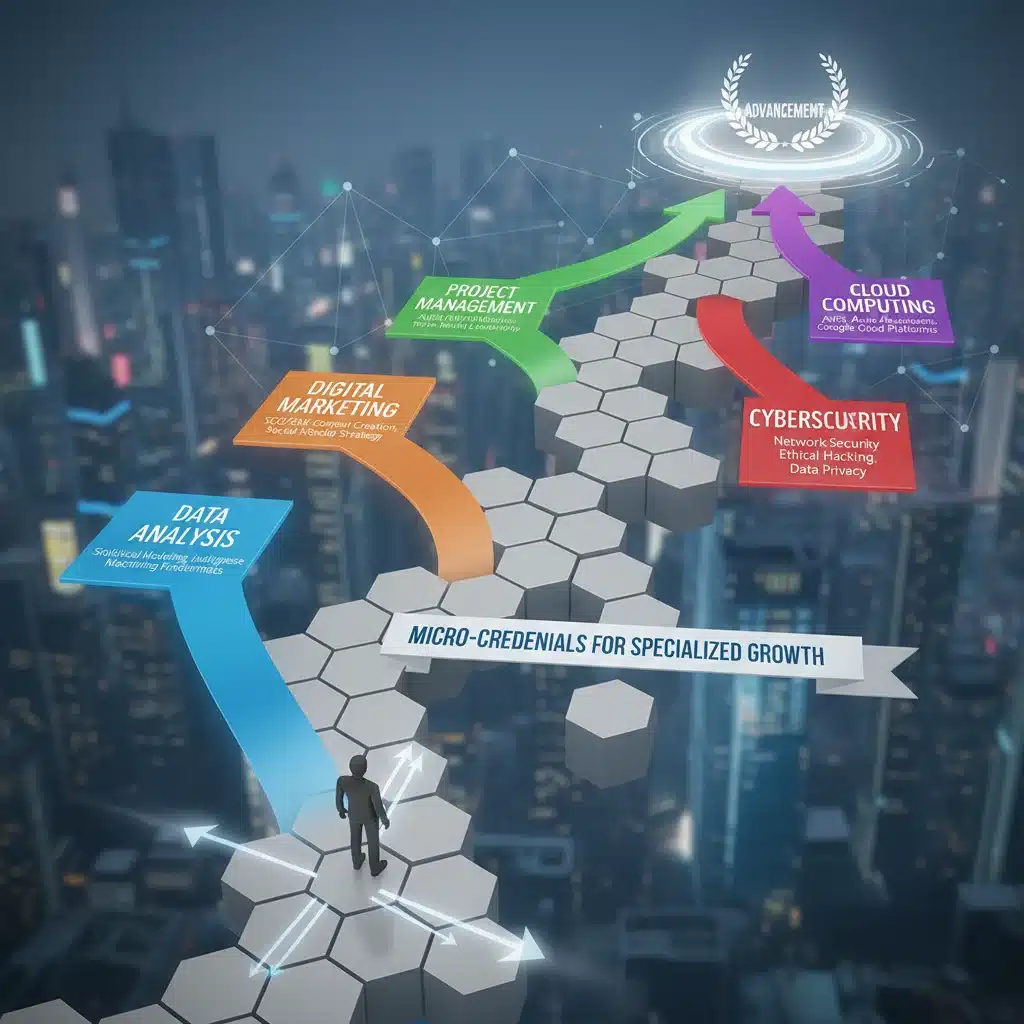
The demand for specialized skills spans across various industries. Here are some of the most prominent fields where micro-credentials are making a significant impact and offering tremendous career advancement potential:
1. Technology and IT
This sector is a hotbed for micro-credentials, given its rapid evolution. Skills like cybersecurity, cloud computing (AWS, Azure, Google Cloud), artificial intelligence/machine learning, data science, web development (front-end and back-end), and mobile app development are highly sought after. Micro-credentials in these areas can quickly position you for roles as a data scientist, cybersecurity analyst, cloud engineer, or AI specialist.
2. Digital Marketing
As businesses increasingly rely on online presence, digital marketing skills are indispensable. Micro-credentials in SEO (Search Engine Optimization), SEM (Search Engine Marketing), social media marketing, content marketing, email marketing, and marketing analytics are extremely valuable. These can lead to roles such as Digital Marketing Specialist, SEO Analyst, Social Media Manager, or Content Strategist.
3. Data Analytics and Business Intelligence
The ability to collect, analyze, and interpret data is critical for informed decision-making. Micro-credentials focusing on data visualization, SQL, Python for data analysis, R programming, Excel for business analytics, and business intelligence tools (e.g., Tableau, Power BI) are in high demand. These skills open doors to positions like Data Analyst, Business Intelligence Analyst, or Market Research Analyst.
4. Project Management
Effective project management is crucial for any organization. Micro-credentials in agile methodologies (Scrum, Kanban), project planning, risk management, stakeholder communication, and project management software are highly beneficial. They can help you advance into roles like Project Coordinator, Junior Project Manager, or even specialized Agile Coach positions.
5. Healthcare and Life Sciences
Even in traditional fields like healthcare, specialized digital skills are emerging. Micro-credentials in health informatics, medical coding, telehealth technologies, and data privacy (HIPAA compliance) are becoming increasingly important. These can support career growth for healthcare administrators, IT professionals in healthcare, or clinical data specialists.
6. Soft Skills and Professional Development
Beyond technical skills, advanced soft skills are always in demand. Micro-credentials in leadership, emotional intelligence, critical thinking, communication, problem-solving, and collaboration can significantly enhance your professional profile, making you a more effective and valuable employee in any role.

Strategies for Maximizing Your Micro-Credential Journey
Simply enrolling in a micro-credential program isn’t enough; strategic planning is key to truly leveraging these opportunities for career advancement. Here’s how to make the most of your journey:
1. Assess Your Current Skills and Career Goals
Before diving in, take stock of your existing skills and identify gaps relevant to your career aspirations. What skills are most in demand for the roles you covet? What areas do you need to strengthen to achieve your next promotion or career pivot? Tools like LinkedIn Learning’s skill assessments, industry reports, and job descriptions can provide valuable insights. This self-assessment is the foundation for choosing the right micro-credential opportunities.
2. Research and Choose Reputable Providers
Not all micro-credentials are created equal. Look for programs from accredited universities, well-known professional organizations (e.g., Google, IBM, Microsoft, Coursera, edX), or industry-recognized bodies. Check reviews, curriculum details, and instructor qualifications. Ensure the credential is widely recognized and valued by employers in your target industry.
3. Focus on Stackable Credentials
Some micro-credentials are designed to be ‘stackable,’ meaning they can be combined to form a larger qualification, such as a professional certificate or even contribute towards a degree. This offers a flexible pathway to broader education while still providing immediate, recognized skills. Consider how individual micro-credentials can build upon each other to create a robust skill set.
4. Apply Learning Immediately
The best way to solidify new skills is to apply them in real-world scenarios. Look for opportunities to use your newly acquired knowledge in your current job, through volunteer work, personal projects, or freelance assignments. This practical application not only reinforces your learning but also creates tangible examples for your portfolio and resume, demonstrating your proficiency to potential employers.
5. Network and Share Your Achievements
Once you earn a micro-credential, don’t keep it a secret! Update your LinkedIn profile, share your digital badges, and talk about your new skills with colleagues, mentors, and industry contacts. Networking can open doors to new opportunities and help you connect with others who can support your career growth. Actively seek out professional communities related to your new skills.
6. Stay Updated and Plan for Continuous Learning
The job market will continue to evolve, so view micro-credentials not as a one-time fix but as part of a continuous learning strategy. Keep an eye on emerging trends and regularly assess your skill set against industry demands. Plan to pursue new micro-credential opportunities as your career progresses and new skills become critical.
The Impact of Micro-Credentials on the Future of Work
The shift towards micro-credentials signifies a fundamental change in how we approach education and career development. This isn’t just a fleeting trend; it’s a structural change driven by economic and technological forces. Here’s what this means for the future:
Democratization of Education
Micro-credentials are making high-quality, specialized education more accessible to a global audience. This levels the playing field, allowing individuals from diverse backgrounds to gain competitive skills without the time and financial burden of traditional degrees. This democratization will foster a more skilled and adaptable global workforce.
Skills-Based Hiring
Employers are increasingly moving towards skills-based hiring, where demonstrable competencies take precedence over traditional academic qualifications. Micro-credentials provide a clear, verifiable way to showcase these skills, making them a powerful tool in the hiring process. This trend will only accelerate by 2026, making a portfolio of micro-credentials a significant asset.
Lifelong Learning as the Norm
The concept of a single career path or a static skill set is becoming obsolete. Micro-credentials embed lifelong learning into the professional journey, encouraging individuals to continuously adapt and acquire new skills throughout their careers. This fosters a culture of perpetual growth and resilience in the face of change.
Bridging the Skills Gap
One of the most significant challenges facing industries today is the growing skills gap. Micro-credentials offer a targeted and efficient way to address this by quickly training individuals in specific areas where there is a high demand for talent. This benefits both individuals seeking employment and companies struggling to find qualified workers.
Overcoming Challenges in Pursuing Micro-Credentials
While micro-credential opportunities offer immense benefits, it’s important to acknowledge and address potential challenges:
Choosing the Right Program
With a proliferation of micro-credential offerings, it can be overwhelming to choose the right one. Thorough research, reading reviews, and consulting industry experts or career counselors can help you make informed decisions. Prioritize programs that are aligned with industry standards and have strong employer recognition.
Time Management
Even though micro-credentials are shorter, they still require a significant time commitment. Effective time management, setting realistic goals, and creating a study schedule are crucial for successful completion. Remember, consistency is key, even if you’re dedicating just a few hours each week.
Demonstrating Value to Employers
While many employers recognize the value of micro-credentials, some may still be more familiar with traditional degrees. It’s up to you to effectively communicate the skills you’ve gained and how they directly apply to the job. Highlight projects, practical applications, and the reputable source of your credential on your resume, cover letter, and during interviews.
Staying Motivated
Learning new skills can be challenging. Maintaining motivation through self-discipline, joining online study groups, or finding an accountability partner can be incredibly helpful. Celebrate small victories and remind yourself of your ultimate career goals.
Conclusion: Embrace Micro-Credential Opportunities for a Future-Proof Career
The world of work is undergoing a profound transformation, and the ability to adapt and acquire new skills rapidly is paramount for sustained career success. Micro-credential opportunities offer a powerful, flexible, and efficient pathway to achieving this. By focusing on specific, in-demand skills, these targeted learning experiences empower you to stay ahead of the curve, enhance your employability, and unlock new avenues for career advancement in 2026 and beyond.
Whether you’re looking to upskill in your current role, pivot to a new industry, or simply expand your professional toolkit, micro-credentials provide a strategic advantage. They represent an investment in yourself, promising a significant return in terms of career growth, increased earning potential, and heightened job satisfaction. The future belongs to lifelong learners, and micro-credentials are your key to navigating that future with confidence and competence.
Start exploring the vast array of micro-credential opportunities available today. Identify the skills that will propel your career forward, choose reputable programs, and commit to the journey of continuous learning. Your future self will thank you for embracing this transformative approach to professional development.