SSI Benefits 2026: Eligibility, Payments, & Application Strategies

Understanding SSI Benefits in 2026 is crucial for eligible individuals, involving navigating updated eligibility requirements, projected payment adjustments, and strategic application processes to secure vital financial support.
Navigating government assistance programs can often feel like a complex maze, particularly when changes are on the horizon. For many Americans, SSI Benefits in 2026 represent a critical lifeline, offering financial support to those with limited income and resources. This guide aims to demystify the Supplemental Security Income program, providing a clear roadmap for understanding who qualifies, what to expect in terms of payments, and how to effectively apply in the coming year. We’ll explore the nuances of eligibility, projected payment adjustments, and practical strategies to ensure a successful application process, empowering you to make informed decisions about your financial future.
Decoding SSI: What is Supplemental Security Income?
Supplemental Security Income (SSI) is a federal program designed to provide financial assistance to eligible adults and children with disabilities, as well as individuals aged 65 or older, who have limited income and resources. Unlike Social Security retirement or disability benefits, SSI is not based on prior work history or contributions to the Social Security trust fund. Instead, it is a needs-based program funded by general tax revenues.
The primary goal of SSI is to help recipients meet their basic needs for food, clothing, and shelter. Understanding its fundamental nature is the first step toward appreciating its significance for millions of Americans who rely on this support. The program operates under strict federal guidelines, which are subject to periodic adjustments to reflect economic conditions and legislative changes.
Key distinctions from other programs
It’s important to differentiate SSI from other Social Security Administration (SSA) programs. While both are administered by the SSA, their foundational principles differ significantly. SSI focuses on financial need, while Social Security Disability Insurance (SSDI) and retirement benefits are earned through work credits.
- Needs-Based: Eligibility is determined by income and resource limits, not work history.
- Federal Funding: Financed by general tax revenues, not Social Security taxes.
- Basic Needs: Aims to provide funds for essential living expenses.
- Age/Disability Focus: Primarily for low-income seniors, blind, or disabled individuals.
The distinction is vital because it impacts who can apply and what documentation is required. Many individuals may be eligible for both SSI and SSDI, leading to concurrent benefits that can further complicate the application process. Knowing the specific criteria for each program helps streamline the application and avoid common pitfalls.
In essence, SSI serves as a crucial safety net for the most vulnerable populations in the United States. Its framework is designed to ensure that those who cannot support themselves due to age, blindness, or disability receive fundamental financial assistance, contributing to their overall well-being and stability. As we move closer to 2026, understanding these core principles becomes even more important as potential adjustments loom.
Eligibility Criteria for SSI in 2026: What You Need to Know
Qualifying for SSI is contingent upon meeting specific criteria related to age, disability, and financial need. These requirements are rigorously enforced by the Social Security Administration, and slight changes can significantly impact an applicant’s chances of approval. For 2026, while the core principles remain, it’s essential to be aware of any potential adjustments to income and resource limits, as well as disability definitions.
The SSA defines disability for adults as the inability to engage in any substantial gainful activity (SGA) due to a medically determinable physical or mental impairment that is expected to result in death or has lasted or is expected to last for a continuous period of not less than 12 months. For children, the definition considers whether their impairment causes severe functional limitations.
Income and resource limits
The financial aspect of SSI eligibility is often the most complex. The SSA considers both your income and your resources when determining if you qualify for benefits. Income includes earned wages, unearned income (such as Social Security benefits, pensions, or interest), and in-kind support and maintenance. Resources refer to things you own, such as bank accounts, cash, stocks, and property.
- Earned Income: A portion of your earned income is typically excluded, meaning it doesn’t count against your limit.
- Unearned Income: Most unearned income counts dollar-for-dollar against your SSI benefit.
- Resource Limits: For 2026, these are projected to be $2,000 for an individual and $3,000 for a couple, though these figures can be adjusted.
- Exempt Resources: Certain assets, like your primary residence and one vehicle, are usually not counted.
It’s vital to have a clear understanding of what counts as income and resources. Even small changes in your financial situation can affect your eligibility. The SSA has specific rules for deeming income and resources from spouses, parents, or sponsors, which can further complicate the calculation for some applicants. Careful planning and accurate reporting are essential to avoid issues.
Beyond financial thresholds, applicants must also be U.S. citizens or eligible non-citizens. Residency requirements also apply, meaning you must reside in one of the 50 states, the District of Columbia, or the Northern Mariana Islands. Meeting all these criteria is paramount for securing SSI Benefits in 2026.
Projected Payment Adjustments for SSI in 2026
Every year, the Social Security Administration reviews and often adjusts benefit amounts to account for changes in the cost of living. These adjustments, known as Cost-of-Living Adjustments (COLAs), are crucial for maintaining the purchasing power of SSI benefits. For 2026, experts and analysts are already projecting potential COLA figures, which will directly impact the monthly payments received by eligible individuals.
While the exact COLA for 2026 will not be announced until late 2025, it is typically based on the Consumer Price Index for Urban Wage Earners and Clerical Workers (CPI-W). Economic forecasts, including inflation rates and economic growth, play a significant role in these projections. Recipients should stay informed about these forecasts to anticipate changes to their monthly income.
Factors influencing COLA
Several economic indicators contribute to the COLA calculation. Understanding these factors can help individuals predict the magnitude of potential adjustments to their SSI Benefits in 2026.
- Inflation Rates: Higher inflation generally leads to larger COLAs to help benefits keep pace with rising costs.
- Economic Growth: A robust economy can influence legislative decisions regarding social programs.
- CPI-W Data: The official calculation relies on specific data points from the CPI-W.
- Legislative Changes: Although rare, Congress can intervene to alter the COLA formula or provide special adjustments.
Past COLAs have varied widely, reflecting different economic environments. For instance, periods of high inflation have seen substantial increases, while periods of low inflation have resulted in minimal or no adjustments. Preparing for these fluctuations is a key part of financial planning for SSI recipients.

It’s also worth noting that state supplementary payments, which some states provide in addition to federal SSI benefits, may also see adjustments. These state-specific payments vary significantly and depend on individual state budgets and legislative decisions. Therefore, recipients should also monitor announcements from their state social services agencies.
Staying updated on these projections and official announcements is vital for financial planning. Any increase, no matter how small, can make a difference in managing daily expenses for those living on fixed incomes. Conversely, a lower-than-expected COLA might necessitate adjustments to personal budgets.
Strategic Application for SSI: Tips for Success
Applying for SSI can be a daunting process, often involving extensive paperwork, interviews, and waiting periods. However, with a strategic approach, applicants can significantly improve their chances of approval. For those seeking SSI Benefits in 2026, preparation and attention to detail will be paramount.
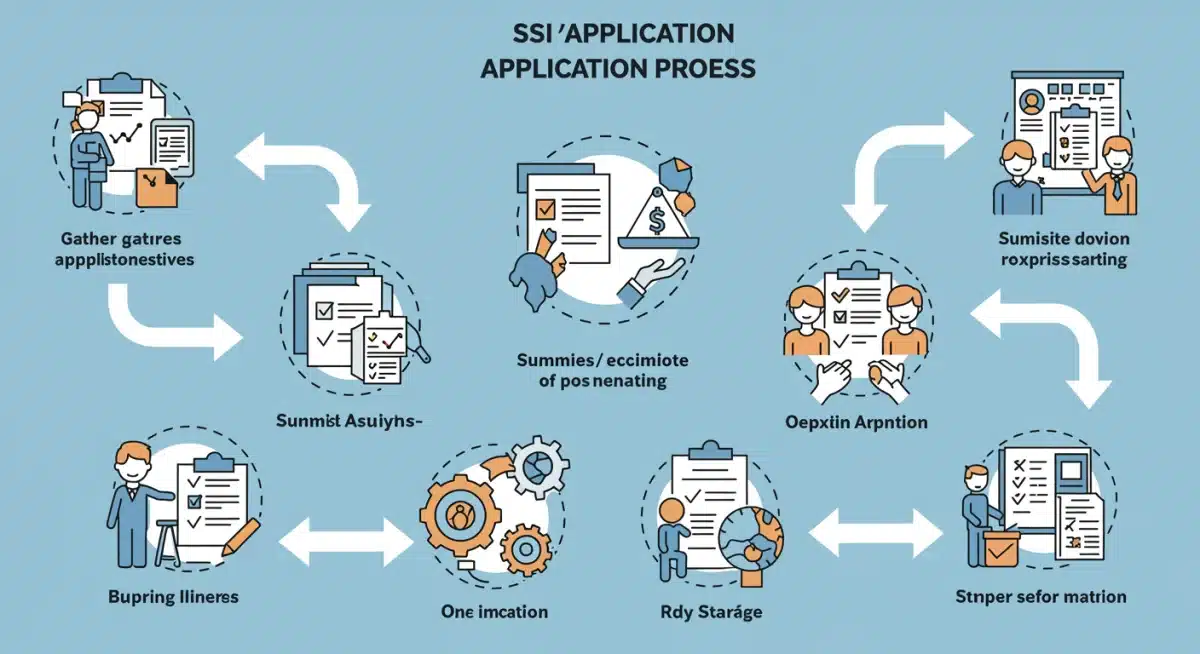
The application process generally begins with an online application or a phone call to the SSA to schedule an appointment. Following this, applicants will typically need to complete several forms that detail their medical history, financial situation, and daily activities. Thoroughness and accuracy in providing information are critical.
Gathering essential documentation
One of the most common reasons for delays or denials in SSI applications is incomplete or inaccurate documentation. Before even starting the application, compile all necessary records. This proactive step can save considerable time and reduce stress during the process.
- Medical Records: Doctor’s reports, test results, hospitalizations, and treatment plans are crucial.
- Financial Statements: Bank statements, pay stubs, pension statements, and any other income proof.
- Identification: Birth certificate, Social Security card, and proof of U.S. citizenship or eligible non-citizen status.
- Living Arrangements: Information about your household and who provides support.
Organizing these documents beforehand will not only make the application smoother but also ensure that the SSA has a complete picture of your situation. It’s also advisable to keep copies of everything you submit for your records. This can be invaluable if there are any questions or discrepancies later on.
During the application interview, be honest and provide as much detail as possible about your condition and how it affects your daily life. The SSA uses this information to determine your eligibility, particularly for disability claims. Don’t underestimate the importance of explaining how your impairment limits your ability to perform basic tasks.
If your initial application is denied, don’t give up. Many applicants are initially denied but are approved after appealing the decision. Understanding the appeals process and seeking assistance from legal aid or disability advocates can significantly increase your chances of success. A strategic approach to the application process, from initial submission to potential appeals, is key to securing SSI Benefits in 2026.
Understanding the Appeals Process for SSI Denials
Receiving a denial for your SSI application can be disheartening, but it is not uncommon. Many initial applications are denied, and a significant number of these decisions are overturned during the appeals process. Understanding how to navigate an appeal is crucial for anyone whose initial application for SSI Benefits in 2026 is not approved.
The appeals process involves several stages, each with its own deadlines and requirements. It’s important to act promptly after receiving a denial notice, as there are strict time limits for requesting an appeal. Typically, you have 60 days from the date you receive the denial letter to request a reconsideration.
Stages of the appeals process
The SSA’s appeals process is designed to allow applicants multiple opportunities to present their case. Each stage offers a fresh review of your claim, often with new evidence or perspectives.
- Reconsideration: Your case is reviewed by a different SSA representative, often considering new evidence.
- Hearing by an Administrative Law Judge (ALJ): If reconsideration is denied, you can request a hearing before an ALJ, where you can present witnesses and testimony.
- Appeals Council Review: If the ALJ denies your claim, you can ask the Appeals Council to review the ALJ’s decision.
- Federal Court Review: As a last resort, you can file a lawsuit in a federal district court.
Gathering additional medical evidence is often the most critical step in an appeal. This might include new diagnostic tests, doctor’s opinions specifically addressing your functional limitations, or statements from family members or caregivers about how your condition affects you daily. The more comprehensive and recent your medical documentation, the stronger your appeal will be.
Seeking professional assistance during the appeals process can also be highly beneficial. Disability attorneys or advocates specialize in these cases and can help you gather evidence, prepare for hearings, and represent you effectively. Their expertise can be invaluable in presenting a compelling case to the SSA or an ALJ.
Persistence is key when appealing an SSI denial. Many successful applicants only receive benefits after going through one or more stages of the appeals process. By understanding each step and meticulously preparing, you can significantly increase your chances of ultimately securing the SSI Benefits in 2026 you need.
Managing Your SSI Benefits: Responsibilities and Reporting
Once approved for SSI, recipients have ongoing responsibilities to ensure they continue to receive their benefits without interruption. The Social Security Administration requires beneficiaries to report certain changes in their circumstances, as these can affect eligibility and payment amounts. Failure to report promptly and accurately can lead to overpayments, which may need to be repaid.
Understanding these reporting requirements is just as important as understanding the initial application process. The SSA uses the reported information to verify continued eligibility for SSI Benefits in 2026 and to adjust monthly payments accordingly. Proactive reporting helps avoid potential issues down the line.
Key changes to report
Several types of changes must be reported to the SSA. These generally fall into categories related to income, resources, living arrangements, and medical status.
- Income Changes: Any change in earned wages, unearned income, or other sources of money.
- Resource Changes: If your bank account balance or other countable assets exceed the limits.
- Living Arrangements: Moving, changes in household members, or changes in who pays for your food and shelter.
- Marital Status: Getting married, divorced, or separated can affect benefits.
- Medical Improvement: If your medical condition improves to the point where you might no longer be considered disabled.
- Absence from U.S.: Leaving the country for 30 consecutive days or more.
The SSA provides various ways to report changes, including online, by phone, by mail, or in person at a local Social Security office. It’s often recommended to report in writing or keep a record of your report, including the date and the person you spoke with, for your own documentation.
Periodic reviews, also known as redeterminations, are conducted by the SSA to confirm that recipients still meet all eligibility criteria. These reviews typically occur every 1 to 6 years, depending on the recipient’s situation. During a redetermination, you will be asked to provide updated information about your income, resources, and living arrangements.
For disabled recipients, the SSA also conducts continuing disability reviews (CDRs) to determine if your medical condition has improved. The frequency of CDRs depends on the nature of your disability. Maintaining accurate records and promptly responding to SSA requests are essential to ensure uninterrupted SSI Benefits in 2026.
Resources and Support for SSI Applicants and Beneficiaries
Navigating the complexities of SSI, whether applying for the first time or managing ongoing benefits, can be challenging. Fortunately, numerous resources and support networks are available to assist applicants and beneficiaries. These resources can provide invaluable guidance, answer questions, and help resolve issues related to SSI Benefits in 2026.
The Social Security Administration itself offers a wealth of information through its official website, local offices, and national toll-free helpline. Their website, in particular, is a comprehensive source for forms, publications, and detailed explanations of policies and procedures.
External support networks
Beyond the SSA, a variety of organizations and professionals specialize in assisting individuals with SSI matters. These external resources can offer personalized advice and advocacy, especially during complex situations like appeals.
- Disability Advocates and Attorneys: Legal professionals who specialize in disability law can represent you through the application and appeals process.
- Community Organizations: Many non-profits offer free or low-cost assistance with benefit applications and understanding eligibility.
- State and Local Agencies: State health and human services departments often have programs to help residents access federal benefits.
- Benefit Specialists: Professionals who can help you understand how working might affect your benefits, referred to as Work Incentives.
These support systems are particularly helpful for those who may have difficulty understanding complex regulations or gathering necessary documentation due to their disability or age. They can act as intermediaries, helping to bridge the gap between the applicant and the SSA.
Moreover, online forums and support groups can provide a platform for beneficiaries to share experiences and advice. While not official sources, these communities can offer emotional support and practical tips from those who have navigated similar challenges. However, always verify information from unofficial sources with the SSA or a qualified professional.
Utilizing these resources effectively can significantly ease the burden of applying for and managing SSI benefits. Whether you need help understanding specific rules, gathering medical evidence, or appealing a decision, knowing where to turn for help is a crucial step towards securing and maintaining your SSI Benefits in 2026.
| Key Aspect | Brief Description |
|---|---|
| Eligibility | Based on age (65+), blindness, or disability, coupled with limited income and resources. |
| Payment Adjustments | Annual Cost-of-Living Adjustments (COLAs) are projected based on economic indicators like CPI-W. |
| Application Strategy | Thorough documentation, prompt reporting, and understanding the appeals process are key. |
| Reporting Rules | Beneficiaries must report changes in income, resources, and living arrangements to avoid issues. |
Frequently Asked Questions About SSI Benefits in 2026
While specific figures are yet to be finalized, 2026 is expected to see adjustments to income and resource limits, primarily driven by annual Cost-of-Living Adjustments (COLAs). These changes aim to reflect inflation and economic shifts, impacting how much income or assets an individual can have to qualify for SSI.
The Cost-of-Living Adjustment (COLA) for 2026 will likely increase monthly SSI payments to help beneficiaries cope with rising living costs. The exact percentage will be announced in late 2025, based on the Consumer Price Index for Urban Wage Earners and Clerical Workers (CPI-W). Recipients should monitor official announcements.
For disability-based SSI applications, comprehensive medical records are arguably the most crucial documents. These include doctor’s reports, diagnostic test results, treatment histories, and statements detailing how your condition limits daily activities. Strong medical evidence significantly strengthens your claim for SSI Benefits in 2026.
Yes, you can work and still receive SSI benefits, thanks to Social Security’s Work Incentives. These rules allow disabled individuals to work and earn income without immediately losing their benefits. However, earnings above certain thresholds will reduce your SSI payment, so it’s important to report all income.
If your SSI application is denied, you should immediately initiate the appeals process, starting with a Request for Reconsideration within 60 days. Gather additional medical evidence, seek advice from a disability advocate or attorney, and be prepared to proceed through subsequent appeal stages if necessary. Persistence is often key.
Conclusion
As we look towards 2026, understanding SSI Benefits in 2026 remains a cornerstone for many Americans seeking financial stability. The program’s commitment to supporting the elderly, blind, and disabled with limited resources is unwavering, yet the landscape of eligibility, payment adjustments, and application strategies is dynamic. By staying informed about projected COLAs, meticulously preparing documentation, and proactively navigating the application and appeals processes, individuals can significantly enhance their ability to secure and manage these vital benefits. Leveraging available resources and support networks further empowers beneficiaries to confidently address the complexities of the SSI program, ensuring they receive the assistance necessary for their well-being.