US Consumer Spending Drops 1.5%: Market Alert & Impact Analysis
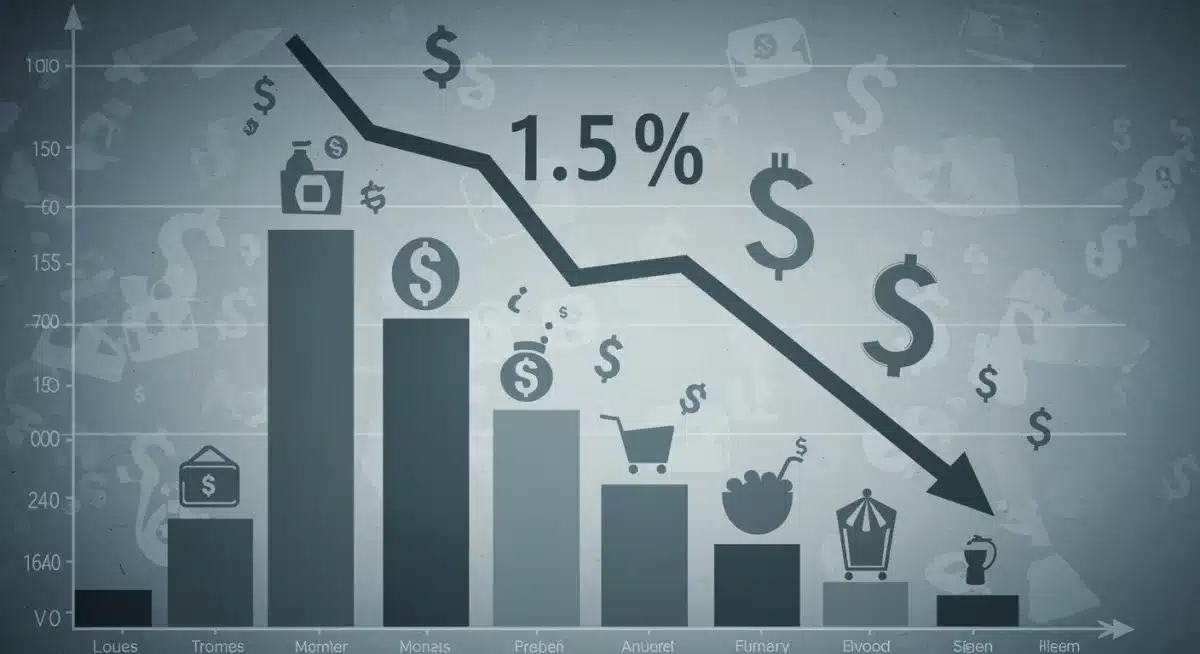
An unexpected 1.5% drop in US consumer spending reported this quarter signals a significant shift in economic trends, prompting immediate analysis of its potential causes and far-reaching market implications.
The recent announcement of an unexpected 1.5% drop in US consumer spending this quarter has sent a ripple of concern through financial markets and economic circles nationwide. This significant decline, coming after a period of relative stability, raises crucial questions about the health of the American economy and the future trajectory of consumer confidence. Understanding the underlying factors contributing to this downturn is paramount for investors, policymakers, and everyday citizens alike, as its implications could reshape financial strategies and influence economic policy for the foreseeable future.
Understanding the Unexpected Decline in US Consumer Spending
The reported 1.5% decline in US consumer spending is more than just a statistic; it’s a critical indicator that warrants a deep dive into its potential causes. Consumer spending is the bedrock of the US economy, accounting for a significant portion of the nation’s GDP. When it falters, the effects can be widespread, impacting everything from corporate earnings to employment rates.
Several factors could be at play here, ranging from persistent inflationary pressures to shifts in consumer sentiment. It’s crucial to differentiate between temporary blips and more systemic issues to accurately gauge the long-term outlook. This section will explore the immediate data and initial reactions from economists, setting the stage for a comprehensive analysis.
Key Economic Indicators and Initial Reactions
When the news broke, financial analysts and economists quickly began piecing together the puzzle. Initial reactions often involve scrutinizing other coinciding economic data points. For instance, did this drop align with an increase in savings rates, or was it accompanied by a rise in unemployment claims? These co-occurring indicators provide vital context.
- Inflationary Pressures: Continued high prices for essential goods and services might be eroding purchasing power, forcing consumers to cut back on discretionary spending.
- Interest Rate Hikes: Aggressive rate hikes by the Federal Reserve could be making borrowing more expensive, impacting big-ticket purchases like homes and cars, and subsequently reducing overall spending.
- Wage Stagnation: If wages aren’t keeping pace with inflation, households may experience a real decline in income, leading to reduced spending capacity.
- Consumer Confidence: A general sense of economic uncertainty or pessimism about future job prospects can cause consumers to save more and spend less.
The immediate consensus among many experts is that this drop is a wake-up call, signaling that the economy might be more fragile than previously assumed. While some hope it’s a temporary adjustment, others fear it could be the harbinger of a more significant slowdown.
The Role of Specific Sectors
A 1.5% overall drop doesn’t mean all sectors are equally affected. It’s imperative to look at which areas of spending saw the most significant declines. Was it predominantly in discretionary categories like entertainment and dining out, or did essential spending on groceries and utilities also see a contraction? This granular view helps to pinpoint the precise pain points.
For instance, a sharp decline in durable goods purchases (e.g., appliances, electronics) suggests consumers are postponing large investments, potentially due to economic uncertainty or tighter credit conditions. Conversely, if essential spending is also down, it might indicate broader financial distress among households. Understanding these sectoral nuances is key to formulating targeted policy responses.
In conclusion, the unexpected 1.5% drop in US consumer spending is a multifaceted issue with several potential drivers. Initial analyses point towards a combination of inflationary pressures, rising interest rates, and cautious consumer sentiment. A deeper dive into specific sectors will further illuminate the precise nature of this economic shift.
Potential Causes Behind the Spending Contraction
Delving deeper into the reasons for the US consumer spending drop, it becomes clear that a confluence of economic forces is likely at play. Attributing such a significant shift to a single cause would be an oversimplification. Instead, we must consider a range of interconnected variables that collectively influence consumer behavior and purchasing power.
From the lingering effects of inflation to shifts in savings patterns and the broader geopolitical landscape, each factor contributes to the complex economic tapestry. Understanding these underlying causes is essential for forecasting future trends and developing effective mitigation strategies.
Inflationary Pressures and Real Income Erosion
One of the most frequently cited culprits is persistent inflation. While headline inflation rates may have shown some signs of moderation in previous periods, the cumulative effect of rising prices over time can significantly erode real household income. When the cost of living outpaces wage growth, consumers inevitably have less disposable income for non-essential goods and services.
This erosion of purchasing power forces households to make difficult choices, often prioritizing necessities over discretionary spending. The result is a contraction in overall consumer activity, as seen in the recent data. This phenomenon disproportionately affects lower-income households, who spend a larger percentage of their income on essentials.
Impact of Interest Rate Hikes on Borrowing and Spending
The Federal Reserve’s strategy of increasing interest rates to combat inflation also plays a pivotal role. Higher interest rates translate to more expensive borrowing for consumers, whether it’s for mortgages, auto loans, or credit card debt. This increased cost of credit can deter large purchases and make it more challenging for households to manage existing debt, thereby reducing their capacity for new spending.
- Mortgage Rates: Elevated mortgage rates cool the housing market, impacting related spending on home furnishings and renovations.
- Auto Loans: Higher rates make car purchases more expensive, leading consumers to delay or downsize their vehicle choices.
- Credit Card Debt: Increased interest on credit card balances can tie up more of a household’s budget in debt servicing, leaving less for consumption.
The cumulative effect of these higher borrowing costs can create a significant drag on consumer spending, especially for items typically financed through loans.
Changing Consumer Sentiment and Savings Behavior
Beyond tangible economic pressures, shifts in consumer sentiment can also drive spending patterns. If households become more pessimistic about future economic conditions, job security, or their personal financial outlook, they tend to adopt a more cautious approach to spending. This often manifests as an increase in personal savings rates and a reduction in discretionary purchases.
Geopolitical events, global economic uncertainty, or even domestic political instability can contribute to this cautious sentiment. When consumers feel less secure about the future, they are more likely to hoard cash and defer non-essential spending, creating a self-fulfilling prophecy of slower economic activity.
In summary, the 1.5% drop in consumer spending is likely the result of a complex interplay between persistent inflation, higher interest rates, and a palpable shift towards more cautious consumer behavior. Addressing this multifaceted challenge requires a nuanced understanding of each contributing factor.
Market Implications and Investor Reactions
The news of a significant US consumer spending drop inevitably sends ripples through financial markets, prompting immediate reactions from investors and analysts alike. Consumer spending is a primary driver of corporate profits, and a contraction in this area can signal headwinds for various industries. Understanding these market implications is crucial for investors looking to navigate the current economic climate.
From stock market volatility to shifts in sector performance, the impact of reduced consumer spending is broad and varied. This section will explore how different market segments are reacting and what this might mean for investment strategies moving forward.

Stock Market Volatility and Sectoral Shifts
Upon the announcement, stock markets often react with increased volatility. Companies heavily reliant on consumer purchases, particularly those in discretionary sectors, typically see their stock prices affected first. This could lead to a broader market correction or a shift in investor preference towards more defensive stocks.
- Retail Sector: Retailers, especially those selling non-essential items, are likely to face reduced sales volumes and potentially lower profit margins.
- Hospitality and Travel: Industries like hotels, airlines, and restaurants, which thrive on discretionary spending, may experience a downturn in demand.
- Technology and Consumer Electronics: Purchases of new gadgets and high-end electronics might be postponed as consumers tighten their belts.
- Defensive Sectors: Conversely, sectors like utilities, healthcare, and consumer staples (e.g., basic groceries) might be seen as more resilient, attracting investor capital seeking stability.
This reallocation of capital reflects investors’ attempts to shield their portfolios from the adverse effects of reduced consumer demand. The extent and duration of this sectoral shift will depend on whether the spending drop is perceived as temporary or a more enduring trend.
Bond Market Response and Interest Rate Expectations
The bond market also responds significantly to consumer spending data. A weakening in consumer demand can be interpreted as a sign of slowing economic growth, which might prompt central banks to reconsider their monetary policy stance. If the economy appears to be cooling, the likelihood of further interest rate hikes could diminish, or even lead to discussions about potential rate cuts in the future.
This shift in expectations can impact bond yields, with government bonds potentially becoming more attractive as a safe-haven asset during times of economic uncertainty. Investors often flock to bonds when equity markets are volatile, seeking stability and capital preservation.
Currency Fluctuations and Global Economic Impact
A significant economic indicator like US consumer spending also has implications for currency markets. A weaker economic outlook for the US could lead to a depreciation of the US dollar against other major currencies, especially if global investors perceive better growth opportunities elsewhere. This can affect international trade balances and the competitiveness of US exports.
Furthermore, given the interconnectedness of the global economy, a slowdown in US consumer spending can have ripple effects worldwide. Many international companies rely on the US market for a substantial portion of their revenue, meaning a US spending contraction could impact global corporate earnings and economic growth forecasts.
In conclusion, the 1.5% drop in US consumer spending has immediate and far-reaching implications for financial markets. Investors are likely to adjust their portfolios, favoring defensive sectors, while bond markets will recalibrate interest rate expectations. The global economy will also feel the reverberations of this significant economic shift.
Government and Federal Reserve Responses
In the face of an unexpected US consumer spending drop, both the government and the Federal Reserve are likely to assess their current policies and consider potential interventions. Their responses are critical in managing economic stability and guiding the nation through periods of uncertainty. The tools at their disposal range from fiscal measures to monetary policy adjustments, each designed to address specific economic challenges.
The coordination, or lack thereof, between these two powerful entities will largely determine the effectiveness of any economic stabilization efforts. This section explores the typical reactions and potential strategies these institutions might employ.
Fiscal Policy Options from the Government
The government, primarily through Congress and the executive branch, can utilize fiscal policy to stimulate demand or provide relief. In a scenario of declining consumer spending, potential fiscal responses might include:
- Tax Cuts: Reducing income or sales taxes could put more money directly into consumers’ pockets, encouraging spending.
- Stimulus Checks: Direct payments to households have been used in previous crises to boost immediate consumption.
- Increased Government Spending: Investing in infrastructure projects, social programs, or other public initiatives can create jobs and inject money into the economy.
- Unemployment Benefits: Extending or increasing unemployment benefits can provide a safety net and maintain some level of spending for those out of work.
The challenge with fiscal policy often lies in its implementation speed and political feasibility. Debates over the size, scope, and target of such measures can delay their impact, but their potential to directly influence consumer behavior is significant.
Monetary Policy Adjustments by the Federal Reserve
The Federal Reserve, as the nation’s central bank, wields monetary policy tools, primarily through interest rates and quantitative easing/tightening. Given a drop in consumer spending, the Fed might consider:
- Pausing Rate Hikes: If the spending decline signals a significant economic slowdown, the Fed might halt its current cycle of interest rate increases to avoid further dampening demand.
- Considering Rate Cuts: In a more severe downturn, the Fed could contemplate cutting interest rates to make borrowing cheaper, thereby stimulating investment and consumption.
- Adjusting Quantitative Tightening: The Fed could slow down or reverse its balance sheet reduction efforts (quantitative tightening) to ensure ample liquidity in the financial system.
The Fed’s decisions are often data-dependent, meaning they will closely monitor subsequent economic reports before making any drastic policy shifts. Their primary goals are typically price stability and maximum sustainable employment, and a significant spending drop would influence their assessment of these objectives.
Coordination and Future Outlook
Effective responses to a significant economic challenge like a consumer spending contraction often require coordinated efforts between fiscal and monetary authorities. While the government can enact broad spending and tax policies, the Fed can adjust the cost of money. A synchronized approach can amplify the positive effects of these interventions.
The future outlook for these policy responses will hinge on the persistence and severity of the spending decline. If it proves to be a one-off event, minimal intervention might be required. However, if it signals a deeper malaise, more aggressive and sustained policy measures could become necessary to avert a more significant economic downturn.
In conclusion, both the government and the Federal Reserve have powerful tools to address a 1.5% drop in US consumer spending. Their respective fiscal and monetary policy decisions, and the degree of their coordination, will be crucial in shaping the economic trajectory in the coming months.
Impact on Businesses and Employment
A US consumer spending drop directly translates into significant challenges for businesses across various sectors, inevitably impacting employment levels. When consumers spend less, companies face reduced revenues, which can lead to a cascade of difficult decisions regarding production, investment, and workforce management. The health of businesses is intrinsically linked to consumer demand, making this decline a critical concern for the corporate landscape.
Understanding how businesses and employment are affected provides a crucial perspective on the broader economic implications of the recent spending contraction. This section will explore the immediate and potential long-term consequences for the private sector.
Reduced Revenues and Profit Margins
The most immediate effect for businesses is a reduction in sales revenue. When fewer goods and services are purchased, the top-line figures for companies begin to shrink. This, in turn, puts pressure on profit margins, especially for businesses with high fixed costs or those operating in highly competitive markets.
Companies may respond by trying to cut costs, which can include reducing marketing budgets, delaying investments in new equipment, or renegotiating supplier contracts. For some, the pressure might be so intense that it forces them to re-evaluate their entire business model or market strategy.
Hiring Freezes and Potential Layoffs
A direct consequence of reduced revenues and tighter profit margins is an impact on employment. Businesses that anticipate sustained lower demand are often compelled to implement hiring freezes to control labor costs. If the situation deteriorates further, they might resort to layoffs to align their workforce with the reduced operational needs.
- Job Market Softening: A widespread reduction in hiring and an increase in layoffs would lead to a softening of the overall job market, potentially increasing the unemployment rate.
- Wage Growth Stagnation: With more available labor and less demand, wage growth could slow down or even reverse, further impacting consumer purchasing power.
- Sector-Specific Impacts: Industries most directly affected by the spending drop (e.g., retail, hospitality) would likely see the most significant employment adjustments.
The ripple effect of job losses can be substantial, as newly unemployed individuals further reduce their spending, creating a vicious cycle that exacerbates the initial economic slowdown.
Investment Decisions and Business Expansion
Beyond day-to-day operations, a decline in consumer spending also influences long-term business decisions. Companies are less likely to invest in expansion, research and development, or new product lines if they anticipate a period of low demand and economic uncertainty. This can stifle innovation and hinder future economic growth.
Entrepreneurship might also take a hit, as the risk associated with starting new ventures increases in a challenging economic environment. Access to capital for small businesses could become more difficult, as lenders become more cautious, further limiting their ability to grow and create jobs.
In conclusion, the 1.5% drop in US consumer spending presents substantial challenges for businesses, leading to reduced revenues, potential job losses, and a slowdown in investment. These impacts underscore the interconnectedness of consumer behavior and the overall health of the private sector and labor market.
Consumer Behavior: Shifting Priorities and Adaptations
The US consumer spending drop is not merely an economic statistic; it reflects a fundamental shift in how American households are managing their finances and making purchasing decisions. When faced with economic headwinds, consumers adapt their behavior, often prioritizing necessities and becoming more discerning about discretionary expenditures. Understanding these evolving consumer priorities is key to grasping the broader societal and economic adjustments underway.
This section will explore the changes in consumer habits, the psychological factors influencing these shifts, and how households are strategizing to navigate a more uncertain economic landscape.
Prioritizing Essentials Over Discretionary Spending
One of the most evident shifts in consumer behavior during economic slowdowns is the increased focus on essential goods and services. Households tend to reallocate their budgets, ensuring that funds are first directed towards housing, food, utilities, and healthcare. Discretionary items, such as entertainment, dining out, new clothing, and luxury purchases, are often the first to be cut or significantly reduced.
This prioritization is a direct response to inflationary pressures and stagnant real wages, where every dollar needs to stretch further. Consumers become more conscious of value, seeking out sales, discounts, and cheaper alternatives for items they once purchased without much thought.
The Rise of Frugality and Value-Conscious Shopping
A cautious economic outlook often fosters a culture of frugality. Consumers are increasingly adopting value-conscious shopping habits, which include:
- Budgeting: More households are creating and sticking to strict budgets to track and control their spending.
- Comparison Shopping: Before making a purchase, consumers are more likely to research prices across different retailers and brands to find the best deals.
- Delaying Purchases: Non-essential or big-ticket items are often postponed until economic conditions improve or until a significant discount is available.
- DIY and Repair: Instead of replacing items, consumers might opt to repair them or take on do-it-yourself projects to save money.
This shift towards a more frugal mindset can become ingrained, even after economic conditions improve, fundamentally altering long-term consumption patterns.
Digital Adoption and E-commerce Trends
Economic pressures can also accelerate existing trends, such as the adoption of digital shopping. E-commerce often provides better opportunities for price comparison and access to a wider range of discount options. Consumers might increasingly turn to online platforms to find more affordable alternatives or to avoid impulse purchases associated with physical stores.
However, even within the digital realm, the focus remains on value. Shoppers might spend more time reading reviews, looking for free shipping, or waiting for promotional events before committing to a purchase. This indicates a more deliberate and strategic approach to consumption, regardless of the shopping channel.
In conclusion, the 1.5% drop in US consumer spending is driving significant behavioral changes among consumers. Households are prioritizing essentials, embracing frugality, and leveraging digital tools to maximize value. These adaptations highlight the resilience and strategic thinking of American consumers in navigating economic uncertainties.
Future Outlook and Recovery Pathways
The unexpected US consumer spending drop naturally raises questions about the future trajectory of the economy and potential pathways to recovery. While the immediate data presents challenges, economic cycles are dynamic, and understanding the potential for rebound and the factors that could facilitate it is crucial. The path forward will likely involve a combination of policy adjustments, business adaptations, and a gradual restoration of consumer confidence.
This section will explore various scenarios for economic recovery, the indicators to watch, and the potential strategies that could help stabilize and stimulate consumer spending in the coming quarters.
Scenarios for Economic Recovery
Economists typically consider several shapes for economic recovery, each with different implications for how quickly consumer spending might rebound:
- V-shaped recovery: A sharp decline followed by a rapid and strong rebound. This would imply the current spending drop is temporary, and underlying economic strength will quickly reassert itself.
- U-shaped recovery: A more gradual decline, followed by a period of stagnation, and then a slow, steady recovery. This scenario suggests a longer period of subdued consumer spending.
- W-shaped recovery: A recovery that is interrupted by another downturn before a more sustained rebound. This could occur if initial recovery efforts are met with new economic shocks or policy missteps.
- L-shaped recovery: A sharp drop followed by a prolonged period of stagnation, with little to no recovery. This is the most pessimistic scenario and implies a fundamental shift in economic conditions.
The likelihood of each scenario depends heavily on the root causes of the spending drop and the effectiveness of subsequent policy responses.
Key Indicators to Monitor for Recovery
To assess the pace and nature of any recovery, several key economic indicators will be closely watched:
- Inflation Rates: A sustained decline in inflation, bringing it closer to the Federal Reserve’s target, would alleviate pressure on consumer budgets.
- Wage Growth: Real wage growth that outpaces inflation would restore purchasing power and encourage spending.
- Employment Data: A steady increase in job creation and a declining unemployment rate would signal improved economic health and consumer confidence.
- Consumer Confidence Surveys: These surveys directly measure how optimistic or pessimistic consumers are about their financial future and the economy, providing a leading indicator of spending intentions.
- Retail Sales Data: Subsequent retail sales reports will offer direct evidence of whether consumer spending is stabilizing or beginning to rebound.
Monitoring these metrics will provide critical insights into whether the economy is moving towards stabilization and recovery.
Strategies for Stimulating Consumer Spending
Should the spending decline persist, various strategies could be employed to stimulate consumer demand:
- Targeted Fiscal Stimulus: Government programs designed to provide financial relief or incentives to specific demographics or industries could help boost spending where it’s most needed.
- Monetary Policy Accommodation: If inflation is under control, the Federal Reserve might consider lowering interest rates to make borrowing and investment more attractive.
- Business Innovations: Companies might adapt by offering more affordable products, innovative payment plans, or enhanced value propositions to entice cautious consumers.
- Restoring Confidence: Clear communication from policymakers and a sense of stability on the geopolitical front could help restore consumer optimism.
The journey to recovery will likely be complex, requiring adaptability from all stakeholders. A collaborative approach between government, the Federal Reserve, and the private sector will be essential in navigating the current economic challenges and fostering a robust rebound in consumer spending.
| Key Point | Brief Description |
|---|---|
| 1.5% Spending Drop | Unexpected decline in US consumer spending, signaling economic shifts. |
| Causes Identified | Inflation, interest rate hikes, and cautious consumer sentiment are key drivers. |
| Market Impact | Increased stock volatility, sectoral shifts, and bond market adjustments. |
| Policy Responses | Government fiscal measures and Federal Reserve monetary policy adjustments anticipated. |
Frequently Asked Questions About the Consumer Spending Drop
This drop suggests that average Americans are likely experiencing reduced purchasing power due to inflation or higher borrowing costs. It could lead to a softer job market, more cautious spending from businesses, and potentially cheaper goods as retailers try to attract buyers, impacting daily financial decisions.
Recovery speed depends on several factors, including the causes of the drop and policy responses. If it’s a temporary blip, a V-shaped recovery is possible. If underlying issues like high inflation persist, a U-shaped or even W-shaped recovery with prolonged stagnation is more likely.
While a 1.5% drop in consumer spending is a significant concern, it doesn’t automatically guarantee a recession. It increases the risk, especially if combined with other negative indicators like rising unemployment or sustained declines in business investment. Economists will be closely monitoring further data.
Higher interest rates make borrowing more expensive, impacting big purchases like homes and cars, and increasing the cost of credit card debt. This reduces disposable income and deters new spending, acting as a significant brake on overall consumer activity and contributing to the observed decline.
Investors might consider shifting towards more defensive sectors like utilities or healthcare, which are less sensitive to consumer spending fluctuations. Re-evaluating portfolios for companies with strong balance sheets and consistent demand, even during economic slowdowns, could also be a prudent approach.
Conclusion
The unexpected 1.5% drop in US consumer spending this quarter serves as a critical market alert, underscoring the dynamic and often unpredictable nature of economic forces. This decline, likely driven by a complex interplay of inflation, rising interest rates, and evolving consumer sentiment, has immediate and far-reaching implications for individuals, businesses, and financial markets. While the path to recovery remains uncertain, understanding the underlying causes and monitoring key economic indicators will be paramount. Effective policy responses from both the government and the Federal Reserve, coupled with adaptive strategies from businesses and cautious but resilient consumer behavior, will ultimately shape the trajectory of the American economy in the coming months. This event highlights the ongoing need for vigilance and informed decision-making in an ever-changing economic landscape.