U.S. EdTech Trends 2026: 4 Innovations Transforming Learning
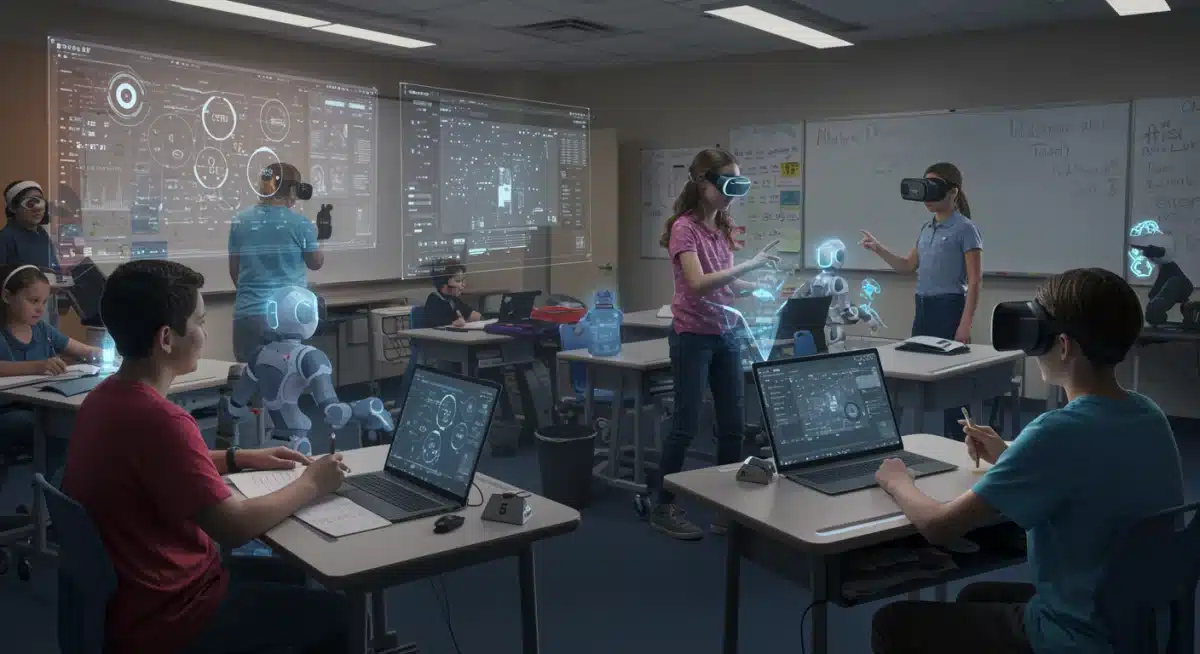
U.S. EdTech Trends 2026: 4 Innovations Transforming Learning Environments
The landscape of education is in a constant state of evolution, driven by technological advancements that reshape how we teach and learn. As we look towards 2026, the United States educational technology (EdTech) sector is poised for significant transformation. The integration of cutting-edge innovations promises to create more engaging, personalized, and effective learning environments. This article delves into the top four U.S. EdTech Trends for 2026, exploring how these innovations are not just incremental improvements but fundamental shifts in pedagogical approaches and student experiences.
The past few years have accelerated the adoption of digital tools in education, largely due to unprecedented global events. This rapid integration has laid a robust foundation for more sophisticated technologies to take root. From elementary schools to higher education institutions, educators, administrators, and students are increasingly embracing digital solutions that offer flexibility, accessibility, and new avenues for knowledge acquisition. The focus is shifting from merely digitizing traditional content to fundamentally reimagining the learning process itself.
Understanding these U.S. EdTech Trends is crucial for anyone involved in education – policymakers, educators, developers, and even parents. These trends will dictate resource allocation, curriculum development, teacher training, and ultimately, the preparedness of the next generation for a rapidly changing world. As the demand for skilled workers in technology-driven industries continues to rise, the education system must adapt to equip students with the necessary competencies, not just in terms of content knowledge but also critical thinking, problem-solving, and digital literacy.
The overarching theme among these emerging U.S. EdTech Trends is personalization and engagement. Gone are the days of one-size-fits-all education. Modern technology allows for tailored learning paths, adaptive content, and immersive experiences that cater to individual student needs and preferences. This shift is not just about making learning more fun; it’s about making it more effective and equitable, ensuring that every student has the opportunity to reach their full potential, regardless of their background or learning style.
1. Artificial Intelligence (AI) and Machine Learning (ML) in Personalized Learning
Artificial Intelligence (AI) and Machine Learning (ML) are undeniably at the forefront of the U.S. EdTech Trends for 2026. These technologies are moving beyond simple automation to provide deeply personalized learning experiences that were once unimaginable. AI algorithms can analyze vast amounts of student data – from performance on assignments to engagement levels and learning patterns – to create adaptive learning paths tailor-made for each individual.
The application of AI in education extends to intelligent tutoring systems that can provide immediate, constructive feedback, much like a human tutor. These systems can identify areas where a student struggles, offer supplementary materials, and adjust the pace of instruction to ensure mastery before moving on. This not only enhances academic performance but also builds confidence and fosters a growth mindset in students. Imagine an AI tutor that understands exactly why a student is making a particular error and can explain the concept in multiple ways until it clicks.
Beyond tutoring, AI is revolutionizing content creation and curation. AI-powered platforms can generate personalized learning materials, including quizzes, exercises, and even entire lessons, based on a student’s current understanding, learning style, and interests. This dynamic content delivery ensures that students are always challenged appropriately and engaged with relevant material. Furthermore, AI can assist educators by automating administrative tasks, such as grading repetitive assignments, allowing teachers to dedicate more time to direct instruction, mentorship, and addressing individual student needs.
Machine learning also plays a crucial role in predictive analytics. By analyzing historical data, ML models can identify students who might be at risk of falling behind or disengaging, allowing educators to intervene proactively. This early warning system is invaluable for preventing academic failure and ensuring that no student is left behind. The data-driven insights provided by AI and ML empower educators to make more informed decisions about curriculum design, teaching strategies, and student support services, making them essential U.S. EdTech Trends.
However, the implementation of AI and ML in education also brings forth important considerations, particularly concerning data privacy, algorithmic bias, and the ethical use of student information. As these technologies become more prevalent, robust frameworks and policies must be developed to ensure responsible and equitable deployment. Transparency in how AI makes decisions and the ability for human oversight will be paramount to building trust and maximizing the benefits of these powerful tools. The discussion around these ethical implications will be as important as the technological advancements themselves in shaping future U.S. EdTech Trends.
2. Extended Reality (XR): Virtual Reality (VR) and Augmented Reality (AR) for Immersive Learning
Extended Reality (XR), encompassing Virtual Reality (VR) and Augmented Reality (AR), is set to revolutionize experiential learning and is a pivotal element of the U.S. EdTech Trends for 2026. XR technologies transcend traditional textbooks and lectures, offering immersive and interactive experiences that can transport students to historical events, inside the human body, or even to distant galaxies.
Virtual Reality provides a fully immersive digital environment, allowing students to explore complex concepts through direct interaction. Imagine a biology student dissecting a virtual frog without ethical concerns, a history student walking through ancient Rome, or an engineering student designing and testing structures in a simulated environment. These experiences foster deeper understanding, improve retention, and make abstract concepts tangible. VR labs, field trips, and simulations are becoming increasingly accessible and cost-effective, paving the way for widespread adoption across various educational levels.
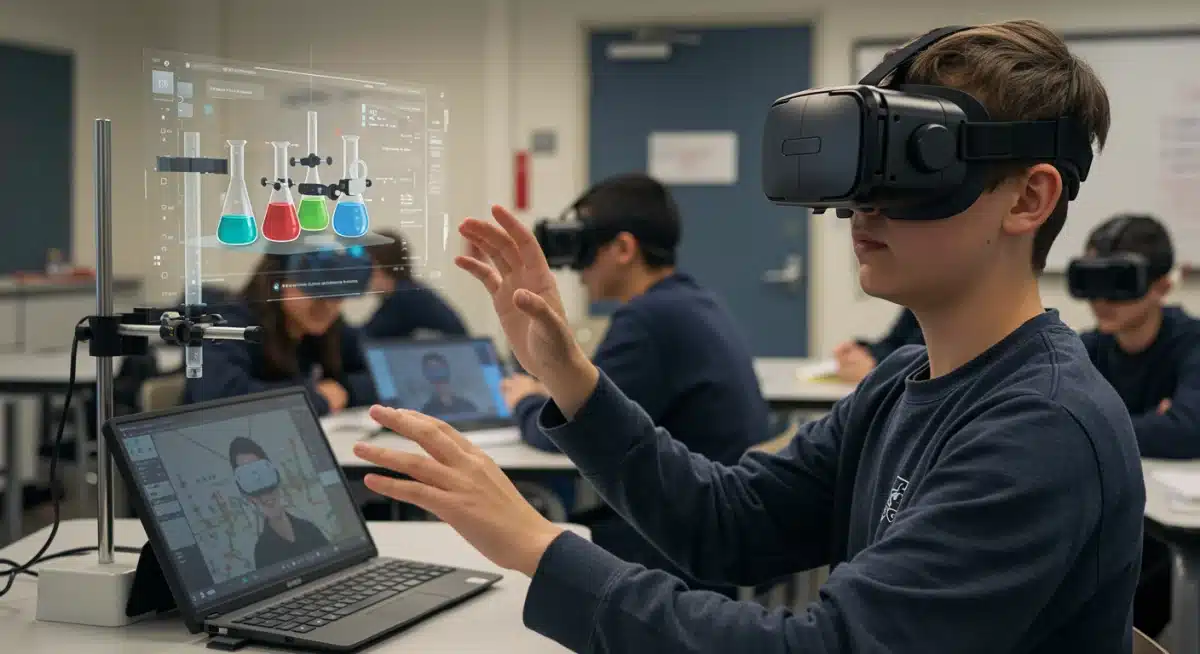
Augmented Reality, on the other hand, overlays digital information onto the real world, enhancing everyday learning environments. AR apps can bring textbooks to life, display interactive 3D models of objects on a classroom desk, or provide real-time information during a field trip. For example, a student could point their tablet at a historical landmark and see virtual annotations, historical figures, or reconstructions of how it looked centuries ago. This blends the physical and digital worlds, creating a richer, more contextualized learning experience.
The benefits of XR in education are multifaceted. It significantly boosts student engagement and motivation by transforming passive learning into active exploration. It also provides opportunities for hands-on practice in safe and controlled environments, which is particularly valuable for subjects like science, medicine, and vocational training. Furthermore, XR can make learning accessible to students with diverse needs, offering alternative ways to interact with content and demonstrate understanding. The spatial reasoning and problem-solving skills developed through XR experiences are highly valuable in today’s job market.
As hardware becomes more affordable and content creation tools become more user-friendly, the integration of VR and AR into mainstream education will accelerate. Developers are actively creating curriculum-aligned XR content, and educators are exploring innovative pedagogical approaches to leverage these tools effectively. The challenge lies in ensuring equitable access to these technologies and providing adequate training for educators to integrate them seamlessly into their teaching practices. Addressing these aspects will be crucial for XR to fully realize its potential as one of the leading U.S. EdTech Trends.
3. Data-Driven Pedagogy and Learning Analytics
The proliferation of digital learning tools generates an unprecedented amount of data about student performance, engagement, and learning behaviors. Harnessing this data through learning analytics is becoming a cornerstone of modern educational practice and a significant U.S. EdTech Trend for 2026. Data-driven pedagogy involves using insights derived from student data to inform teaching strategies, refine curriculum, and provide targeted support.
Learning analytics platforms collect and analyze data from various sources, including online assignments, discussion forums, click-through rates on digital content, and even biometric data in some advanced applications. This aggregated data provides a holistic view of each student’s progress and areas where they might need additional assistance. Educators can identify patterns, understand common misconceptions, and tailor their interventions more effectively. For instance, if a large number of students consistently struggle with a particular concept, the data can prompt a review of the teaching method or the clarity of the instructional materials.
Beyond individual student support, learning analytics can also inform broader institutional decisions. Administrators can use data to evaluate the effectiveness of different programs, identify resource gaps, and optimize course design. For example, data might reveal that certain online modules have significantly lower completion rates, prompting a redesign to improve engagement. This continuous feedback loop ensures that educational offerings are constantly being improved and aligned with student needs and learning outcomes.
The ethical implications of collecting and using student data are paramount. Robust data privacy measures, anonymization techniques, and transparent policies are essential to build trust among students, parents, and educators. The focus must always be on using data to empower learners and improve educational outcomes, not for surveillance or discriminatory practices. Training educators to interpret and utilize data responsibly is also a critical component of successful data-driven pedagogy. This ensures that the insights gained are translated into meaningful actions that benefit students.
As this U.S. EdTech Trend matures, we can expect more sophisticated predictive models that can identify at-risk students even earlier and recommend personalized interventions with greater precision. The goal is to move from reactive support to proactive guidance, creating a truly adaptive and responsive educational system. This shift will require a culture of data literacy among all stakeholders in education, from students understanding their own learning patterns to administrators making strategic decisions based on evidence.
4. Adaptive Learning Platforms and Microlearning
Adaptive learning platforms, often powered by AI and ML, represent a highly personalized approach to education, making them a crucial U.S. EdTech Trend. These platforms continuously assess a student’s knowledge, skills, and learning pace, then dynamically adjust the content, difficulty, and instructional strategies in real-time. This ensures that students are always working within their zone of proximal development, receiving challenges that are neither too easy nor too difficult, thereby maximizing engagement and learning efficiency.
Unlike traditional linear curricula, adaptive learning paths are fluid and responsive. If a student demonstrates mastery of a concept quickly, the platform can accelerate them to more advanced topics. Conversely, if a student struggles, the platform can provide additional practice, different explanations, or prerequisite material until the concept is understood. This individualized approach caters to diverse learning styles and paces, reducing frustration for struggling students and preventing boredom for advanced learners.

Complementing adaptive learning is the rise of microlearning. Microlearning involves delivering educational content in small, digestible chunks, typically lasting a few minutes. These short bursts of learning can take the form of short videos, interactive quizzes, infographics, or quick simulations. This approach is particularly effective for reinforcing concepts, delivering just-in-time information, and accommodating the busy schedules of modern learners.
The synergy between adaptive learning and microlearning is powerful. Adaptive platforms can identify specific knowledge gaps and then deliver targeted microlearning modules to address those gaps efficiently. This allows students to learn exactly what they need, when they need it, without having to wade through irrelevant material. This approach is highly effective for skill development, professional training, and continuous learning, where learners need to acquire specific competencies quickly.
The benefits of adaptive learning platforms and microlearning are profound. They increase student engagement by making learning more relevant and manageable. They improve retention by focusing on mastery and providing immediate feedback. And they empower students to take more ownership of their learning journey. For educators, these tools provide valuable insights into student progress and allow them to focus their efforts where they are most needed, transforming their role from content delivery to facilitators of personalized learning experiences.
As these U.S. EdTech Trends continue to mature, we can expect more sophisticated integration with other technologies, such as AI-powered content generation for microlearning modules and XR experiences embedded within adaptive paths. The ultimate goal is to create a seamless, highly effective, and deeply personalized learning ecosystem that prepares students for the challenges and opportunities of the 21st century.
The Broader Impact of U.S. EdTech Trends on Education
The four U.S. EdTech Trends for 2026—AI and ML for personalization, XR for immersive experiences, data-driven pedagogy, and adaptive learning with microlearning—are not isolated phenomena. They are interconnected forces that collectively reshape the entire educational ecosystem. Their combined impact extends beyond the classroom, influencing teacher training, curriculum development, assessment methods, and even the physical design of learning spaces.
Teacher training and professional development will need to evolve significantly. Educators will require new skills to effectively leverage these advanced technologies, interpret data insights, and facilitate highly personalized learning environments. The role of the teacher is shifting from a disseminator of information to a guide, mentor, and facilitator of complex learning experiences. This requires continuous professional learning opportunities that keep pace with technological advancements.
Curriculum development will become more dynamic and flexible. Instead of static textbooks and rigid lesson plans, curricula will increasingly incorporate adaptive digital content, immersive XR modules, and real-time data feedback. This allows for more responsive and relevant learning pathways that can be updated quickly to reflect new discoveries, societal needs, and industry demands. The emphasis will shift from rote memorization to critical thinking, problem-solving, and creativity, skills that are augmented by these technologies.
Assessment methods will also undergo a transformation. Traditional standardized tests may be supplemented or even replaced by continuous, formative assessments embedded within adaptive learning platforms. These assessments can provide a more accurate and nuanced picture of student understanding, focusing on mastery of concepts rather than just recall. Performance-based assessments within XR environments could evaluate practical skills in simulated real-world scenarios, offering a more authentic measure of competency.
The physical learning environment itself may also change. Classrooms could become more flexible, with spaces designed for individual focus, collaborative projects, and immersive XR experiences. The lines between formal and informal learning will blur, with technology enabling learning to happen anytime, anywhere. This distributed learning model, further amplified by these U.S. EdTech Trends, offers unprecedented flexibility and access to education for diverse populations.
However, the successful integration of these U.S. EdTech Trends hinges on addressing critical challenges. Equitable access to technology and high-speed internet remains a significant hurdle, particularly in underserved communities. The digital divide must be bridged to ensure that all students can benefit from these innovations. Furthermore, robust cybersecurity measures are essential to protect student data and maintain privacy in an increasingly connected educational landscape.
Moreover, striking a balance between technology integration and human interaction is crucial. While technology can enhance learning, it should never replace the invaluable role of human connection, mentorship, and social-emotional development that occurs within educational settings. The most effective educational models will be those that strategically blend the power of technology with the irreplaceable value of human educators and peer interaction. This thoughtful integration will define the success of future U.S. EdTech Trends.
Conclusion: Shaping the Future of Learning with U.S. EdTech Trends
The U.S. EdTech Trends for 2026 paint a compelling picture of an educational future that is highly personalized, deeply engaging, and driven by intelligent technologies. Artificial Intelligence and Machine Learning are refining personalized learning paths, while Extended Reality (VR and AR) is creating unprecedented immersive experiences. Data-driven pedagogy is empowering educators with actionable insights, and adaptive learning platforms, coupled with microlearning, are making education more efficient and effective.
These innovations are not merely tools; they are catalysts for a paradigm shift in education. They promise to move us beyond traditional models to a learner-centric approach where every student can learn at their own pace, in their own style, and pursue their passions with greater depth and understanding. The emphasis on developing critical thinking, problem-solving, and digital literacy through these technologies will equip the next generation with the skills necessary to thrive in an increasingly complex world.
As we navigate towards 2026 and beyond, the commitment to thoughtful implementation, ethical considerations, and equitable access will be paramount. Investing in robust infrastructure, comprehensive teacher training, and continuous research and development will ensure that these U.S. EdTech Trends translate into tangible improvements in educational outcomes for all students. The future of learning is bright, dynamic, and profoundly shaped by the intelligent integration of technology, promising an era of unprecedented educational possibilities.
The journey to fully realize the potential of these U.S. EdTech Trends will require collaboration among educators, technologists, policymakers, and communities. By working together, we can build an educational system that is not only technologically advanced but also deeply human-centered, preparing every student not just for jobs, but for fulfilling lives and active participation in a global society. The innovations discussed here are just the beginning of what promises to be an exciting and transformative era in U.S. education.