
Disability Benefits in 2026: A Comprehensive Look at Application Changes and Approval Rates
Navigating the complex landscape of disability benefits can be a daunting task, especially with the constant evolution of policies and procedures. As we approach 2026, many individuals and their families are seeking clarity on what to expect regarding disability benefits. This article aims to provide a comprehensive overview of the anticipated changes to application processes, eligibility criteria, and projected approval rates for disability benefits 2026. Understanding these shifts is crucial for anyone considering applying or currently receiving benefits.
The Evolving Landscape of Disability Benefits
The Social Security Administration (SSA), responsible for administering Social Security Disability Insurance (SSDI) and Supplemental Security Income (SSI), continually evaluates its programs to ensure efficiency, fairness, and sustainability. These evaluations often lead to adjustments in how benefits are processed and awarded. For disability benefits 2026, several key areas are expected to see modifications, driven by technological advancements, demographic shifts, and economic considerations.
Understanding SSDI and SSI: A Brief Refresher
Before diving into future changes, it’s essential to distinguish between the two main types of Social Security disability benefits:
- Social Security Disability Insurance (SSDI): This program is for individuals who have worked long enough and recently enough, and have paid Social Security taxes. It’s essentially an insurance policy paid through payroll deductions.
- Supplemental Security Income (SSI): This is a needs-based program for low-income individuals who are aged, blind, or disabled, regardless of their work history.
Both programs require applicants to meet the SSA’s strict definition of disability, which means being unable to engage in any substantial gainful activity (SGA) due to a medically determinable physical or mental impairment that is expected to last for at least 12 months or result in death. While the core definition of disability is unlikely to change drastically, the interpretation and evidence required to prove it might evolve for disability benefits 2026.
Anticipated Changes to the Application Process for Disability Benefits 2026
The application process for disability benefits is notoriously complex and lengthy. The SSA has been making efforts to streamline this process, and 2026 could see significant advancements in this regard. Here are some potential areas of change:
Increased Digitalization and Online Application Enhancements
The trend towards digital services is undeniable. For disability benefits 2026, we can expect further enhancements to the SSA’s online application portal. This might include:
- More intuitive user interfaces: Making it easier for applicants to navigate the online forms and understand the required information.
- Improved document submission: Enhanced capabilities for uploading medical records and other supporting documents securely and efficiently.
- Real-time status updates: More frequent and detailed updates on the application’s progress, reducing the need for applicants to call the SSA.
- AI-powered assistance: While not replacing human interaction, AI tools could be used to guide applicants through common questions or identify missing information, potentially speeding up the initial review phase.
While these digital advancements aim to simplify the process, they also necessitate that applicants have access to reliable internet and basic computer literacy. Support systems for those without such access will remain critical.
Emphasis on Telehealth and Remote Medical Evaluations
The recent global health events accelerated the adoption of telehealth. This shift is likely to have a lasting impact on how medical evidence is gathered for disability benefits 2026 applications. We might see:
- Increased acceptance of telehealth records: Medical evidence derived from virtual consultations could become more widely accepted and integrated into the evaluation process.
- Remote consultative examinations (CEs): For some conditions, the SSA might utilize remote CEs conducted via video conferencing, particularly for mental health impairments or less physically demanding assessments.
This could be a double-edged sword: offering convenience and accessibility for some, while potentially posing challenges for others who require in-person examinations or lack the necessary technology.
Streamlined Evidence Submission and Medical Records Management
One of the biggest hurdles in the application process is obtaining and submitting comprehensive medical records. For disability benefits 2026, the SSA might further develop systems to facilitate this:
- Direct electronic medical record (EMR) access: Expanding partnerships with healthcare providers to allow the SSA direct, secure access to applicants’ EMRs (with applicant consent), reducing the burden on applicants to collect records themselves.
- Standardized medical evidence forms: Introducing more standardized forms for treating physicians to complete, ensuring all necessary information is captured consistently.
These changes aim to reduce delays caused by incomplete or missing medical evidence, which is a common reason for initial denials.

Eligibility Criteria: What Might Change for Disability Benefits 2026?
While the fundamental definition of disability is unlikely to change, the specific criteria for evaluating certain conditions or the thresholds for income and resources might be adjusted for disability benefits 2026.
Updates to the Blue Book (Listing of Impairments)
The SSA’s “Blue Book” outlines medical criteria for various impairments that are considered severe enough to prevent an individual from engaging in SGA. This book is periodically updated to reflect advances in medical understanding and treatment. For disability benefits 2026, we could see:
- New or revised listings: Incorporating new medical conditions or updating the criteria for existing ones, especially in areas like mental health, autoimmune disorders, and chronic pain conditions.
- Emphasis on functional limitations: A continued focus on how an impairment impacts an individual’s ability to perform work-related tasks, rather than just the diagnosis itself.
Applicants should always refer to the most current version of the Blue Book or consult with a disability advocate to understand the specific criteria relevant to their condition.
Potential Adjustments to Substantial Gainful Activity (SGA) Limits
The SGA limit is the maximum amount of monthly earnings an individual can have while still being considered disabled by the SSA. This amount typically increases annually based on national average wage index. For disability benefits 2026, we expect this trend to continue, meaning the SGA limit will likely be higher than in previous years. This is generally a positive change for applicants, as it allows for slightly more earnings without jeopardizing their disability status.
SSI Income and Resource Limits
For SSI applicants, income and resource limits are critical for determining eligibility. These limits are also subject to periodic adjustments, usually tied to inflation. For disability benefits 2026, we anticipate modest increases in these limits, which could allow more low-income individuals to qualify for SSI, or to retain their benefits if their income or resources slightly increase.
Projected Approval Rates for Disability Benefits 2026
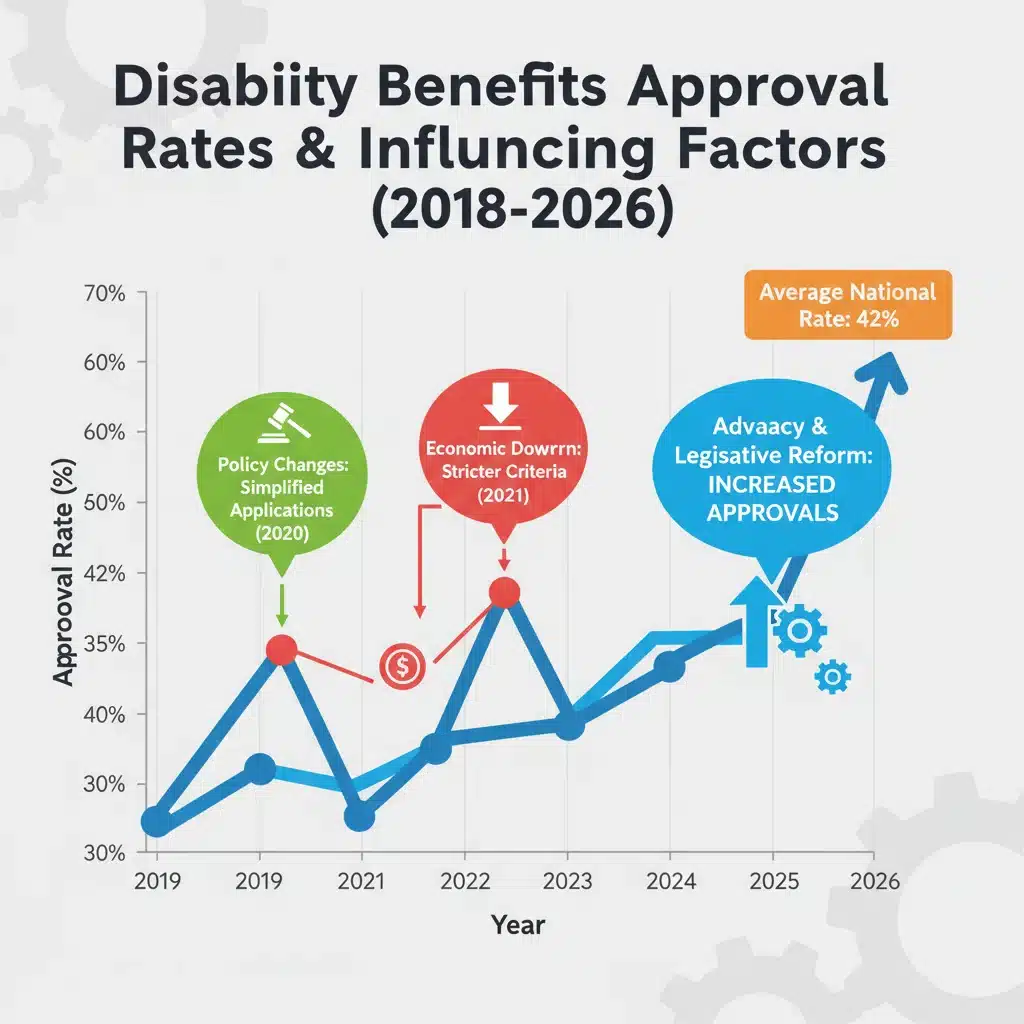
Disability approval rates are a significant concern for applicants. These rates fluctuate based on various factors, including economic conditions, policy changes, and the volume of applications. While predicting exact rates for disability benefits 2026 is challenging, we can infer trends based on historical data and current SSA initiatives.
Factors Influencing Approval Rates
- Economic Climate: During economic downturns, more people tend to apply for disability benefits, sometimes leading to a slight decrease in approval rates due to increased scrutiny and resource strain.
- SSA Budget and Staffing: Adequate funding and staffing levels at the SSA and state Disability Determination Services (DDS) are crucial for timely and thorough evaluations. Budget cuts can lead to backlogs and potentially affect approval rates.
- Policy Directives: New directives or changes in how medical evidence is weighed can impact how claims are decided.
- Technological Improvements: While intended to streamline, new technologies can initially cause adjustment periods that might subtly affect processing times and, indirectly, approval rates.
General Trends and Outlook for 2026
Historically, initial application approval rates for SSDI and SSI are relatively low, often below 30%. However, approval rates tend to increase significantly at the reconsideration and hearing levels. For disability benefits 2026, the SSA’s focus on digitalization and streamlining could have a mixed impact:
- Initial Application Stage: Improved online tools and clearer guidelines might help applicants submit more complete and accurate initial applications, potentially leading to a slight increase in initial approval rates by reducing easily avoidable denials.
- Reconsideration and Hearing Stages: As the system becomes more efficient, the focus at these later stages might shift more towards complex medical and vocational issues, rather than procedural errors. The availability of legal representation continues to be a strong predictor of success at these stages.
Overall, while a dramatic surge in approval rates for disability benefits 2026 is unlikely, the SSA’s efforts towards efficiency and clarity could lead to a more predictable and potentially slightly more favorable outcome for well-prepared applicants.
Tips for Preparing Your Disability Benefits Application for 2026
Regardless of the changes, thorough preparation remains the cornerstone of a successful disability claim. Here are essential tips to help you navigate the process for disability benefits 2026:
1. Gather Comprehensive Medical Evidence
This is arguably the most critical component of your application. Ensure you have:
- Complete medical records: Include all doctor’s notes, hospital records, test results (X-rays, MRIs, blood tests), and therapy notes.
- Detailed treatment history: Document all treatments received, medications prescribed, and their effectiveness (or lack thereof).
- Statements from treating physicians: Ask your doctors to provide detailed statements outlining your diagnosis, prognosis, functional limitations, and how your condition prevents you from working. These statements are often more persuasive than raw medical data.
2. Document Your Functional Limitations
The SSA wants to know not just what your diagnosis is, but how it impacts your daily life and ability to work. Keep a detailed log of:
- Daily activities: How your disability affects simple tasks like bathing, dressing, cooking, and household chores.
- Work-related limitations: Specific tasks you can no longer perform, how long you can sit, stand, walk, lift, or concentrate.
- Pain levels and fatigue: How these symptoms fluctuate throughout the day and week, and how they interfere with your ability to sustain work.
3. Be Honest and Consistent
Consistency across all your statements – from your application forms to your medical records and testimony – is vital. Any discrepancies can raise red flags for the SSA. Always provide accurate and truthful information.
4. Seek Professional Assistance
While you can apply for disability benefits 2026 on your own, statistics show that applicants represented by an attorney or a non-attorney advocate have a significantly higher chance of approval, especially at the reconsideration and hearing levels.
- Disability Lawyers: They understand the complex legal requirements, can gather necessary evidence, represent you at hearings, and appeal unfavorable decisions.
- Non-Attorney Advocates: These professionals also specialize in disability claims and can provide valuable assistance throughout the process.
Most disability lawyers and advocates work on a contingency basis, meaning they only get paid if you win your case, and their fees are capped by law.
5. Understand the Appeals Process
Do not be discouraged by an initial denial. The majority of applicants are denied at the initial application stage. The appeals process involves several levels:
- Reconsideration: A complete review of your claim by a different examiner.
- Hearing by an Administrative Law Judge (ALJ): This is often the best chance for approval, as you can present your case in person and have a legal representative argue on your behalf.
- Appeals Council Review: If you disagree with the ALJ’s decision, you can ask the Appeals Council to review it.
- Federal Court Review: The final stage of appeal, involving a federal court lawsuit.
Be prepared to go through the appeals process, as it is a common part of securing disability benefits 2026.
Potential Challenges and How to Address Them
Even with anticipated improvements, applying for disability benefits 2026 will likely present challenges. Being aware of these can help you better prepare:
Long Processing Times
Despite efforts to streamline, the SSA’s caseload is immense, and processing times can still be lengthy. Be prepared for delays and ensure you have a financial plan in place while your application is pending.
Difficulty Obtaining Medical Records
Even with potential SSA initiatives, you might still face challenges in getting timely and complete medical records from all your providers. Start gathering these records as early as possible.
Proving “Disability” to the SSA’s Standard
The SSA’s definition of disability is strict. Many people mistakenly believe that having a severe medical condition automatically qualifies them. You must demonstrate that your condition prevents you from engaging in any substantial gainful activity, not just your previous job. Focus on providing detailed evidence of your functional limitations.
Navigating Complex Forms and Regulations
The application forms are extensive, and the regulations are intricate. Mistakes or omissions can lead to denials. Double-check all information and consider getting help from an expert.
The Broader Impact of Disability Benefits 2026 Changes
The changes implemented for disability benefits 2026 are not just procedural; they reflect broader societal trends and governmental priorities. Increased digitalization can enhance accessibility for some, but also highlight the digital divide for others. Emphasis on telehealth could make medical evaluations more convenient, but might also miss crucial nuances of in-person assessments for certain conditions.
Ultimately, these adjustments aim to create a more efficient and equitable system, but their real-world impact will depend on their implementation and the resources allocated to the SSA. For individuals seeking disability benefits, staying informed, organized, and proactive will be more important than ever.
Conclusion
The landscape of disability benefits 2026 is poised for evolution, with a strong push towards digitalization, streamlined processes, and potentially updated eligibility criteria. While the core mission of providing support to those unable to work due to disability remains, the pathways to receiving that support are changing.
Applicants should prioritize gathering comprehensive medical evidence, meticulously documenting functional limitations, and seriously considering professional assistance to navigate the complexities. By understanding the anticipated changes and preparing thoroughly, individuals can significantly improve their chances of a successful outcome in securing the disability benefits they need and deserve.
Stay vigilant for official announcements from the Social Security Administration as 2026 approaches, and continue to educate yourself on the specific requirements that apply to your situation. Your future financial stability could depend on it.